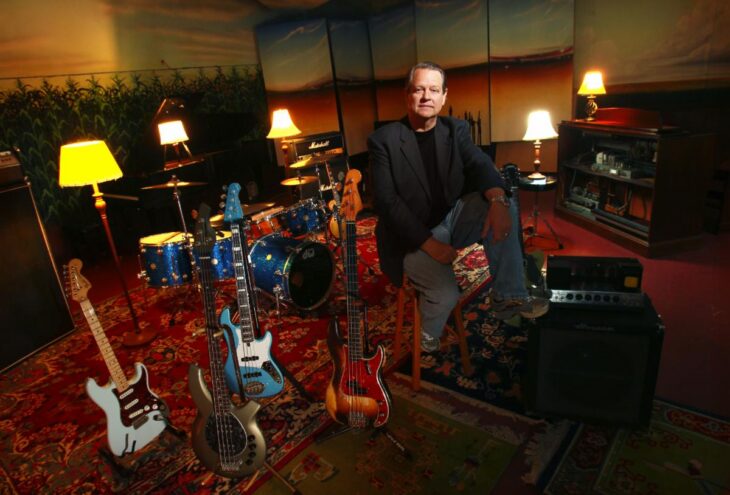
Originally from rural Illinois but with close ties to Chicago, musician, producer, and studio owner Mark “Mooka” Rennick relocated to Sonoma County, California in 1976. There, he established a basic home studio before later launching the now-shuttered Prairie Sun Recording, a residential studio that has hosted artists including Tom Waits, Michael Schenker, and Commander Cody. Indeed, metal label Shrapnel Records has recorded more than 100 albums there. Rennick now maintains several satellite studios (including one in Portland) and has worked closely with the late celebrated Chicago engineer Steve Albini.
Not surprisingly, one of the biggest obstacles Rennick faced when he opened his studio was dealing with the economics of the operation. He was an indie establishment amidst a sea of entrenched sonic spaces. “You had labels and a huge number of commercial studios [in the Bay Area] and I was kind of an outsider,” he recollects. “But I also had much lower overhead costs than they did, so I worked with a lot of indie labels. That eventually segued into major label work, including the first records by Exodus and Faith No More. The challenge when I started was to try to get the budgets to work for indie bands and also to be taken seriously.”
For Rennick, top mics rise above nearly all other pieces of gear. “Tom Waits recorded every note from 1989 until 2001 on a Neumann M 49 vintage microphone,” he explains. “We use it to this day and it remains one of our go-to pieces. We also have a Neumann U 47 with its original tube. When Journey recorded at Prairie Sun, those were the mics they used. I love them because the records I grew up with used the same ones. I knew that if I didn’t want to pay for studio time, I needed to own my own laboratory, which is what we call our studio in Portland.”

With decades spent in studios across the country, Rennick has seen his share of magic. One of his favorite memories is of witnessing one legendary percussionist lead another through some musically murky waters. “I once watched Journey drummer Steve Smith play with tabla master Zakir Hussain,” he recalls. “Zakir was playing tabla, Steve was playing traps and we were trying to get this extremely complex rhythmic crescendo finished. Watching a world-famous drummer keep missing the downbeat while Zakir patiently walked him through it was great. When we finally got it, Steve was smiling like a little kid.”
As an industry veteran, Rennick urges rising producers and engineers to log hours however they can. “Get into a workable, learnable DAW,” he suggests. “Acquire a good mic or two and work for free at first with talented people. Don’t be too picky initially. Things have a way of working out.”
After a lifetime in the business, he still finds engineering fun. “I don’t know anybody who does this that doesn’t live and breathe music,” he observes. “They have to.” Currently he’s putting together a record of things he’s recorded over the course of his career. “We’ve done four singles in the last year and we only have 196 to go,” he says jokingly. He’s also collaborating with golf course architect Robert Trent Jones Jr. on several projects.
Visit prairiesun.com
Instagram @prairiesunrecording