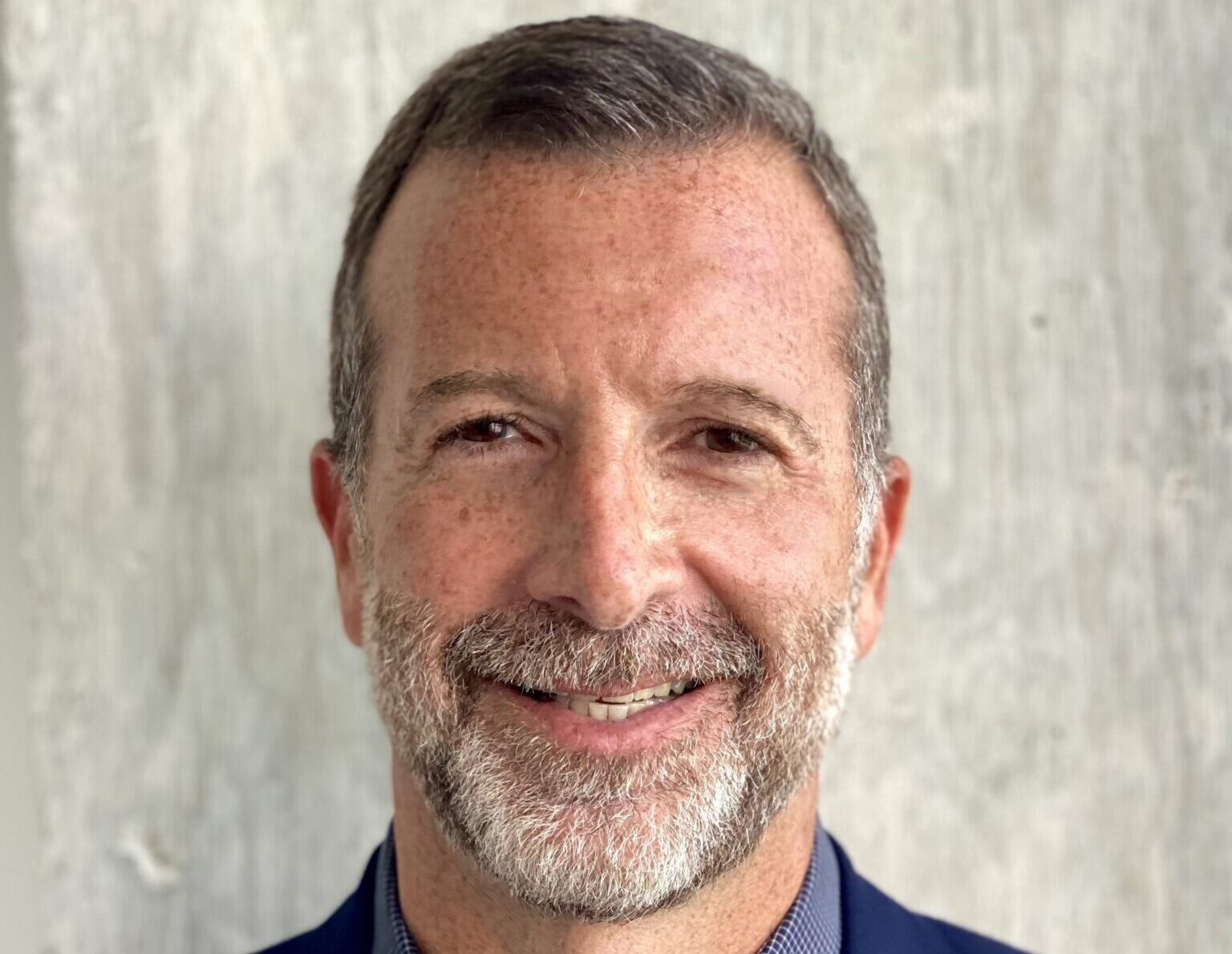
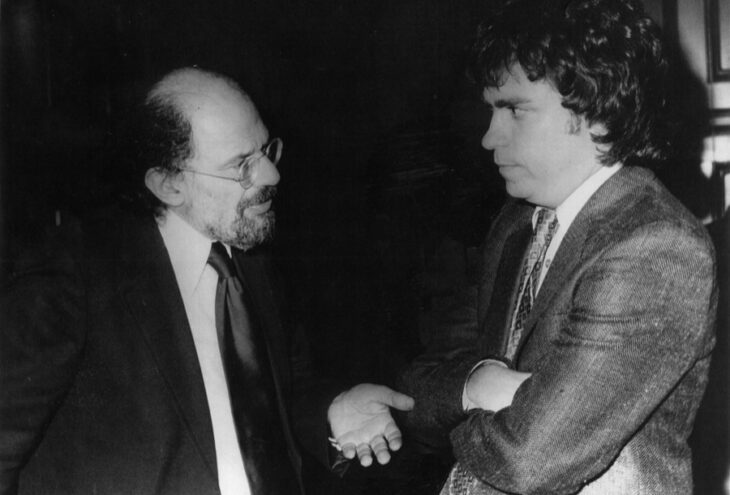
Allen Ginsberg and Harvey Kubernik photo by Suzan Carson, Courtesy of the Harvey Kubernik Archives
“The only truth is music…Music blends with the heartbeat universe and we forget the brain beat.” --Jack Kerouac, Desolation Angels.
Jack Kerouac (March 12, 1922 – October 21, 1969) was a leading prose stylist of the Beat movement in literature, author of On the Road, The Dharma Bums, and many other celebrated books.
“Understanding Jack Kerouac and his writing begins with acknowledging his profound relationship with jazz,” explained historian Dennis McNally, author of Desolate Angel: Jack Kerouac, The Beat Generation & America.
“His best writing springs from the same improvisational — ‘composition on the fly’ — roots as jazz. The deep form that he sought was in the same realm as the sound that Charlie Parker explored. To boot, Kerouac had a beautiful reading voice. Paired with a fine pianist like Steve Allen, he delivered the goods.
“Although the Beat scene was generally associated with jazz, by the early 1960s, the young people who read On the Road and explored alternatives to mainstream life were also listening to folk music. By 1965, bluegrass banjo player Jerry Garcia met his friend blues guitarist Jorma ‘Jerry’ Kaukonen and revealed that he was now in a rock and roll band. ‘So am I,’ said Jorma. Kaukonen’s band, the Jefferson Airplane, even had a home; bandleader Marty Balin had found backers and created the Beat music club The Matrix, just a few doors down from the site of the legendary first reading of Allen Ginsberg’s Howl. The connection was palpable,” summarized McNally to me, who in 2025 published THE LAST GREAT DREAM How Bohemians Became Hippies and Created the Sixties.”
McNally is the former publicist of the Grateful Dead and author for his biography of the band, A Long Strange Trip.
His 2025 book is a marvelous social history of the many elements that led up to the 1960s counterculture movement. He reminds us about key figures and trailblazing characters in Greenwich Village, folkies, Allen Ginsberg, John Cage, Judith Malina and Julian Beck of the Living Theater, Lenny Bruce, the Beatles, Ken Kesey, Chet Helms, poster artists, Robert Hunter, Janis Joplin, the underground press, social activists, and Los Angeles modern artists like the omnipresent Wallace Berman.
The 1966-67 California psychedelic blues and soul world of Joplin was very much inspired by the pervasive influence of the San Francisco, Berkeley and Venice Beat generation literature and poetry she first discovered with fellow Bohemians in Port Arthur, Texas at Thomas Jefferson High School and the University of Texas in Austin.
Three of her favorite writers were Jack Kerouac, Allen Ginsberg and Michael McClure.
“I grew up and got to see all the jazz cats in the clubs. Plus, I saw all the beatniks, and great writers and poets,” enthused Marty Balin, the co-founder of Jefferson Airplane in a 2014 interview we did.
“I was a friend of Ralph Mathis, Johnny Mathis’ brother. They had a house in San Francisco. I’d go over with Ralph and Johnny would have Erroll Garner in there. And then Ralph and I would go downtown, we could get into any club. I saw John Coltrane. Man, I saw Miles Davis and Thelonious Monk.
“On April 13, 1965 I helped open the Matrix Club and did some booking in 1966 and ’67. People were comin’ in lookin’ for places to play, the infamous Warlocks and Janis. I had an immediate influx of people.
“This is a world before 1967 and the Summer of Love. It started with the beatniks and poets.
“I think San Francisco was full of all these people who were talented and who were expressing themselves or their rights or playing music. And I think San Francisco has a lot to do with that. I don’t know if it’s the geomagnetic forces of the earth and the ocean but something went on there. It’s a lot different than the rest of the world.”
Playboy Magazine’s reporting on the contemporary music scene of 1967 spread the June Monterey Pop happening and the counterculture revolution to a much wider audience. The Jazz & Pop Poll ballot of October 1967 reflected the current audio climate.
In the Male Vocalist category, Marty Balin, Jimi Hendrix, Otis Redding, John Mayall, Scott McKenzie, and Johnny Rivers were now listed along with Frank Sinatra, Gene Pitney, Sammy Davis Jr., Al Martino, and Mose Allison.
The Female Vocalist results now found Janis Joplin, Cass Elliot, and Grace Slick right alongside Dionne Warwick, Julie London, Anita O’Day, Jackie DeShannon, and Eartha Kitt.
“Jack Kerouac's On the Road & October in the Railroad Earth are rhapsodies,” emailed actor/poet Harry E. Northup, who has published 13 books and appeared in many movies, including Mean Streets, Taxi Driver and The Silence of the Lambs.
“His prose is like the rolling hills & the open road America; you hear America in his singing, his search for a home. He wrote, that's what he did. The men in the car in On the Road, lived outside society as they crisscrossed America. They wrote, that's what they lived for, not conformity.
“I read On the Road, when I was16, in 1957, when it came out. I had begun hitchhiking when I was 11 & when I was 16, I hitchhiked from Sioux Ordnance Depot to Sidney, in western Nebraska many times. On the Road set my life ablaze with a yearning to burn, as Kerouac said, to blaze away. Did Kerouac blaze? He blazed! & gave us a taste of Romanticism."
“Back in the 60’s and early 70’s, I spent a lot of time at The Fillmore, The Avalon and The Family Dog in the San Francisco area,” Be Here Now author and spiritual teacher Ram Dass, reminisced with me in a 1997 interview.
“When I [then Richard Alpert] was at Stanford in Northern California taking my Ph.D, I went there and stayed on the faculty there and to U.C. Berkeley to teach. When I was at Stanford, on weekends I would drive up to the city, and go to North Beach, and hear the Beat poets, but it was so out of my world. I was a real gung high-need achieving Jewish upwardly mobile graduate student and they scared the shit out of me.
“I went to The Monterey International Pop Festival. It was a time when the San Francisco sound was rock by Jefferson Airplane, Quicksilver Messenger Service, Big Brother and the Holding Company, Grateful Dead.
“I did a couple of shows with the Grateful Dead, but it wasn’t the right setting for my thing, because the audience, no matter how sweet they were, basically came to have a rock concert experience.
“Music is a vehicle for moving consciousness and humor is a vehicle for moving consciousness. And the combination of that…
“See, my game is very shrewdly designed. My game is what I am marketing is my truth and my vulnerability. I’ve taken my weaknesses and made them into my assets.
“I was drawn to the music. I came from classical and jazz. I really liked Dylan. He was close to Allen Ginsberg, and I was close to Allen. I loved Dylan’s music. I took many acid trips listening to his music, the Beatles’ Sgt. Pepper’s and Miles Davis’ Sketches of Spain.
“I was really happy when Ravi Shankar started getting acceptance in the West, partly because of George Harrison going to India.
“I loved the Doors. ‘Light My Fire.’ Some Eastern influences in their music. Jim Morrison was a poet…I liked the level of reality he played with. I like people pushing the edge and getting out of the linearity. I love that and not in a kind of clever, studied way, but in an ecstatic experiential way. That’s what I love better. That’s what he tried to do.”
When I first met and interviewed Ray Manzarek co-founder of the Doors in 1974, he happily confessed “If Jack Kerouac had never written On the Road the Doors would never have existed.”
Over many decades, Ray and I discussed Kerouac, the Beat generation, and their impact on the Doors.
“My wife Dorothy and I went up to San Francisco in approximately 1963, during a spring break from UCLA. We tried to get up to San Francisco as much as possible. So, we went up to San Francisco and there was a poetry reading going on featuring Lou Welch, who had just come out of the forest after being a hermit for the last three or four years. He was just charged and wired out of his mind. Gary Snyder had just come back from Japan, wearing his Japanese schoolboy suit. He was mellow and tranquil. Philip Whalen read and was just a house of fire. Words were coming out of his mouth so fast, you had to listen so closely.
“Somebody in the audience yelled, ‘speak slower!’ Philip Whalen stopped for a second after he heard that and replied, ‘listen faster! Man, there were 2,000 people in the audience!
Ray and I talked about the Doors recording of “L.A. Woman.”
“‘L.A. Woman’ is just a fast L.A. kick ass freeway driving song in the key of A with barely any chord changes at all. And it just goes. It’s like Neal Cassady, Jack Kerouac and Allen Ginsberg heading from Los Angeles up to Bakersfield on the 5 Freeway. Let’s go, man.”
In a 2001 interview I told Manzarek I witnessed a Doors concert in 1968. That seminal event made a lifelong impression on my own bio-regional artistic path.
Ray then addressed Jim Morrison’s poetry album An American Prayer.
“It was the first full-length rock ‘n roll poetry record that’s been released. Back in the 50’s, we used to get spoken word records by everybody, Dylan Thomas, E.E. Cummings, Kenneth Patchen. This is entirely different.
“I saw Jim’s words before he started writing songs. So, when you see his words on the page that’s poetry. I always thought of Jim as a good poet. But when he started writing songs, then everything became verse, chorus, verse and chorus. Really tight, and it was a whole other ball game. He put his words into an entirely different context. A musical context. A hit single in a three-minute context. I thought ‘Moonlight Drive’ was brilliant when I heard him sing it on the beach in Venice, I thought he had it.
“Lyrics are poetry. The words were well edited. Jim was good that way when it came to songs. When you are doing this written poetry, you can really stretch out and you can really expand.
“With his poetry, he’d throw this out, take this line, or two lines, but when it comes to music you gotta be very choosy because you only have a short period of time. Songs in a way, outside of like ‘The End,’ and ‘When the Music’s Over’ are sort of like haikus. The fit has to be very tight.”
Last decade I asked the Doors’ drummer John Densmore about touring the United States during 1967.
“In 1967 we played The Village Theater in New York, Steve Paul’s Scene, and Town Hall in Philadelphia. In San Francisco, first at the Avalon Ballroom, and then Fillmore Auditorium, where we kinda scared everybody. I could tell they liked us, we were the under belly. You forget in the Summer of Love there is the Vietnam War on everyone’s mind. San Francisco was quiet. They stared at us like we were from Mars. We knew that was making an impact.”
"Transcendental meditation was definitely Summer of Love. For some damn reason in 1965…Well, Robby and I went because LSD was legal and we were quite interested in our nervous systems, and knew we had to do this TM thing slowly. We meet this little guy, Maharishi, and the ‘Love Vibe’ is very palpable. This is 30 people in a room. Then, a year or two later, I read that the Beatles are onto TM and our little secret is being spread worldwide. Great. I still meditate. The whole Eastern Indian thing, Ravi Shankar, via George Harrison and the Beatles saturated everything with paisley bedspreads sound wise. ‘The End’ was a raga tune. Robby and I went to Ravi Shankar’s Kinnara School of Indian Music. Robby and I go see Ravi play at the Hollywood Bowl, and George is on stage. Later, he came to one of our recording sessions for The Soft Parade. You hear the Indian thing in techno stuff now. We need the East.”
Earlier this century, Steven Van Zandt, record producer, deejay, actor and musical director of Bruce Springsteen & The E Street Band emailed me about the Doors.
"I didn't like the Doors as a kid. I didn't get it. I was a total Anglophile on top of being prejudiced against most things from the West Coast. Any guitar player not from the Eric Clapton school was irrelevant, Mike Bloomfield being the only exception, so I didn't appreciate Robbie Krieger's Ravi Shankar influenced guitar style.
"Poetry was beyond me, the only exception being Bob Dylan, so Jim Morrison's Rimbaud meets Dionysius routine went right over my head. John Desmore's drum craft gently weaving the guitar and keys together was too subtle in my world of Keith Moon, Ginger Baker, and B.J. Wison. Ray Manzarek was the exception, being obviously impressive with every keyboard player tested by his ‘Light My Fire’ riff. But I wouldn't appreciate keyboardists playing with one hand until much later (he played bass with the left).
"Nobody in my neighborhood took the band seriously. And while we're on the subject, we let the Rascals get away it but we weren't so forgiving with the Doors' weird ass no-bass-thing either.
"As it turned out, of course, I couldn't have been more wrong. It's obvious to me now, they were fantastic. They would be one of the defining bands of the Psychedelic Era.
"They were a brilliant combination of extremely cinematic Rock, Pop, and Art that featured Existential philosophy, Beat Poet influenced lyrics, Eastern-style Indian scales, Western-style self-psychoanalysis, and Native American primal, ritual performance.
"Awesomely original, they were an unpredictable exciting visionary energy for a new world that never quite came to be."
“When I was in the Kaleidoscope we did some concerts with the Doors,” reflected multi-instrumentalist, singer and songwriter Chris Darrow in a 1999 interview I did with him.
“At the Hullabaloo club in Hollywood we participated in the Freedom of Expression Concert to defend Lenore Kandel’s The Love Book. [It hada three-part poem, "To Fuck with Love." Police seized the work as a violation of state obscenity codes]. At the Kaleidoscope venue in April1968 we played with the Doors, Canned Heat, Bo Diddley, Traffic, and the Holy Modal Rounders on the Super Ball benefit for the radio station KPPC-FM strike fund.
“The Summer of Love was real. It had a real vibe, a real feel and a real tone. All of which added up to something none of us had ever experienced or seen before. It was in the air. The original nature of the psychedelic movement was never really about the drugs or just having fun.
“For the devout, it was about expansion; spiritual, mental and physical. The idea of self-realization, freedom and growth gave the burgeoning hippie movement a direction, having come out of a more introspective, and cool scene, called the Beat Generation or beatniks, the new cool kids wanted to rock, but in a free and open way.”
I interviewed Allen Ginsberg at length three times in the eighties and nineties, and co-promoted several of his Southern California readings in Los Angeles and Santa Monica. In 1982 I recorded a live reading of Allen and Harold Norse at the Unitarian Church in Los Angeles.
My initial Ginsberg interview first appeared in 1996 for HITS Magazine and an edited version was published in The Los Angeles Times Calendar section on April 7, 1997, when the daily newspaper asked me to pen one of the tribute cover stories on Ginsberg when he died.
“I learned a lot from William Carlos Williams, and the elders of my generation,” revealed Allen. “People who were much older than me when I was young. And that inter-generational amity is really important because it spreads myths from one generation to another of what you know, and all the techniques and the history.
“And I get the same thing whenever I get to work with younger people. And I learn from them. I don't think I would have been singing if it wasn't for younger Dylan. I mean he turned me on to actually singing. I remember the moment it was. It was a concert with Happy Traum that I went to and saw in Greenwich Village. I suddenly started to write my own lyrics, instead of Blake.
“Dylan's words were so beautiful. The first time I heard them I wept. I had come back from India, and Charlie Plymell, a poet I liked a lot in Bolinas, at a 'Welcome Home Party', played me. Dylan singing 'Masters of War' from Freewheelin' Bob Dylan, and I actually burst into tears. It was a sense that the torch had been passed to another generation. And somebody had the self-empowerment of saying, 'I'll Know My Song Well Before I Start Singing It.’

“The renewed interests stem from the fact that we were being more candid and truthful than most other public figures or writers at the time. We were switched over to writing a spoken idiomatic vernacular, actual American English, which turned on many generations later. Dylan said that Kerouac's Mexico City Blues had inspired him to be a poet. That was his poetic inspiration.
“So, I think what happened is that we followed an older tradition, a lineage, of the modernists of the turn of the century continued their work into idiomatic talk and musical cadences and returned poetry back to its original sources and actual communication between people. That was picked up generation after generation up to people like U2, who are very much influenced by Burroughs in their presentation of visual material, like Patti Smith, and Thurston Moore and Lee Renaldo of Sonic Youth are interested in poetry.
"Also in San Francisco, in the mid-'50s, there was a music and poetry scene. Mingus was involved with Kenneth Rexroth and Kenneth Pachen. And [Berkeley-based] Fantasy records documented some of that. The Cellar in San Francisco.
“By the time I got around to getting on the radio, it was actually an AM station in Chicago with Studs Turkel; recorded the complete reading of Howl in Chicago, later used for the Fantasy record. It was broadcast censored. '59. KPFA in the Bay Area then started broadcasting my stuff in San Francisco, a Pacifica station. Fantasy put out Howl and that got around. Then, Jerry Wexler at Atlantic, put out Kaddish. It was radio broadcast from Brandeis University.
“So, I think what happened is that we followed an older tradition, a lineage, of the modernists of the turn of the century continued their work into idiomatic talk and musical cadences and returned poetry back to its original sources and actual communication between people.
“I think you'll find in Howl, sympathy. In fact, I remember when Kerouac was asked on William F. Buckley Firing Line on televisionin the sixties what 'Beat Generation' meant, Kerouac said, 'Sympathetic.'”
On Bob Dylan’s 1975-1976 semi-improvised Rolling Thunder Revue tour, Dylan performed a concert at the University of Lowell in Lowell, Massachusetts.
The following day, Dylan, Ginsberg and some band members visited Kerouac’s grave on November 2, 1975. The trek was self-promoted, with revolving musicians making guest stops in clubs and small hall venues across the US. There was even a warm up gig at Doug Weston’s Troubadour in West Hollywood. The road trip circus came to town, organized by Dylan’s friend Louie Kemp, with Bob Dylan assumed a role similar to Kerouac’s character Sal Paradise in On the Road.
Ginsberg is in Dylan’s Renaldo and Clara movie and it includes excerpts from Ginsberg reading Kaddish.
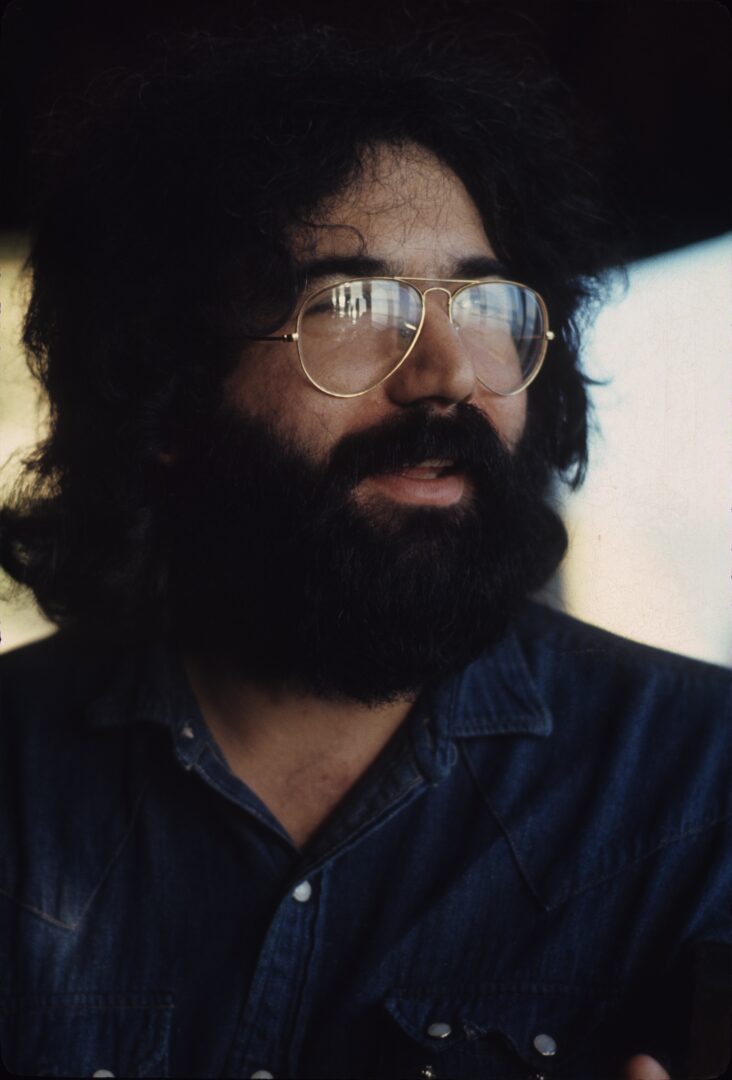
In a 1976 interview I conducted with Jerry Garcia inside Bill Graham’s Mill Valley residence for Melody Maker, Jerry discussed the world of San Francisco.
After the session was over, Jerry touted Jack Kerouac to me and I made a mental note and had a feeling, that perhaps years later I would continue to support Jerry and Jack’s gifts in my own endeavors.
In 1989, I was the Project Coordinator on The Jack Kerouac Collection box for the Rhino/Word/Beat label. I personally arranged for Ray Manzarek, Michael C Ford, Jerry Garcia and Michael McClure to contribute to the package booklet notes. In the mid-eighties I produced spoken word and music programs with Ray and McClure at McCabe’s Guitar Shop in Santa Monica, CA.
In our 1976 conversation, Garcia said he first heard the word ‘Beat generation’ in high school in San Francisco, and then a teacher at the San Francisco Art Institute told him about Kerouac’s On the Road.
In his literary donation, Garcia wrote, “His way of perceiving music-the way he wrote about music and America-and the road, the romance of the American highway, it struck me. It stuck a primal chord. It felt familiar, something I wanted to join in. It wasn’t like a club, it was a way of seeing. It became so much a part of me that it’s hard to measure; I can’t separate who I am now from what I got from Kerouac. I don’t know if I would ever have had the courage or the vision to do something outside with my life-or even suspected the possibilities existed-If it weren’t for Kerouac opening those doors.”
In the text booklet I wrote, “Jack Kerouac’s influence on my environment, then and now, is obvious. Kerouac’s written/verbal work helped me walk around the block so I can still cross the street seeking.”
“One of the things you could say about all the bands that came from San Francisco at that period of time was that none of them were very much alike,” Garcia told me in 1976. “I think that the world has changed. I think the United States has changed very visibly in the last ten years. A lot of it had to do with what happened in San Francisco.
“I can’t say how or why, but I also think it’s affected everything. Just all the interest in things like ecology. All the interest in the sense of personal freedom as expressed by all kinds of movements. All these things were designed to free the human. Social overtones. All that stuff. The communal spirit. I really think the scene out here created the possibility for Woodstock to happen. The Monterey International Pop Festival. The thing, the activity, music and people. The set-up was out here.”
In 2010 I interviewed Paul Kantner of Jefferson Airplane.
We would meet at the Vesuvio Café the historic bar located across an alley from Lawrence Ferlinghetti’s City Lights Books. Ginsberg, Kerouac, and Cassady would drink in the room. In 1988 the common alley next to City Lights was named “Jack Kerouac Alley.”
Kantner praised Cassady’s energetic presence, acknowledged the influence, open-mindedness and the quest for understanding that the beatnik universe had on him and his band.
“Jefferson Airplane had the fortune or misfortune of discovering Fender Twin Reverb amps and LSD in the same week while in college. That’s a great step forward. One of the reasons I started a band was to meet girls. And to this day it beats giving guitar lessons at a guitar store. I did that, too.
“FM radio was one of the many things that showed up and was going on in those days. So many things were going on you didn’t take that kind of notice of them. You just assumed that was going on, and go with it. We didn’t analyze it. We didn’t think to wonder about it. It was just another thing that was going on along with the music, the clothes, the book stores, the poets, the artists, there was a plethora of things and you did not have time basically to take it all in. It existed, and part of a whole.
“In San Francisco we had no restrictions. We never thought about being in an independent record label for cred. It came to us. All we had to do was roll with it. I liken it to white water rafting. There was so much going on you didn’t worry about what was around the next curve because you are right in the river.
“That’s why I like to leave ourselves open. The point is if you find something that makes you joyful take note of it. Amplify it if you can. Tell other people about it. That’s what San Francisco was about. Both musically, idealistically, and metaphorically and every other way. That’s what we did here.”
“My favorite place was to be up on stage, because it was the least crowded,” Grace Slick volunteered in a 2004 interview with me. “The audience and the bands were not that separate. A large amount of the audience was the other bands at the time. There were lots of bands that were working in San Francisco. Somebody would walk up from the audience and play guitar for a while with somebody. So, it was casual, and not that separated.
“I saw Lenny Bruce a couple of times and he was fabulous. After he got into the trial segment of his life. The legal thing. So, his performances during that time got somewhat tedious. But before that, the guy would hit all different kinds of subjects. He was just amazing.
“When I saw his album cover [The Sick Humor of Lenny Bruce] at a record store, where he was having a picnic in a graveyard, I had never seen any bashing of so-called sacred cows. Having a picnic in a graveyard. We are talking about the fifties. It was Leave It to Beaver time. My song ‘Father Bruce’ came out of that experience. Comedians very often are letting us know about morality through humor. That’s why I called him Father Bruce. It’s an easier way to swallow morality, listening to a comedian.”
“At the time of the Monterey International Pop Festival, I think I made a donation to The Oracle alternative newspaper in San Francisco,” clarified the Monkees’ Micky Dolenz in a discussion I had with him in 2008.
My mother Hilda worked on The Monkees TV series.
“I do remember making a huge contribution, a lot of money at the time, to some Indians in Seattle, or in Alaska, who were put in jail because of a fishing rights dispute. They sent me a beautiful painting after that. I gave them thousands and thousands to bail them out.
“I wasn’t deeply invested into that counter culture as others might have been. At the time, there were some people who got what The Monkees were all about, like Frank Zappa, my friend Harry Nilsson, and John Lennon. At the Sgt. Pepper’s recording sessions there was community, camaraderie, and that was the culture at the time. The zeitgeist of our generation. Before the hippies there were the beatniks, really. And the commercial pop environment came from that.
“Also, at that time of Monterey, it was all one sort of zeitgeist and the community at that time was quite small and local, it was only really California and New York that had any real to speak of hippie community, because it was the counter culture and there were only a couple places in the country you could get away with it without being arrested.
“In fact, one of the most important things, I think The Monkees show contributed to the culture was the idea that you could have longhair and wear bell bottoms and you weren’t committing crimes against nature. At the time the only time you saw people with longhair on television they were being arrested. Or treated as second class citizens.
“I’ve often thought The Monkees often hit pop music. Dr. Timothy Leary said in that book, Politics of Ecstasy, ‘The Monkees brought long hair into the living room.’ And I think that may be the legacy. It made it OK to be a hippie, have long hair, and wear bellbottoms. It did not mean you were a criminal, a dope smoking fiend commie pervert. That’s what happened. A kid says, ‘Hey mom, the Monkees have long hair and wear paisley bell bottoms.’
“And there were others who honestly didn’t get it. Rolling Stain magazine to this day still doesn’t get it.”
Jack Kerouac’s fingerprints can be found in dozens of recordings over the last half century: Tom Waits’ “Medley: Jack and Neal/California, Here I Come,” King Crimson’s “Neal and Jack and Me,” and 10,000 Maniac’s, “Hey Jack Kerouac.”The Beastie Boys cited Kerouac in a 1989 song “3-Minute Rule,” on Paul’s Boutique, and in 2000, in the Barenaked Ladies’ tune “Baby Seat” on Maroon, there’s a reference to Kerouac. Patti Smith, read and recorded a Kerouac poem “The Last Hotel” accompanied by music from Thurston Moore and Lenny Kaye. One of her favorite books is Kerouac’s Big Sur.
In 2011, I interviewed Patti, and she discussed stage improvisation and studio recording. “They are different responsibilities,” Smith suggested. “Doing a record, one is doing something that hopefully will endure. And one is doing it in a very intimate situation. Just with one’s band members and a few technicians And so it is very intimate, but one is mentally projecting toward the future and the people who’ll listen to it. Playing live you are right there with the people. I don’t think of live performance as enduring. It’s for the moment, somebody might bootleg it or tape it for themselves, but basically, I think of performance for the moment and it’s often more raucous, flawed, and you know, totally done for the people that are there.”
During 1995, I interviewed Marianne Faithfull. In the early ’90s she was made a professor by Allen Ginsberg at the Jack Kerouac School of Disembodied Poetics Naropa Poetry Institute in Boulder, Colorado. She hailed the books of Kerouac, Burroughs nd Ginsberg and mentioned Dylan. “I find them very sexy all those guys. Wonderful. I adore Allen. I was teaching lyric writing and Allen eventually showed me a book of Japanese haiku.
“I had never seen a rock person like Dylan or an American like him in 1965. Never. [She’s glimpsed in D.A. Pennebaker’s 1965 UK tour portrait of Dylan, Dont Look Back, and recorded Blowin In The Wind].
“Never in my wildest dreams could have imagined anyone like Bob in 1965. His brain, but I was frightened. I didn’t know they were probably more scared of me. I don’t know. He played me the album Bringing It All Back Home himself on his own. It was just amazing. And I worshipped him anyway. That was where I got very close to Allen, ‘cause Allen was the only sort of person I could recognize as being somewhat like me.
“Spoken word is something I’ve done all my life. Listen to the recitation of Lewis Carroll’s ‘Jabberwock’ and ‘Full Fathom Five’ from Shakespeare’s The Tempest, done with the Prospect Theatre, a theatrical group before my [Decca Records] career. I’ve always included the spoken word. The talk. To their credit, really, the music business let me do it.”
“For us rock and roll kids who came of age in the '70s and '80s, Kerouac was the portal into literature because he felt like rock and roll,” emailed author and novelist, Daniel Weizmann.
“His kamikaze crop duster prose, his refusal to play the structure game, his ability to capture tenderness in the middle of chaos, his willingness to be openly enthused, to be jazzed--all of it brought him just a little closer to a spieling boss jock than some arch grey belles lettres shmuck. And despite incredible flights into the ethereal, Kerouac was trustworthy--he kept it real. He was a portal for us, just like he was a portal for the whole culture that led to us.
“And maybe it's no accident that his masterpiece is about driving westward because Kerouac is also, in some funny way, a California writer, an embracer of the blazing sunlight, a seeker of the untamed. Whether walking the streets of Los Angeles or San Francisco or sleeping in the wild fields, he is never a tourist.
“We claimed him for our own--a California rock and roll hero—which is amazing when you realize what he also was--a poor French-Canadian kid from Massachusetts who couldn't even speak English before the age of 6, a printer's son, a halfback who blew out his leg freshman season, a dishonorable discharge from the US Navy. But he made the journey, he beat down the path, and he was ours.
"What I love about Frank Zappa is the way he connects to the pre-Beatle world of American bohemianism,” added Weizmann.
“Even long after he became the reluctant king of hippiedom, Zappa always struck me as a beatnik at heart, with that same Mad [magazine] trickster spirit of Lenny Bruce, Russ Meyer, early Bukowski, Venice cats like Lawrence Lipton and Stuart Z. Perkoff, and the whole crosshatch of subcultures that were just under the surface in Cali ’59 to ’63—bikers, surfers, poets, bongo-heads all pulling for exotica, for erotica, for something else—‘the left behinds of the Great So-ci-e-ty!’ (Cue the kazoos!) Case in point: In early ’65, Zappa got busted by a vice squad undercover officer for agreeing to produce a ‘sexually suggestive reel-to-reel’ for a stag party.
“His trip was never just about music, no way. Zappa was a straight-up tummler—the Yiddish word for soup spoon—a stirrer of pots.”
“For those of us who entertain a terminally whimsical view of the human condition, suggested musician, author and former editor of Music Connection, Kenneth Kubernik, “‘the road’ is a mighty seductive metaphor. Infinite in all directions, literally and metaphysically, it's an irresistible portal through which countless storytellers have journeyed, some with courage, some with reckless abandon, some content to ride shotgun - taking the wheel being too much responsibility.
“Homer took the bait; what was The Odyssey if not a mythically misguided road trip. Quixote and Panza's canter through Andalusia in search of the impossible - another noble, if muddle-headed pursuit.
“America is no stranger to the beguiling indignities of heading out on lonesome highways, pedal down, no direction home, cat nip for romantics who struggle with the real thing.
“We read, enraptured, ‘watching the long, long skies over New Jersey, and sense all that raw land that rolls in one unbelievable huge bulge over to the West Coast and all that road going, all the people dreaming in the immensity of it...’ It's bred in our bones, Manifest Destiny, Turner's frontier thesis, the privilege of putting distance between yourself and your history. Lewis and Clark; Huck and Jim; Crosby and Hope (why not); Hunter Thompson and an assortment of Schedule 1 drugs. Springsteen would still be out there lost in his own tormented arcadia if Landau didn't tether him to service more quotidian pursuits.
“My touchstone is that imperishable moment in Animal House when our heroes survey the wreckage around them and then, with clarion resolve rally the troops for - all together - a ‘Road Trip!’ I nearly rushed the screen to heed their call to action.
“Kerouac is, of course, the north star around which so much of this gravitational yearning takes place. He wrote the user's manual for a generation (and a little beyond) eager to transform its' post-war triumphalism into a debauched celebration of self-discovery and self-deception. His prose often crackled with the pop of a Philly Joe Jones rim shot; Ginsburg called it ‘bop prosody.’ Jack was crazy mad for Charlie Parker and the rattle and hum of 52nd Street; I hear him as more closely attuned to the tragic beauty of Art Pepper, whose playing caught the orphaned sound of an artist at the edge.
“Decades removed from its deeply-rooted '50s setting, much of the writing has lost its narcotic kick. Like many a compelling if self-absorbed saxophone solos, the words tumble forth like a run-on sentence, that initial rush tempered by overstaying its welcome. The Beat movement itself now appears distant and, frankly diminished, even though their books, their posturing, their insouciant middle-finger to ‘I Like Ike’ conformity, remains consoling, even valiant to those who still consider the life of the mind valuable.
“In today's heedless rush to celebrate the dazzling surfaces of our digital age - delighting the eye, dead to the touch - the idea of the road has retreated to a desolate backwater, at best a virtual memory as the Sal's and Dean's of today grind away in the Metaverse, jazzed by the clickity sound of Python swallowing them whole.”
“Back in the late '50s as I was completing my high school years, a too-hip classmate of mine tipped me to On the Road, remembered broadcaster, author and reggae/Bob Marley scholar, Roger Steffens.
"An avid reader, I devoured four or five books a week in my youth, but I had never encountered prose like Kerouac's. Raised in Brooklyn, and North Jersey, I had no geographic knowledge outside of that cramped terrain, and when the opportunity arose, I bought a '65 yellow Mustang and embarked on a speaking tour of the Midwest, reading Beat poetry to high school classes in a show called Poetry for People Who Hate Poetry. The Beats just felt good in my mouth, and it was thanks to Kerouac that I discovered them too.”
(Harvey Kubernik is the author of 20 books, including 2009’s Canyon Of Dreams: The Magic And The Music Of Laurel Canyon, 2014’s Turn Up The Radio! Rock, Pop and Roll In Los Angeles 1956-1972, 2015's Every Body Knows: Leonard Cohen, 2016's Heart of Gold Neil Young and 2017's 1967: A Complete Rock Music History of the Summer of Love.
Sterling/Barnes and Noble in 2018 published Harvey and Kenneth Kubernik’s The Story Of The Band: From Big Pink To The Last Waltz. In 2021 they wrote Jimi Hendrix: Voodoo Child for Sterling/Barnes and Noble.
Otherworld Cottage Industries in 2020 published Harvey’s Docs That Rock, Music That Matters. His Screen Gems: (Pop Music Documentaries and Rock ‘n’ Roll TV Scenes) was published on February 6, 2026 by BearManor Media.
Harvey spoke at the special hearings in 2006 initiated by the Library of Congress held in Hollywood, California, discussing archiving practices and audiotape preservation.
In 2017, he appeared at the Rock & Roll Hall of Fame in Cleveland, Ohio, in its Distinguished Speakers Series and as a panelist discussing the forty-fifth anniversary of The Last Waltz at the Grammy Museum in Los Angeles in 2023.
During 2025, Kubernik was interviewed in the Siobhan Logue-written and -directed documentary The Sound of Protest,airing on the Apple TVOD TV broadcasting service. The film also features Smokey Robinson, Hozier, Skin (Skunk Anansie), Two-Tone's Jerry Dammers, Angélique Kidjo, Holly Johnson, David McAlmont, Rhiannon Giddens, and more.
Harvey was an interview subject along with Iggy Pop, the Beach Boys’ Bruce Johnston, Love’s Johnny Echols, the Bangles' Susanna Hoffs, Victoria and Debbi Peterson, and the founding members of the Seeds for director/producer Neil Norman’s documentary The Seeds: Pushin' Too Hard. In summer 2026, GNP Crescendo will release the film on DVD/Blu-ray). Author Miss Pamela Des Barres narrates).