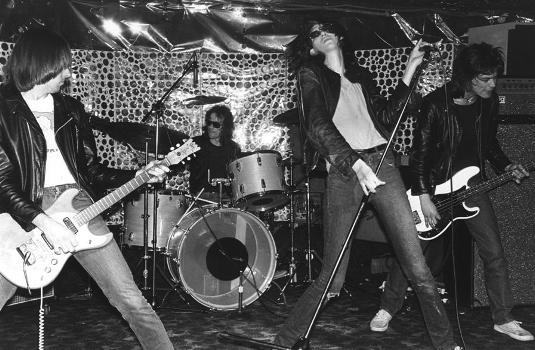
Magnolia Pictures announced today that they will release a brand new 4K restoration of END OF THE CENTURY: THE STORY OF THE RAMONES, from directors Michael Gramaglia and Jim Fields, plus John Gramaglia (co-editor and co-producer). The documentary is a vibrant, candid portrait of one of the most influential bands in punk rock history. The 4K restoration will be released in theaters later this year, and marks the first time ever that the film will be available to rent and own on digital.
In 1974, the New York City music scene was shocked into consciousness by the violently new and raw sound of a band of misfits from Queens called the Ramones. Playing in a seedy Bowery bar to a small group of fellow struggling musicians, the band struck a chord of disharmony that rocked the foundation of the mid-seventies music scene. This quartet of unlikely rock stars traveled across the country and around the world connecting with the disenfranchised everywhere, while sparking a movement that would resonate with two generations of outcasts across the globe. Although the band never reached the top of the Billboard charts, they managed to endure in the face of fleeting success and crushing interpersonal conflicts by maintaining a rigorous touring schedule for twenty-two years. END OF THE CENTURY: THE STORY OF THE RAMONES traces the history of the band, from its unlikely origins, through its star-crossed career, bitter demise, and the sad fates of Joey and Dee Dee.
Produced and directed by Michael Gramaglia and Jim Fields, END OF THE CENTURY: THE STORY OF THE RAMONES is also produced by Rosemary Quigley and Chinagraph NYC, and George Seminara. Executive producers are Jan Rofekamp, Diana Holtzberg, Andrew Hurwitz.
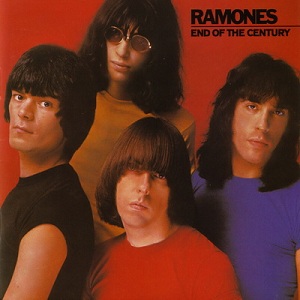
The Ramones’ album End of the Century was produced by Phil Spector and first released on Sire Records on February 4, 1980. I was at most of the recording sessions during the late seventies and handclapped on a couple of tracks.
In 2002, I wrote the 5,000-word liner notes for the deluxe edition on Rhino/WMG Records.
I was also interviewed earlier this century for this 2026 Magnolia Pictures documentary, along with Dan and David Kessel.
But what brought the Ramones, Phil Spector and Gold Star together in the first place?
The week before Spector began the Ramones album, Phil helmed a production of Jonathan and Andy Paley’s “Baby, Let’s Stick Together.” Ray Pohlman, Hal Blaine, Tommy Tedesco, Jay Migliori, Jim Keltner, Julius Wechter, Steve Douglas, Barry Goldberg and Dan and David Kessel were on the date. Rodney Bingenheimer, Phil Seymour and I provided percussion on the recording. Andy had earlier visited Gold Star with Darlene Love and Joey Ramone.
Throughout the 1970s, the Kessel’s guitar work, electric and acoustic, could be found on Spector productions and albums by Harry Nilsson, Cher, John Lennon, Darlene Love, Dion, the Paley Brothers, and Leonard Cohen.
In 1978, Dan and David Kessel produced and arranged the Ramones song, “Slug” (available on the CDs All the Stuff (And More), Vol. 2, and Rocket to Russia, as well as on Rhino’s 2005 box set Weird Tales of the Ramones.
“Dan and I got on the phone to Phil,” David Kessel recalled, “and played Phil some of what we had produced with the Ramones. His immediate reply was that we should pick up some pizzas and bring the Ramones over to his mansion in Beverly Hills. That was truly a happening night.”
“Johnny Ramone was the new Link Wray,” emphasized Dan Kessel. “We were proud to be Ray-Men when we recorded with the Ramones and producer Phil Spector during their End of the Century. Johnny was a phenomenal bandleader. Dee Dee and Marky were both extraordinary too. And Joey was inspirational.
“When we were recording, David and I would thrash on our acoustic guitars all night long until our hands were bloody and raw. We’d mainly just keep playing rhythm, staying out of Johnny’s way, following Marky and Dee Dee. Other times we’d play more nuanced things, rhythmically or harmonically, as requested, when Phil was building on the arrangement.”
“I love seeing people of all ages now wearing Ramones’ T-Shirts,” enthused current deejay and Cavehollywood.com founder and owner, David Kessel.
In September 2026, David will be hosting a radio show on his Cave Hollywood website spotlighting the Ramones and commenting about the End of the Century album.
“From little kids to oldsters. They’re letting their punk flag fly. The Ramones cross all generations because their music and lyrics reflect a parody of reality,” underlined David.
“I’m amazed and delighted that after all these years since the Ramones showed up on the scene, and became the scene, they are more popular globally in 2019 than ever. What they created is entrenched in our modern musical DNA.”
If you were to ask Barry Goldberg, songwriter-producer (as well as the keyboardist with the Electric Flag and Bob Dylan sessions and live gigs), he had one of the most incredible times of his life playing organ, keyboards, and what he calls “a celesta kind of Buddy Holly thing” on The End of the Century.
“Phil called me up in 1979,” remembered Barry, “and said, ‘I’ve got something really important for some sessions.’ But he didn’t tell me what it was. I didn’t know until I walked into Gold Star.
“I found out when I walked in and saw all the Ramones, right. I loved the Ramones. They were rock ’n’ roll. And I started talking to them, and they found out I played keyboard on the Mitch Ryder stuff, and they loved ‘Devil With A Blue Dress On.’ They accepted me.”
Drummer Jim Keltner played on “Baby, I Love You.” Jim had known Phil for years and worked with him many times, including sessions for Leonard Cohen and John Lennon with Dan and David Kessel.
“The Ramones played great together. Their drummer Marky was remarkable,” Keltner volunteered. “They had lots of power and energy. It made sense that Phil would produce a record for them. I mean, he’s always been punk.”
When the record was first released, it received great acclaim from much of the mainstream press (notably Rolling Stone and Time, which deemed it one of the best rock albums of the year) and would go on to become the Ramones’ biggest chart success (#44 on Billboard).
Though punk fans remain divided on the album’s merits, there is a growing cult of admirers who embrace it.
According to Martin Banner of punk fanzine Flipside, “The best thing about End Of The Century for me is that they stayed true to their heroes. The Ramones loved the bass-guitar-drum churn of the early Beatles, the Wall of Sound of the Spector girl groups, The Beach Boys’ perfect, three-minute pop gems, and the roar of the ’60s garage bands. They fused them all into one amazing, underrated record. It’s a rock ’n’ roll car-crash of Spector-sized ambition and Ramones’ energy that sounds better and better with each passing year.”
In the end, End Of The Century (the title was Spector’s) was the by-product of environmental historic tensions; faith-based initiatives; stress; instrument collision; contracts; passion, fury, and confusion; freedom of will; paychecks; a continuing musical education (for everyone involved and hopefully everyone listening); the American Federation of Musicians Local 47, Pink’s Hot Dogs, plenty of alcohol and soft drinks; herring, tongue, and hearty, delicious corned-beef sandwiches from Canter’s delicatessen; and particularly the harsh melodic tunes on played by a nervy rock ’n’ roll band, aided by a few deck hands, produced by a maverick music man. And it’s an album that makes a definite impression.
“Unlike most every single other remnant of the old school’s olden guard dismissive of – no, make that threatened by the new sonic Spirits of ’76, Phil Spector recognized in those very seismic shifters a rebellion ‘n’ roll that had far too long been gone from the Top 40,” insists Gary …make that Gabba Pig Gold.
“It should come then as no shock whatsoever that the band he chose to lift out of the new waves onto his Wall of Sensation was the one which, with its lead singer’s inflections alone, mixed Peter Noone and Ronnie Ronette with the six-string buzzsaw of sand, surf and far-from-California sun.
“Most unfortunately though, it has since been cruelly misreported – often by some of the very participants themselves – that the unholy union of Phil to Ramones produced little but the last bonafide artistic gasp from either; lurid tall tales of Mannlichers and Manischewitz clouding what in truth was one of the most courageous, not to mention loudest months in Gold Star history. Suffice to say the album which resulted, though polarizing to many within the Ramones’ blinkered fanbase, stands today as perhaps the final Big Bang in all of American rock, not to mention a sorry signpost towards what the dreaded digitized Eighties should have sounded like had End Of The Century spent at least as much time on chart-tops as, say, The Wall or The River.
“Instead, what we can, and should hear to this day within its groove is thirty-four minutes of pure, powerful pop with a sly wink and nod to the past via a brave, bold barreling towards the high-risk future all involved were facing, if not facing down. No, EOTC didn’t make any Ramone a fortune or a household name, leading man Phil soon after vanished forever back behind his Wall of Shadow and, alas, the Century they all sang of turned out to be quite some denouement to them, and to us. But, personally speaking, I still proudly file my vintage-1980 pressing right there alongside Odessa and Self Portrait: totems to the very ethic of possibly-flawed masterworks the world – not to mention your record collection – is so much the better to have in pride of place.”
In 2002, I interviewed Johny Ramone. I asked him if he always knew constant touring was essential to the Ramones’ musical mission.
“Of course! We were recycling everything. The drumsticks would come off the kits, everything, and sell ‘em out there for a profit. Sticks get used, we get the sticks for $2 a pair, and then we’d sell the used drumsticks for $5 apiece – used drumsticks. Everything was to turn a profit, yet to still keep it at a reasonable price, so that if the kid got an item, he’d go. ‘Hey, I got a good deal; here’s a good used drum stick for $5,’ and it’s still a good deal, ya know…So that gets back to my construction job before the Ramones and the collecting mentality…
“I learned by just watching Cream come out on stage, and I watched what they did just by presenting themselves. I saw how important it was – perception – how the group was perceived from the moment the band walked on stage – how important to walk on the stage properly. You know, the stage is dark, and there’s no lights – ‘This is the most exciting moment…now, how long is it gonna take for the band to blow it, ya know, with boredom?’ I learned so much from doing that. “Walk on, don’t start fumbling around; if something breaks, don’t make it obvious to the audience – they don’t know. I’d tell Dee Dee, ‘If your microphone doesn’t work, just throw it down, scream out the count. Don’t have any vulnerability, where you go on, ‘Testing, testing….’ Don’t show any vulnerable moment. Perception is everything…”
I asked Johnny about the Phil Spector-produced End of the Century at the Gold Star recording studio in East Hollywood.
“Regarding the cover of “Baby, I Love You,” yeah, I wanted to do a Phil Spector song. . . I realized that it was a mistake, and to me it was the worst thing we’ve ever done in our career.
“But on ballads like ‘Danny Says’, the production work is tremendous. On ‘Do You Remember Rock ’N’ Roll Radio?’ the production works. On some of the things it works, some of the things it doesn’t work. Because of the echo and reverb, I can’t separate; I like to distinguish the guitar from the bass guitar from the drums. I can’t distinguish the separation, because it’s muddy. That’s the sound.
“Looking back, I’m glad I worked with Phil–I worked with a legend of rock ’n’ roll. The last things I know of that he’s done are the Ramones and The Beatles. . . I’m proud to be part of his discography. . . At the time I did it, it was very difficult, it was very stressful. But I’m still happy I did it.”
A key factor in the sound created by the Ramones can be traced to the 1965 Mosrite Ventures II guitar Johnny Ramone played on stage and in the recording studio, often in a series of splendid solos. He had a DeMarzio DP110 FS-1 Pickup. Johnny utilized a Marshall Superlead Guitar Amplifier Head coupled with a Marshall 1960B 4x12” Cabinet that contributed to the distorted and enticing tone.
“Mosrite is a guitar that gave life to New Wave,” suggests guitarist/singer/songwriter Greg Franco, bandleader of Rough Church and Man’s Body.
“Being a California kid, I heard the Ventures on the radio in the late 60’s. “Walk, Don’t Run” is a song that is a better soundtrack to the Los Angeles vibe. The gliding melodic guitar is distinctive talk about earworm riffage!
“The feel of the tune has hips and shoulders. It’s body movement in the city of body worship. Hollywood after all.
“The Mosrite has this California orange juicy sound, enchanting and dancing around your ears. My next encounter with this sound was when it was in the hands of the late Ricky Wilson of the Athens, Georgia band, the B-52’s
“On radio station KROQ-FM, we all heard songs like ‘Planet Claire,’ ‘52 Girls,’ and of course ‘Rock Lobster,’ in the perfect moment of the Summer of 1980. The band was enamored by 60’s kitsch culture, and Yoko Ono!
“The kids in our city took to the sound of this band as their own identity. Here come the weirdos, with unique style and sound. They were accessible, pop, and so they called it ‘New Wave.’ If not for them, the Ramones, who also had a unique, Mosrite-driven sound, we would not have had the rich easter egg albums that collectively turned into the culture we wanted to join. Music comes first, then fashion, and then movies and art, or maybe they all influence each other, but for sure, being a musician influenced by that time and what was on the radio at the time, it made a huge impact on me and others.
“Yes, there were the classic rock and hard rock people to me that were so overdone and dying; there are the jazz, jazz rock, and prog rock folks, for sure the rockabilly thing, punk, but in a way, back then, you had to pick a lane, and mine became New Wave for lack of a better term and proto-punk or post-punk. We know now that the guitar drove that sound, and that sound was reaching back to things like surf music and girl group bands like the Ronettes mixed with anything experimental and wild. We didn’t know that we craved that sound, but bands began providing it, and we dove right in,” Franco happily confessed.
In 2002, Dee Dee Ramone and I conducted an interview.
“The thing with Marky Ramone as a drummer was that he was very particular about the drum sounds and all of that,” explained bass player Dee Dee.
“But I think Joey was into a Keith Moon type drummer who would splash around the tom toms and all that thing. But you know what, we didn’t bother Marky in the studio. He is a very self-willed person, and Johnny Ramone would show him a lot of parts. I wouldn’t worry about what everyone was doing; I would just lead it.
“Playing bass with the Ramones, I think I had a real good sense of time. That’s one thing. I could play bass like a drummer, and I don’t know how other people do it, and they get better, or learn guitar tapping, whatever.
“There’s something about playing live that just makes you better. John and I had been playing for years, and we played every night. Very few nights we didn’t play. We had a standard joke. We never rehearsed ‘cause we were always playing. To get the speed, though, we had to warm up, and we used to warm up in the dressing room with a trap kit, or fake drums, a Fender Champ amp. And that’s it. We would get the speed with the right hand going, until finally it grew to playing. Only playing downstrokes and then playing back. Speed, aggression, but if you are a singer/guitar player, you have to play up and down strokes or pause a little on the guitar. And John and I weren’t like vocal musicians. That’s what happened to us. We’re like a machine.”
Dee Dee Ramone admitted he is intrigued by The End of the Century, especially in hindsight:
“Now I realize more and more with time Joey’s voice had a real deep, deep part of the Ramones’ sound. And really that started with End Of The Century. I think Phil Spector and Joey were a great combination. Phil brought out the romanticism in Joey. He was like a romantic guy, and some of the songs and productions on End Of The Century pushed that. . . ‘Baby, I Love You’ on End Of The Century—I never thought there would be a string section on a Ramones record, but I like it.
“The band was a sum of its parts and reflected the music heard in America.
“I think Joey and me and everyone had that sound drilled into them as part of our rock and roll education. It comes from the radio and the vibe and scene. That’s the beauty of American rock and roll. ‘Mersey Beat,’ whatever. There’s nothing like The Shangri-La’s ‘Walkin’ In the Sand.’ I wish I would have known Mary Weiss…
“I’m amazed by the whole thing and feel I’m a lucky person, ya know.
“Like I was really blessed to be in that band and everything that came along with it. The longevity of it is shocking. All of a sudden, the Ramones have this new life.
“Seymour Stein invented alternative music labeling. Like the Ramones, he was one of the last American dreams. He started from nothing as a record collector buying publishing, putting out Fleetwood Mac albums and stuff, before they were popular, and made a label as a fan. What I remember about Seymour was that he had every single 45. The Teddy Bears’ ‘To Know Him is To Love Him’ which Phil did. During the recording of End Of The Century, he didn’t intrude. He was really generous.
“The Ramones were a pain in the ass too, come on. Playing with the Ramones was wonderful—it was probably like bungee-jumping.”
Writer and novelist Daniel Weizmann collaborated with Dee Dee Ramone on his LOBOTOMY memoir.
Meeting Dee Dee at the Chelsea Hotel sounds like a nice way to spend the day…
“Even though I lived down the street on Jane, something about hitting 23rd Street always gave me a thrill, like being at the delta of hustle and bustle, floating upstream. Then into the lobby with all this crazy art, and here comes Dee Dee, all gangly with his funny walk like a jovial teenybopper. He was really a crackup. He had this much younger girlfriend, and he would tell her, ‘What are you doing wasting your time with a dysfunctional '70s rockstar like me?"
Marky Ramone, who played a custom Ludwig drum kit, has great things to say about his End Of The Century experience but remembers how Joey wasn’t the only band member who felt their time at Gold Star often seemed endless.
“John and Dee Dee were used to working fast. And Phil worked at his own pace, which really frustrated John and Dee Dee because of how things were working.
“I still listen to the record and try to understand what Phil did, which can baffle a lot of people. He’s like a conductor,” sums up Marky. “I was amazed how a certain sax can jump in, then a certain guitar tone would pop up . . . the way the roto-toms bounced off the walls to create that low-end hum after the end of the hit, which bounced right back onto the recording.
“Gold Star had a great room. I was facing Phil and engineer Larry Levine while doing the LP. Phil and I would put a towel on the snare drum on certain songs, an old trick, especially on ‘I Can’t Make It On Time.’ I could see Phil grooving along with my tempo, and I knew when he did that he was liking it!
“I like ‘Danny Says’ because it was your typical ‘Phil the great build up’- the master at work. And of course, ‘I’m Affected.’ But to me it all worked. The songs sounded like one, and that’s the way I feel all songs should sound. Not one thing should stand out louder than the other. I also really like ‘Danny Says,’ which Joey wrote because I enjoy touring.
“I like ‘Do You Remember Rock ‘N’ Roll Radio?’ All the different and wonderful instruments that wove in and out of the song.”
"I always thought I knew what the kids wanted to hear," Spector expressed in a 1976 Melody Maker interview I conducted inside his mansion, where we devoured Pink’s Hot Dogs for lunch washed down by cold bottles of Orange Crush soda.
“They were frustrated, uptight," Phil reinforced. "I would say no different from me when I was in school. I had a rebellious attitude. I was for the underdog. I was concerned that they were as misunderstood as I was."
Phil produced the Ramones’ “Do You Remember Rock ‘N’ Roll Radio” for the End of the Century album. Dee Dee Ramone, Joey Ramone, and Johnny Ramone penned the tune. I handclapped on it. Joey namechecked Hullabaloo, Murray the K, and Shindig! in the lyrics.
After one session, I had a hallway chat with Joey Ramone next to the Coca-Cola machine, which only stocked Tab. Joey, who shared the same May 19th birthday as Pete Townshend, was stunned when I told him the Who mixed “I Can See for Miles,” and produced “Call Me Lightning” at Gold Star. He took off his sunglasses and shook his head in amazement.
Joey and I saw the Who in 1967 on their first tour of the US, but on different coasts. Joey practically fainted when I told him DJ Murray the K was a guest on my 1977 television show 50/50.
It was a weekly music and interview series I produced and hosted, filmed at Theta Cable in Santa Monica and subsequently broadcast on the Public Access and Z Channel in Los Angeles and in New York on Manhattan Cable. My studio guests included Michael Lloyd, Todd Rundgren, Danny Sugerman, and Murray the K. I programmed film clips and videos from Murray’s archive of Otis Redding, Aretha Franklin, and the Doors.
During a pre-production meeting with Murray, I unearthed a “lost” copy of the Doors performing “People Are Strange” in 1967 on the Murray the K in New York television series and programmed it. In 1978, Cynthia Kirk from Variety interviewed me and reviewed 50/50, writing, “50/50 was on a par with The Midnight Special.”
Inside Gold Star, Joey and I chatted about the legendary It's What's Happening, Baby television special that aired on CBS-TV on June 28, 1965, hosted by Murray the K. Joey recited almost all of the guests on that TV show, which included Jan & Dean, Ray Charles, Chuck Jackson, Marvin Gaye, Mary Wells, and the Four Tops. Joey smiled when I reminded him a couple of guests on that program, both the Ronettes and Righteous Brothers, had recorded at Gold Star with Spector and appeared on Shindig!
Joey joined David Kessel and me for another history lesson about a Gold Star session in his band’s repertoire.
David saw the Ramones’ 1976 debut at the Roxy Theatre in West Hollywood. The Ramones encore number was a cover of Chris Montez’s “Let’s Dance,” produced in the same room we were all standing in.
Photo courtesy of Magnolia Pictures