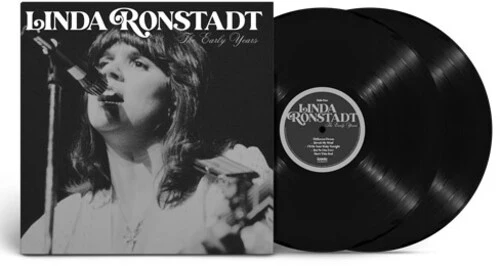
Linda Ronstadt has a new collection, The Early Years, showcasing her early catalog issued on January 30, 2026. It’s available worldwide from the Iconic Artists Group on 2-LPs or a single CD. (A limited run was first made available as part of Record Store Day’s Black Friday 2025). That LP pressing housed live versions of “The Only Mama That'll Walk The Line,” and “Lovesick Blues.”
This 2026 compilation traces Ronstadt’s journey from The Stone Poneys to solo stardom featuring hits like “Different Drum,” “Long, Long Time,” “You’re No Good,” and “When Will I Be Loved.”
Sadly missing, is Linda’s 1971 cover of “(She’s A) Very Lovely Woman” cut for Capitol Records from the Emitt Rhodes penned “You’re A Very Lovely Woman,” he recorded with the Merry-Go-Round in 1967 for A&M Records. Her rendition was released as a single when initially distributed.
The Early Years is sourced from the original analog mono and stereo master tapes and presented in high-resolution audio with period photography.
Ronstadt turns 80 on July 15, 2026.
Linda Ronstadt The Early Years Track Listing
Different Drum
Break My Mind
I’ll Be Your Baby Tonight
Bet No One Ever Hurt This Bad
Silver Threads And Golden Needles
Will You Still Love Me Tomorrow
Long, Long Time
Rescue Me
Rock Me On The Water
I Fall To Pieces
Willin’
The Dark End Of The Street
When Will I Be Loved
You’re No Good
Faithless Love
In 2007 I interviewed musician/photographer Henry Diltz about Ronstadt.
“I did a photo session with Linda Ronstadt at Capitol Records. My dear friend, Cyrus Faryar (The MFQ) called me one morning, ‘Henry, we went to this great party last night. You should have been there. By the way, there was this girl there you would love to meet named Linda. It was at [record producer] Nik Venet’s house. She’s house-sitting while he’s away for the weekend. You ought to go down there.’
“So, I knocked on the door with some trepidation; I was still primarily a musician-photography was just a hobby. And there she was, a fellow musician and a great beauty. I remember we became good friends. I ended up staying there for part of the weekend. Chip Douglas would later produce her. So, I got to know Linda and then went to the recording session. She always went around with bare legs and bare feet in in a tiny dress. But she was a sweet, young girl-very open, very happy, and very delightful. And she really loved music; she identified with all the musicians and sort of wanted to be one of the boys. She just had these killer pipes-when she opened her mouth, you had to back up a few feet because her voice was so strong.”
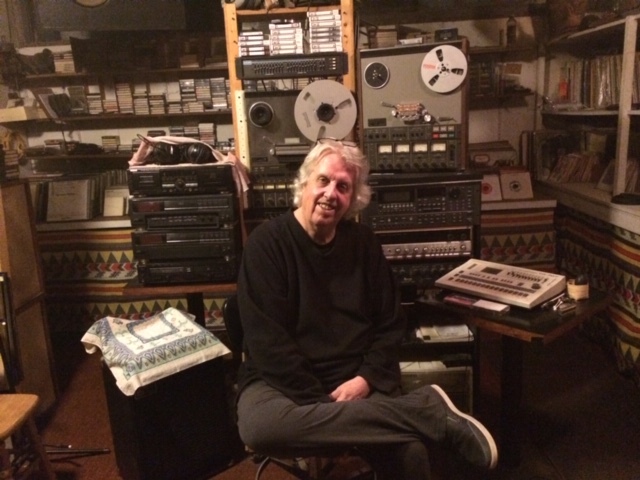
“In late 1967, when Linda Ronsdadt and the Stone Poneys came to the studio with producer Nik Venet, she was barefoot and breathtaking,” recalled keyboardist/arranger Don Randi in a 2013 interview with me.
“Jimmy Bond wrote some of the charts. He’s conducting a string section when one of the violin players says, “I have to apologize, I made a mistake.’ And Linda says, -and you’ve got to remember that this is a pretty straightlaced string player, ‘That’s okay. Everybody fucks up once in a while.’
“They had never heard a young girl come out and say something like that. She was so sweet and kind to everybody. And Linda was excited; she knew that her career was taking off. Vocally, she reminded me of Keely Smith, but she had her own thing going on.”
Muti-instrumentalist [bass, fiddle, guitar] Chris Darrow was co-founder of the Kaleidoscope, session man on Songs Of Leonard Cohen debut LP, and a onetime member of the Nitty Gritty Dirt Band. Additional credits with James Taylor, John Stewart, Hoyt Axton, and as Linda Ronstadt’s band leader 1969-1971.
During 2014 I emailed Darrow, a secret musical sauce on Ronstadt’s 1969-71 bookings, and song sniffer for some of her 1973-1974 recordings.
“In 1969, Jeff Hanna, my partner from the Nitty Gritty Dirt Band, and I decided to form our own band doing original material. We recruited John Ware on Drums and John London on bass to fill out the lineup. We called ourselves the Corvettes. Mike Nesmith, who was a dear friend of London’s and had a production deal with Dot Records, liked our stuff and signed us up to the label. I was thrilled to be associated with one of the great record labels of my childhood. The second single, ‘Beware of Time,’ was the second cut on a released CD devoted to the history of country rock, Country and West Coast: The Birth of Country Rock, on ACE Records. We have the second cut on the CD following the Everly Brothers. Unfortunately, our two singles for Dot Records failed to chart.
“Linda Ronstadt, who had just had a hit with Nesmith’s ‘Different Drum,’ was looking for a band to go on tour with her. Since we had no work, Michael suggested that Linda come to one of our rehearsals and check us out. We were on the road with her in a week’s time and, for a while, were billed as Linda Ronstadt and the Corvettes, and would perform one of our songs every set.
Jeff eventually reformed the Dirt Band, and future Eagle Bernie Leadon took Hanna’s place. I believe the Corvettes were Linda’s finest touring band, and set the sound for her emerging country rock career.
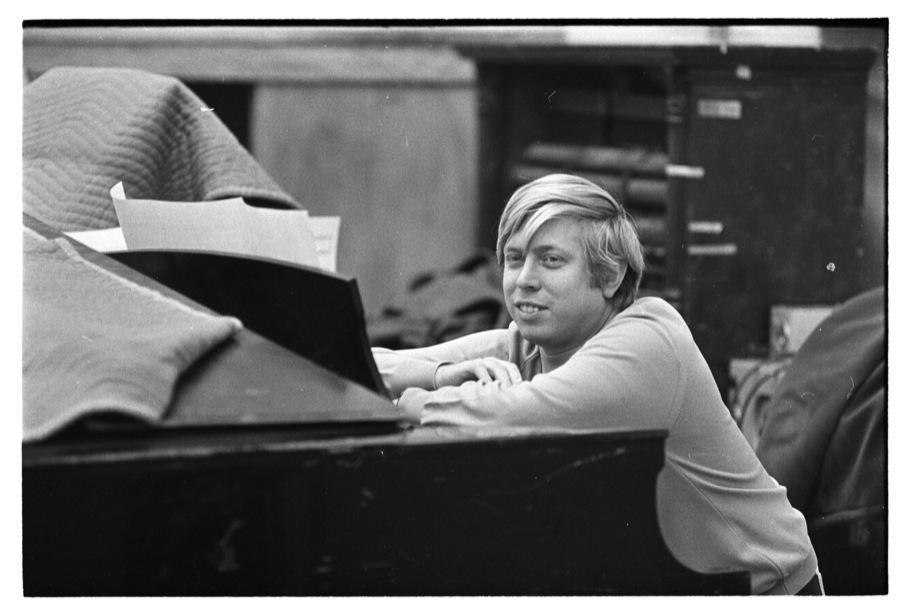
Chris also served as Linda’s de facto road manager.
“I saw Frank Zappa regularly as Linda was managed by Herb Cohen, the same manager as the Mothers, Alice Cooper, Tim Buckley and the GTO’s. When I was touring with Linda in 1969, we saw the Rotary Connection at a concert in a big hall in Chicago. I was blown away by the vocal range of singer Minnie Riperton. She sounded like if Yma Sumac had recorded inside the Dolphins of Hollywood record shop.
“In 1969, while based in New York for a summer and staying at the Chelsea Hotel, we recorded two songs on a super session album called Music from Free Creek. We flew in famed L.A. pedal steel player Red Rhodes to play on our two tracks. One night, while waiting for bandmate Bernie Leadon in the foyer of the Chelsea, I met Peter Asher while he was checking into the hotel.
“He was on his way to Los Angeles to become head of A&R at MGM Records. Asher had left the Beatles’ Apple Records where he headed A&R. I went up, introduced myself, and invited him down to the Bitter End to see us play. He admitted to being a big Ronstadt fan and showed up that evening for the gig. That night was the beginning of a relationship with Peter for both Linda and myself. He loved the Corvettes, and was interested in signing us.
“However, at the end of our stay, Bernie got a call from Gram Parsons asking him to join the Flying Burrito Brothers, which he took. Soon after, Mike Nesmith called Ware and London to form a band called the First National Band with him and Red Rhodes. This is when I first decided to become a solo artist. Asher agreed to sign me to a solo deal at MGM, but he was soon let go after his arrival. In 1972, I released my first solo album on Fantasy Records called Artist Proof, produced by Denny Bruce, Michael O’Connor, and myself.
“Also, during our stay that summer at the Chelsea, Linda asked me if I would be interested in being musical director for her next album. The main aspect of this job was finding material that would be suitable for her to record. We chose to drive up to Woodstock, hang out, and see if we could round up some material from the East Coast songwriting contingent. While staying at the Mill Stream Inn, we proceeded to make a list of our favorite old songs and look for new, original ones. One night, Maria Muldaur came by to visit and sang us a song that just took our breath away. It was called ‘Heart Like a Wheel,’ by Anna McGarrigle of the McGarrigle Sisters.
“Over the course of our stay, I suggested a number songs for Linda that came from my record collection, including ‘You’re No Good’ by Betty Everett and ‘The Tracks of My Tears’ by Smokey Robinson and the Miracles, both of which I had performed with my pre-Kaleidoscope band, the Floggs, circa 1965. Also, one of my all-time favorite songs, ‘The Dark End of the Street’ became another one I was pushing for.
“Alas, there was ultimately no interest in the songs we presented to her producer, and the album ended up taking a different turn. However, I played with Linda for about three years after that, until I began pursuing my own solo career.
“After moving to L.A., Peter Asher didn’t know anyone in the studio scene there, so he asked me for suggestions as to where to record, and musicians he could use with an artist that he had brought with him from Apple, James Taylor. I suggested Sunset Sound with my favorite engineer, Bill Lazrus, and Russ Kunkel on drums, and also future Eagle Randy Meisner on bass. In December of 1969, I would play fiddle on the Asher-produced Sweet Baby James, by the aforementioned James Taylor.
“In addition to working with Ronstadt at the time, I also performed and recorded three albums with former Kingston Trio member and writer of the Monkees’ ‘Daydream Believer,’ John Stewart. John asked me to introduce him to Asher, which resulted in Peter producing Stewart’s 1970 release, Willard. I played fiddle on the title track.
‘It wouldn’t be until 1974 that Linda would release ‘You’re No Good’ and ‘The Dark End of the Street’ on her album, Heart like a Wheel, named after the title song. This would be the first of many Asher/Ronstadt collaborations, and probably the best. It went to number one on the charts and sold over two million copies at the time. It took almost five years to prove we were right about the material.
“Linda Ronstadt has one of the most effortless and alluring voices ever to record in popular American music. It’s too bad that she doesn’t get more credit for her contribution and development of country rock in the late sixties and early seventies in California.
“Nik Venet made a lot of things happen in this town. He signed the Stone Poneys to Capitol Records. I first met him when Linda and the Stone Poneys were on American Bandstand. I was with the Nitty Gritty Dirt Band that afternoon.
“As a staff producer and talent scout, Nik signed the Beach Boys to Capitol Records, and Lou Rawls and Glen Campbell as solo recording artists, to the label. Nik was an early supporter of Johnny Rivers, setting up his debut LP. Nik [produced] ‘Love Her’ for the Walker Brothers, a Barry Mann tune with a great arrangement by Jack Nitzsche.
“Nik was responsible for delivering Fred Neil’s song, ‘Everybody’s Talking,’ to the movie Midnight Cowboy,that Harry Nilsson sung on screen. Nik was involved with Frank Zappa during Lumpy Gravy for MGM. Venet was in the studio with Orson Welles, Jim Croce, the Four Preps, Clara Ward, Rick Nelson, and Dory Previn. Nik produced John Stewart’s California Bloodlines. He was the executive producer of Don McLean’s American Pie at United Artists. I worked with him there. Nik Venet is one of the most overlooked label executives and producers in the history of modern popular music.”
In 2013, Darrow introduced me to drummer John Ware.
I spoke with John for my 2014 book, Turn Up The Radio! Rock, Pop and Roll in Los Angeles 1956-1972.
“Linda [Ronstadt] had, and has, an incredible voice—an instrument like almost no other singer, yes, but she also was, to me, a living band instrument without ever ‘showing off’ her chops. In 1968, Chris Darrow came to my house in Claremont, where he also lived, and suggested I call ‘this girl singer’ he’d heard at the Troubadour. He was in the Nitty Gritty Dirt Band at the time and knew me as a guitar player, but he guessed I was still a drummer, and a drummer from Oklahoma at that. Armed with an invitation to come to her house in Santa Monica, I knocked on her door with an audition ahead. She opened and said, “Hey, I know you!” Indeed, we met a couple of years earlier when I was in a short-lived group with Levon Helm, Jesse Ed Davis, and Junior Markham that rehearsed in the house in which she lived. Somehow, I never auditioned that day.
“For the next few years, on and off, I was a permanent student in the Roundie Grad School of Country Rock. She thought I was the answer to the question, ‘Where do the best country rock drummers come from?’ True or not, her belief in my playing put me on a serious pathway that led to Michael Nesmith, who wrote her first radio hit, and to Emmylou Harris, who I met with Linda, and both of those doors opened to big personal career steps.
“Linda is the dean of the school. Her absolutely spot-on taste made the L.A. music scene of the early seventies what it was. One more aside—I’ve always had the same mixes in my monitor onstage: kick, snare, bass guitar . . . except with Linda. I always had her voice beside me. I so looked forward to every show we played, to hear that voice . . . truly inspirational. The sound of L.A. country rock.”
(Harvey Kubernik is the author of 20 books, including 2009’s Canyon Of Dreams: The Magic And The Music Of Laurel Canyon, 2014’s Turn Up The Radio! Rock, Pop and Roll In Los Angeles 1956-1972, 2015's Every Body Knows: Leonard Cohen, 2016's Heart of Gold Neil Young and 2017's 1967: A Complete Rock Music History of the Summer of Love.
Sterling/Barnes and Noble in 2018 published Harvey and Kenneth Kubernik’s The Story Of The Band: From Big Pink To The Last Waltz. In 2021 they wrote Jimi Hendrix: Voodoo Child for Sterling/Barnes and Noble.
Otherworld Cottage Industries in 2020 published Harvey’s Docs That Rock, Music That Matters. His Screen Gems: (Pop Music Documentaries and Rock ‘n’ Roll TV Scenes) will be published in mid-February 2026 by BearManor Media.
Harvey spoke at the special hearings in 2006 initiated by the Library of Congress held in Hollywood, California, discussing archiving practices and audiotape preservation.
In 2017, he appeared at the Rock & Roll Hall of Fame in Cleveland, Ohio, in its Distinguished Speakers Series and as a panelist discussing the forty-fifth anniversary of The Last Waltz at the Grammy Museum in Los Angeles in 2023).
Credits:
Don Randi Photo by Henry Diltz, courtesy of Gary Strobl at the Diltz studio
Chris Darrow, courtesy of Chris Darrow