Some years in popular music transcend nostalgia to become touchstones for an era, their songs forever intertwined with moments that reshaped culture, challenged conventions and reflected the hopes, heartbreaks and upheaval of a changing world. Few years carry that weight quite like 1969. At the Hollywood Bowl, conductor Ted Sperling and the Hollywood Bowl Orchestra brought that remarkable year vividly back to life in Let the Sunshine In: The Music of '69, an ambitious new program that proved the diverse songs from that time remains as emotionally resonant and culturally relevant today as they were more than half a century ago.
Making his conducting debut at the venue, Sperling—best known for his distinguished Broadway career as a conductor and musical director—approached the evening not as a tribute concert or greatest hits revue, but as a musical journey through one of America's most transformative years. Throughout the performance, his engaging historical commentary became an essential part of the experience, weaving together stories of Woodstock, the Harlem Cultural Festival, the Civil Rights Movement, Vietnam, and the social turbulence that inspired artists to create music that still speaks powerfully across generations.
The evening opened with a brilliant touch. Before the National Anthem itself, the orchestra echoed Jimi Hendrix's unforgettable Woodstock rendition through the iconic guitar motif that remains one of rock's defining moments. It immediately established the evening's historical perspective before a dramatic orchestral introduction led into Joe Cocker's impassioned version of The Beatles’ “With a Little Help From My Friends.” Noah J. Ricketts delivered the soulful opening while Morgan James and Bryonha Marie Parham joined him in a rousing three-part vocal arrangement that instantly immersed the audience in the spirit of 1969.
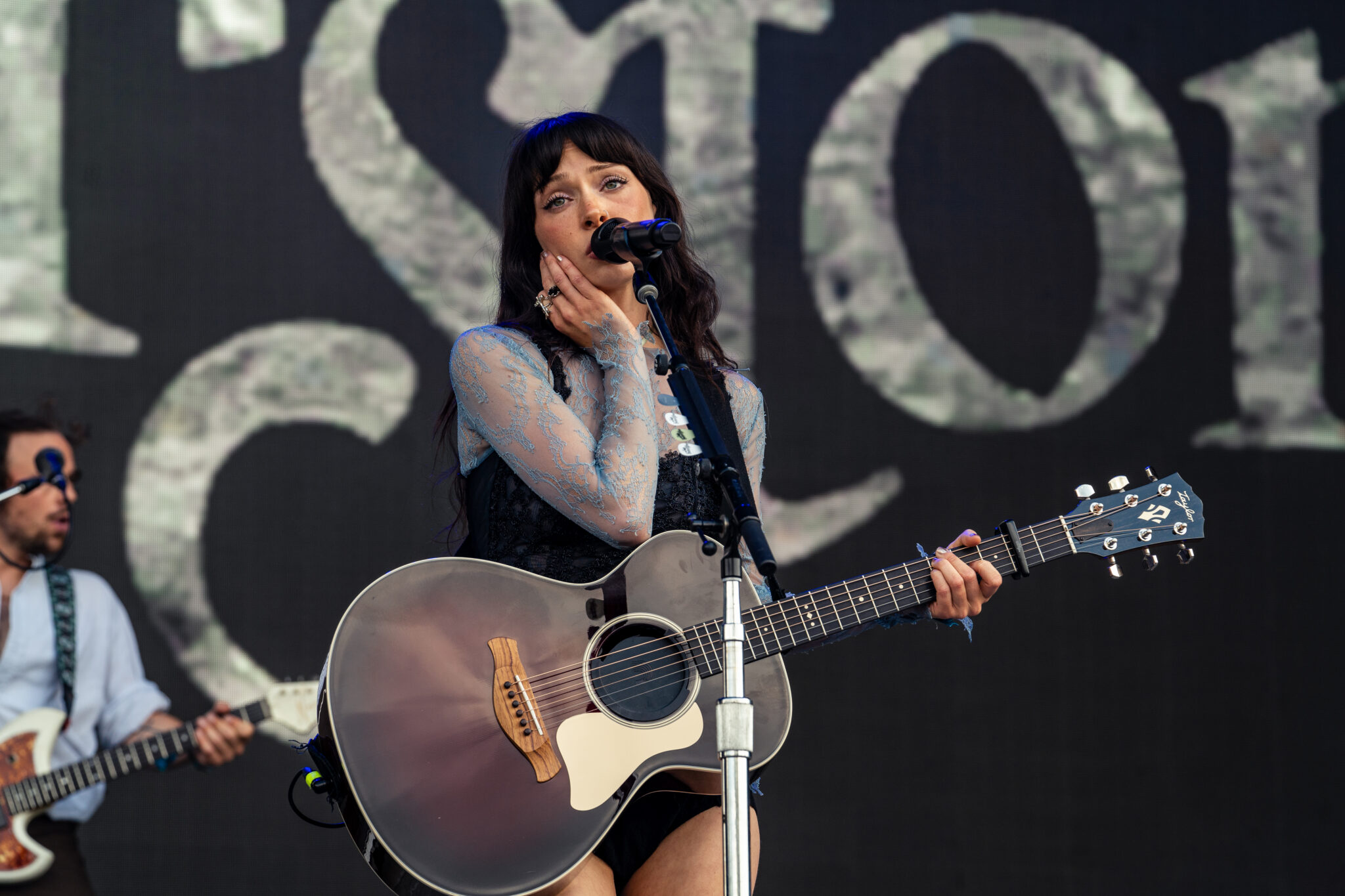
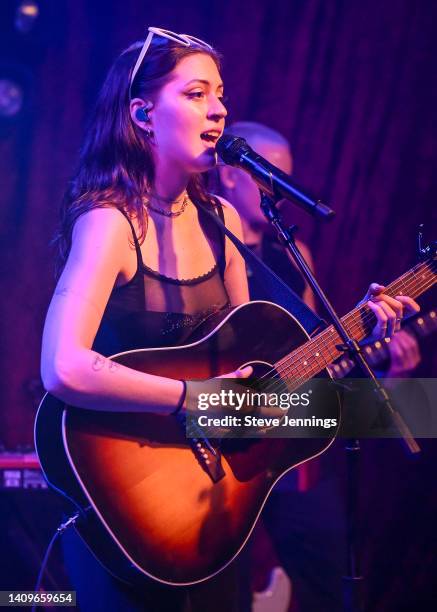
Sperling assembled an exceptional quartet of vocalists uniquely suited to such an ambitious undertaking. While singer-songwriter Lizzy McAlpine brought contemporary acclaim—and Broadway experience of her own, having recently starred in Floyd Collins under Sperling's musical direction—the other three performers are seasoned Broadway veterans whose theatrical instincts elevated every number beyond mere interpretation. Their remarkable versatility became one of the evening's defining strengths and creative thrusts. Rather than imitating iconic recordings, they effortlessly inhabited the vastly different musical languages of rock, gospel, soul, folk, Americana, psychedelia and R&B, each song revealing another facet of a year when popular music itself seemed to reinvent its possibilities.
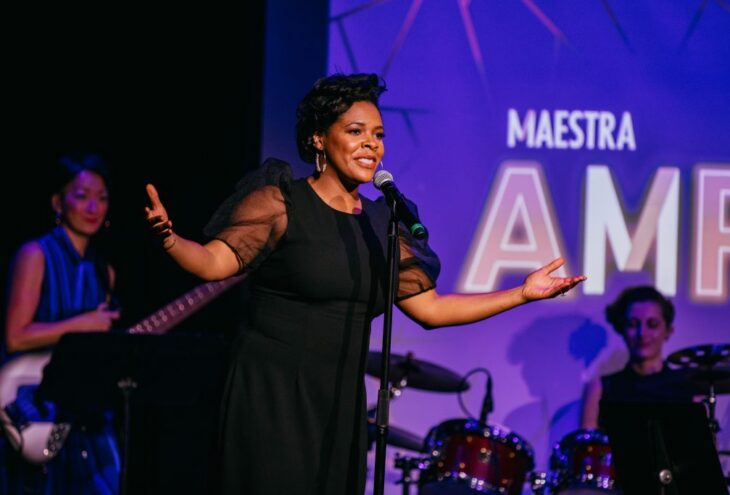
The production’s visual design reinforced that theatrical versatility. Rather than simply dressing everyone in generic hippie attire, the wardrobe subtly evolved with the music, reflecting the many facets of 1969. Morgan James’ flowing floral dresses, feather boa and tinted glasses evoked Janis Joplin and the bohemian spirit of Woodstock, while Bryonha Marie Parham’s vibrant paisley prints, flowing caftans and dramatic silhouettes echoed the era’s soul and gospel influences. Noah J. Ricketts’ colorful shirts, tailored jackets and striped bell-bottom trousers captured the youthful exuberance of late-‘60s rock, while Lizzy McAlpine’s understated black dress offered a contemporary elegance that complemented her introspective singer-songwriter repertoire. Collectively, the costumes became another storytelling device, visually underscoring how the evening moved effortlessly among the many musical identities that defined one extraordinary year.
Morgan James unleashed Janis Joplin's rebellious spirit with a ferocious "Piece of My Heart," delivering a powerhouse performance that captured the song's raw abandon without sacrificing her own individuality. Later, she delivered perhaps the evening's vocal masterpiece with Simon & Garfunkel's "America," beginning with quiet introspection before gradually building into an intense, overwhelming expression of longing, hope and national self-reflection. Framed by Sperling's expansive orchestral arrangement, it became less a folk song than a deeply moving portrait of a nation searching for its ideals.
Parham proved equally commanding. Before introducing “I Heard It Through the Grapevine,” Sperling reminded audiences that no celebration of 1969 would be complete without honoring the Harlem Cultural Festival—often called "Black Woodstock"—the landmark series of concerts celebrating Black music, culture and pride that remained largely forgotten until Questlove's Oscar-winning documentary Summer of Soul restored its rightful place in history. Singing Gladys Knight's festival arrangement, Parham infused the Motown classic with soaring gospel power, dynamic church-fired improvisation and irresistible sass. Her equally stirring performances of Blood, Sweat & Tears' "Spinning Wheel" and Nina Simone's introspective, romantically angelic interpretation of "Here Comes the Sun" demonstrated remarkable stylistic range while honoring the social consciousness embedded within the music.
Ricketts anchored the production with warmth, charisma and soulful conviction. His moving reading of Bob Dylan's "I Shall Be Released" became one of the evening's high points, joined by James and Parham on soaring harmonies while saxophonist Sal Lozano contributed one of several beautifully expressive solos that emerged as instrumental highlights throughout the night. Ricketts later brought dramatic fire to an orchestral “Purple Haze,” proving equally convincing in rock, folk and soul settings before offering a restrained, deeply affecting interpretation of the Grateful Dead's “Ripple.”
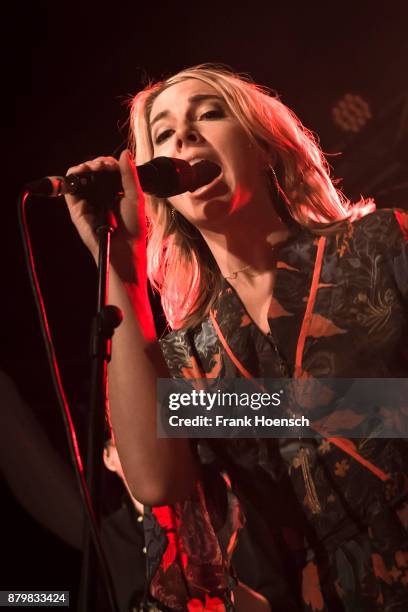
McAlpine, whose introspective songwriting and vocal tenderness and range often draw comparisons to Joni Mitchell, was a perfect choice for Mitchell's "Woodstock." After Sperling recounted how Mitchell, unable to attend the festival because of a television appearance, transformed that disappointment into one of the era's defining anthems, McAlpine responded with crystalline vocals filled with grace and quiet longing before the arrangement blossomed into a full ensemble celebration. She later showcased her own artistry with the live debut of her haunting original "Light in the Painting" before offering a moody interpretation of "House of the Rising Sun."
The Broadway pedigree of the cast paid dividends throughout the evening. Whether singing gospel-infused medleys of "Ooh Child," "Oh Happy Day" and "People Get Ready," the radiant harmonies of Crosby, Stills, Nash & Young's "Suite: Judy Blue Eyes," the gritty soul of "The Weight," or the jubilant celebration of "Aquarius/Let the Sunshine In," the performers adapted seamlessly from genre to genre while remaining completely authentic. They weren't simply changing songs—they were embodying the many musical personalities that defined 1969 itself.
Behind them, the Hollywood Bowl Orchestra under Sperling's direction proved every bit as versatile, moving effortlessly from lush symphonic textures to funky brass charts, folk intimacy and electrifying rock orchestrations. As the cast united for the infectious optimism of "Aquarius/Let the Sunshine In," before closing with the joyous encore of "Everyday People/Dance to the Music," Let the Sunshine In accomplished something more meaningful than simply revisiting beloved songs. It reminded us that the music of 1969 reflected a nation wrestling with division while still believing in hope, compassion and community. More than fifty years later, those ideals—and the extraordinary songs they inspired—continue to shine just as brightly.
Photos courtesy of Getty Images.