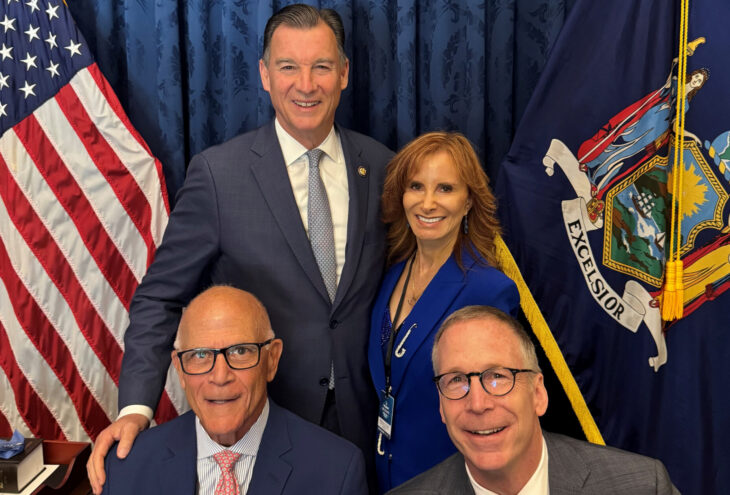
SEATED L-R Joe Castronovo, Jake Connolly. STANDING L-R: NY Representative Tom Souzzi, and Melissa Heche
Korg USA and NAMM (National Association of Music Merchants) brought the music industry’s concerns straight to Washington this month, as tariffs on instruments and gear continue to strike a sour note with manufacturers, retailers, and educators alike.
On May 13, Joe Castronovo of Korg USA joined roughly 100 music industry professionals representing all 50 states for the 20th annual NAMM Advocacy D.C. Fly-In, a coordinated effort to meet directly with lawmakers and push for exemptions on tariffs affecting musical instruments, accessories, and essential components. Representing New York, Castronovo was part of a broader coalition making the case that these added costs ripple far beyond manufacturers.
“Each time we come back to Washington, it reinforces how important it is for our industry to speak with one unified voice,” Castronovo said. “These conversations matter—lawmakers are listening more closely, and there’s a growing understanding of how tariffs impact a highly global, specialized supply chain like ours.”
That supply chain, as industry leaders emphasized throughout the Fly-In, is anything but simple. Musical instruments often rely on internationally sourced materials and precision components, making them particularly vulnerable to shifting trade policies. But as Castronovo and his peers were quick to point out, the real impact lands closer to home.
“But the reality is, tariffs don’t just affect manufacturers—they directly impact small retailers, increase costs for customers, and make it harder for students and first-time players to access music,” he added. “That’s why it’s so important to be here: to connect policy decisions to real-world consequences and advocate for solutions that protect both our industry and access to music.”
The message from NAMM’s delegation was clear: tariff relief isn’t just about protecting business margins—it’s about preserving access. With music programs already navigating tight budgets, rising instrument costs could mean fewer opportunities for students to pick up an instrument in the first place.
For Castronovo, the Fly-In was as much about collaboration as it was about policy. “The NAMM DC Fly-In provided a critical platform to advocate for policies that protect and expand access to music education nationwide,” he said. “Engaging with policymakers alongside industry peers underscored the importance of sustained federal support and reinforced our shared responsibility to ensure music remains an essential part of every student’s education.”
That sense of shared responsibility carried through the entire event, which brought together manufacturers, retailers, and educators under one unified goal. “My experience at the NAMM DC Fly-In was both energizing and meaningful,” Castronovo noted. “Working alongside peers from across the music industry, we came together to champion music education and demonstrate, firsthand, our shared commitment to students and communities nationwide.”
While tariff debates rarely make headlines in the music world, their effects are increasingly hard to ignore. As NAMM continues its advocacy efforts, the hope is that lawmakers will begin to see instruments not just as imported goods—but as essential tools for creativity, education, and cultural growth.