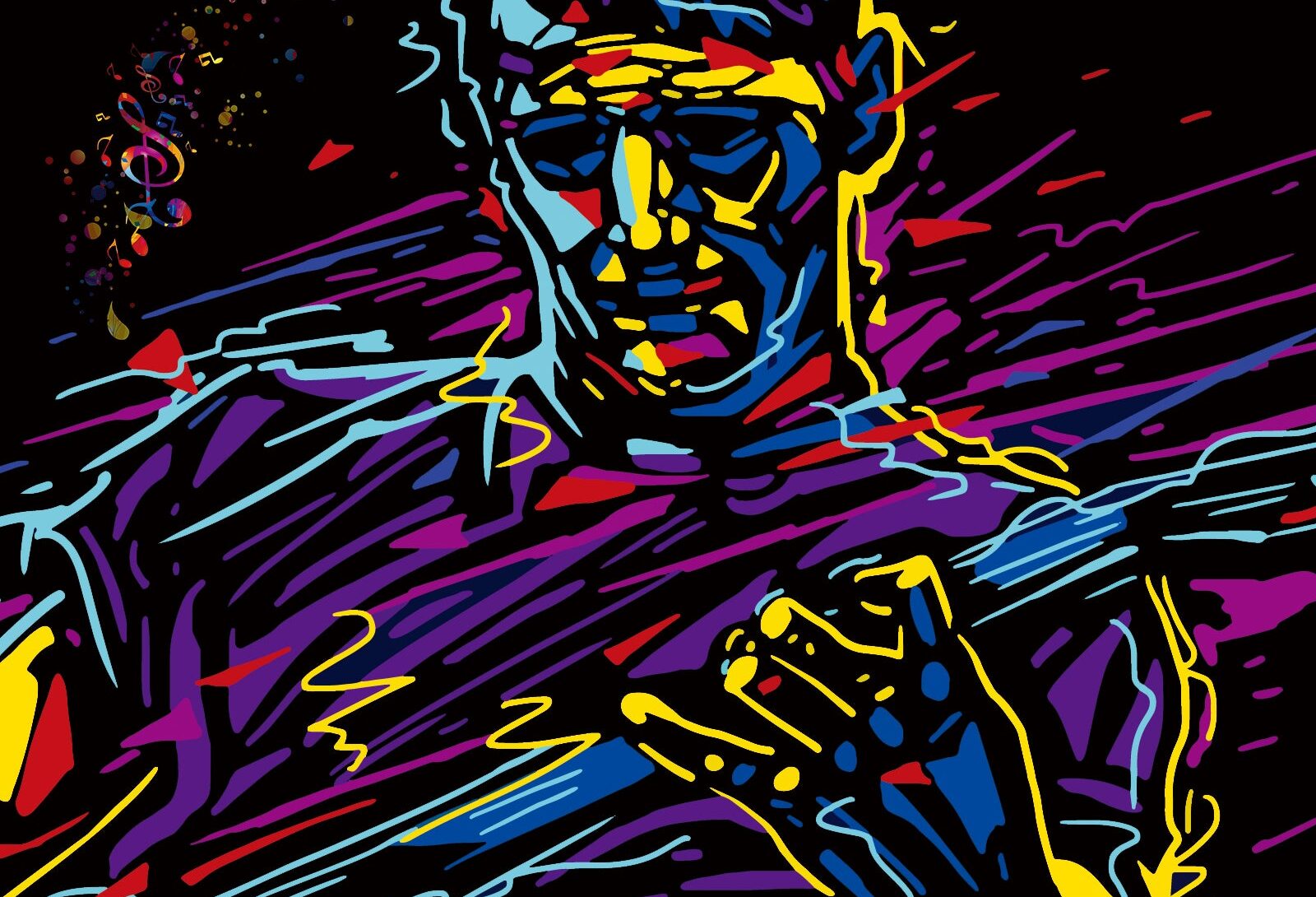
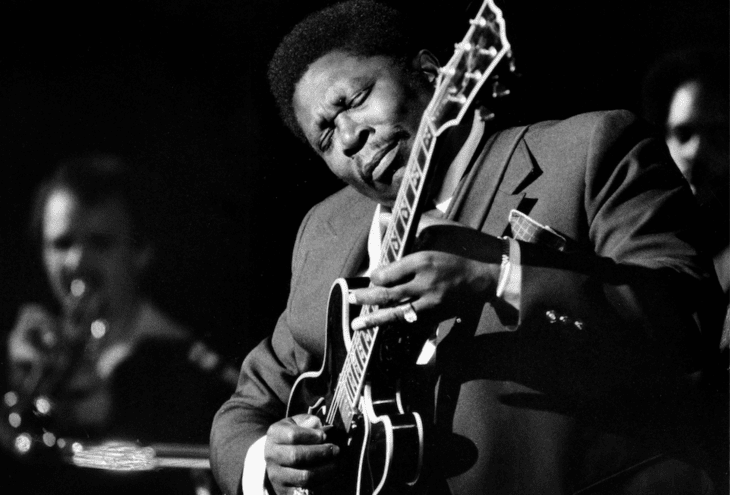
Working a series of odd jobs (including driving a tractor and street performing) after a move from Mississippi (where he was raised by sharecroppers on a cotton plantation), Riley B. King became known as the “Beale Street Blues Boy” (shortened later to “B.B.”) while working on air as a deejay on Memphis’ WDIA (one of the first stations programmed for Black audiences). Leveraging the power of radio in the late 1940s, King became known as a radio personality before his live performances accelerated. Refining his guitar skills with the help of cousin Bukka White, King’s live shows began on the Chitlin’ Circuit, playing 200 to 300 shows a year for 20 years.
1951’s “Three O’Clock Blues” (originally a Lowell Fulson recording in 1946) became King’s first big hit (recorded and released on RPM Records), gaining national recognition and reaching No. 1 on the Billboard R&B Chart (remaining an integral part of his setlist until his passing in 2015). A performance at San Francisco’s Fillmore West in 1968 introduced King’s music to a white rock crowd. Momentum continued with 1969’s “The Thrill Is Gone” gaining more attention, adding broader rock audiences and a mixed, mainstream fanbase. It also brought the first of 15 GRAMMY Awards (which include 1987’s GRAMMY Lifetime Achievement Award and the GRAMMY Hall of Fame Award for “The Thrill Is Gone” in 1998).
“Very few people in music define the genre in which they flourish, and B.B. King is one of them. When B.B. was alive and active, he was the blues—he was the sun which all planets rotated around. Only a few artists are the true north guiding the genre in which they participated, but he was that shining star.”
—Joe Bonamassa
While his Delta blues predecessors (Robert Johnson, Elmore James, and Muddy Waters) were known for their slide guitar playing, B.B. King deliberately chose otherwise. Opting for clarity, texture, and precision, his music was well-received in Memphis clubs and proved very radio-friendly. King was also heavily influenced by brass players T-Bone Walker and Louis Jordan, and became known for his distinctive single-note lines, controlled and expressive vibrato, and the call-and-response mirroring of his own guitar and vocal lines (drawing from gospel, African and big band traditions). B.B. King’s style and phrasing has, and continues to, influence and shape musicians across blues, rock, soul, and R&B, including Eric Clapton, Jimmy Page, Peter Green, Gary Moore, Jimi Hendrix, Gary Clark Jr., Stevie Ray Vaughan, Carlos Santana, John Mayer, U2, Bonnie Raitt, The Rolling Stones, Quinn Sullivan, Joe Bonamassa, and many others.
“B.B. King to me was soul personified. I still remember being a kid and listening to ‘The Thrill Is Gone’ and, even though I didn’t know what he was singing about, because I was a child, somehow his spirit, the honesty in his voice, that cry, just got to me, got under my skin. I started paying attention early on and I kept listening to him my entire life. He’s been a very, very big influence and somebody that I love. To me, he’s soul.”
— Gloria Estefan
Known as the Global Ambassador of the Blues for his relentless international touring and wide, cross-generational appeal, King acted as the bridge between mainstream audiences and authentic blues culture, using his platform to spread the power and history of the genre with top hits including his signature “The Thrill Is Gone,” “Every Day I Have the Blues,” “Sweet Little Angel,” “Paying the Cost to Be the Boss,” and “Why I Sing The Blues.” Performing for presidents, royalty, and at global festivals, he pushed blues into the same cultural category as jazz, classical, and rock.
Between bringing blues from rural Mississippi to Memphis radio, integrating concert halls, touring internationally, and leaving a permanent global genre of music, influential artists and blues festivals across the world cite King as their foundation. Touring into his late ‘80s, there are countless tributes, documentaries, museum exhibits and archival projects that speak to his legacy, including the B. B. King Museum & Delta Interpretive Center in Mississippi (where King was laid to rest in the memorial garden in 2015). Opened on Beale Street in Memphis in 1991, the B.B. King Blues Club chain is still in operation today, with locations in Alabama and Tennessee. Universally recognized as the epitome of 20th-century blues guitar, King’s vibrato style is taught as part of every guitar curriculum. His technique has shaped blues, rock, and soul, with guitarists still referring to the “B.B. box” as a phrasing pattern he created.
Releasing over 40 studio albums, King is a Rock & Roll Hall of Fame, Blues Hall of Fame, and Hollywood Walk of Fame inductee. He held Honorary Music Doctorates from Yale, Berklee, and Brown, was a recipient of the National Medal of Arts (1990), The National Heritage Fellowship (1991), recognized at the Kennedy Center Honors (1995), received a Living Legend Medal from the Library of Congress (2000), and received the Presidential Medal of Freedom from George W. Bush in 2006. In addition to music, King was a dedicated philanthropist, raising awareness for prison reform, serving as Honorary Board member of Little Kids Rock (providing instruments and instruction to underprivileged schools), and was a spokesperson in the fight against diabetes.
“B.B. King came to my attention through my grandmother on my mom’s side. I had just started playing guitar and I was listening very heavily to Jimmy Page, Jeff Beck, Eric Clapton, Hendrix, you know, the big four, right? She brought it to my attention that these guys all got their mojo from B.B. King. When I first heard BB King, it was a revelation. I’d heard blues before, but B.B.’s particular voice on the guitar has always really spoken to me, from the first second that I heard it.”
— Slash
Marking B.B. King’s Centennial birthday celebration (in 2025), modern blues phenom Joe Bonamassa (who first met, opened for, and was nicknamed “Smokin’ Joe” by B.B. King at the age of 12) has released a tribute collection with features from heavy-weight artists from across the board to honor the legend and further his mission to share blues music. With the full blessing of the B.B. King Estate, The B.B. King Music Company, and King’s family, Bonamassa hopes to unite generations shaped by King’s influence.
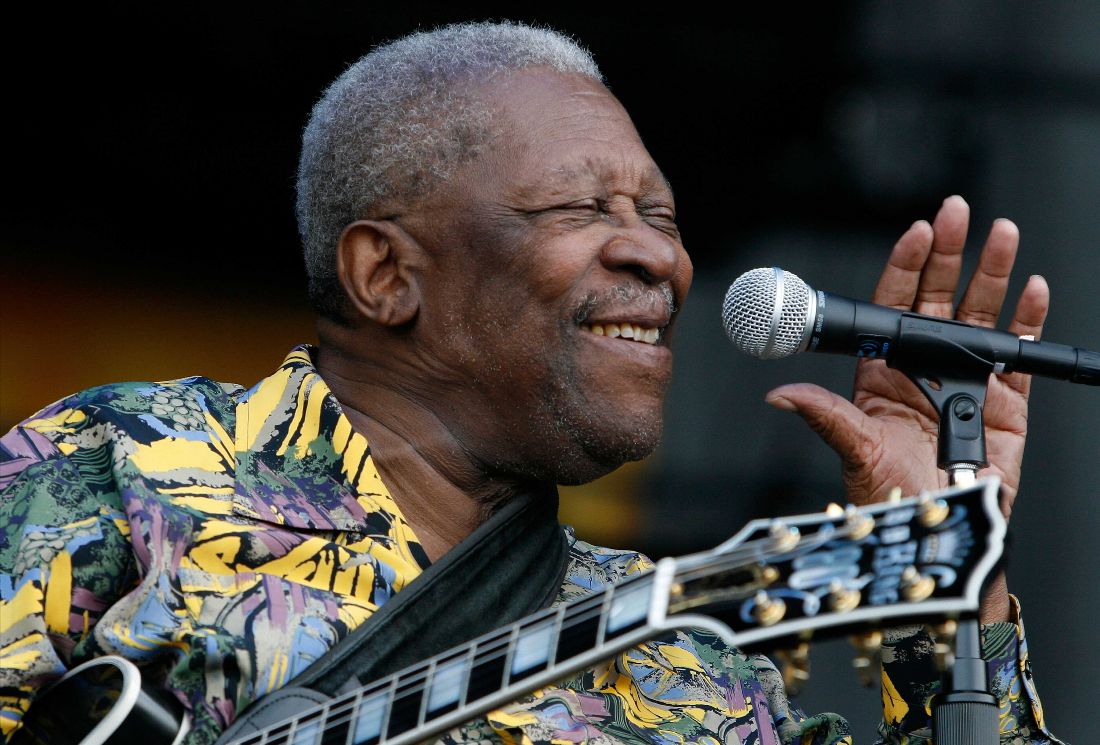
“When B.B. was alive and active, he was the blues—he was the sun which all planets rotated around,” says Bonamassa. “You only get one shot to do this correctly, and I think we nailed it.”
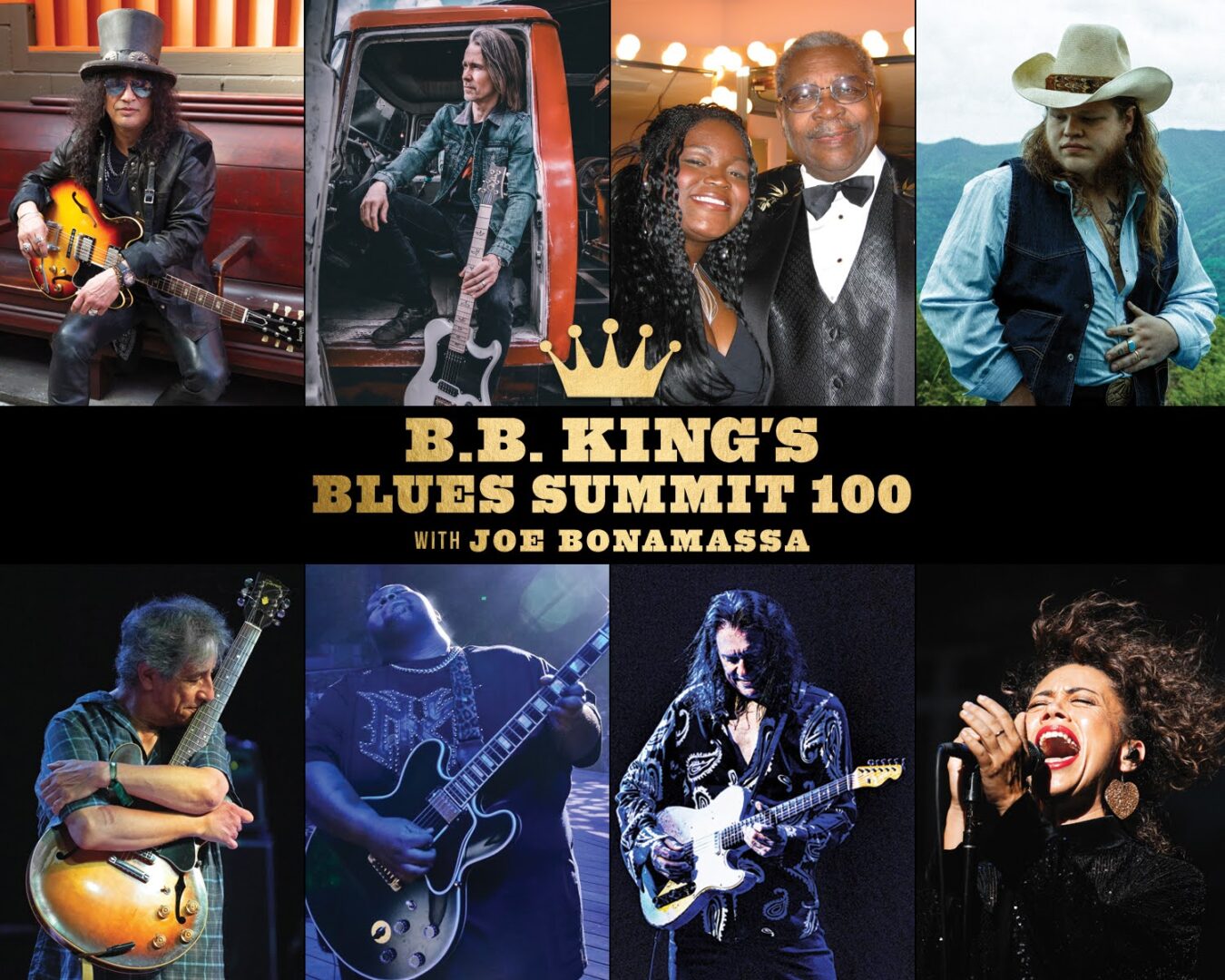
B.B. King’s Blues Summit 100 (the title paying homage to King’s GRAMMY-winning 1993 Blues Summit), a32-track album (produced by Joe Bonamassa and Josh Smith), comes out this month (on digital, double CD, or triple LP 180-gram vinyl), and features artists Buddy Guy (“Sweet Little Angel”), Larkin Poe (“Don’t You Want A Man Like Me”), Trombone Shorty/Eric Gales (“Heartbreaker”), Jimmie Vaughan (“Watch Yourself”), Larry McCray (“When It All Comes Down (I’ll Still Be Around)),” and a collaboration from Chaka Khan and Eric Clapton (“The Thrill Is Gone”).
“B.B.’s only wish was, ‘Do what you can to keep the blues alive,’” says Bonamassa. “Hopefully this album gives a B12 shot to his legacy—and to the legacy of the blues.”
The collection also includes Gary Clark Jr. (“Chains And Things”), Keb’ Mo’ (“I’ll Survive”), Paul Rodgers (“Night Life”), Joanne Shaw Taylor (“Bad Case Of Love”), Pat Monahan of Train/Chris Buck (“Think It Over”), Aloe Blacc (“So Excited”), Michael McDonald/Susan Tedeschi/Derek Trucks (“To Know You Is To Love You”), Kim Wilson (“My Own Fault”), D.K. Harrell (“Every Day I Have The Blues”), Bobby Rush (“Why I Sing The Blues”), Dion (“Never Make A Move Too Soon”), Marc Broussard (“Three O’Clock Blues”), George Benson (“There Must Be A Better World Somewhere”), John Nemeth (“Please Accept My Love”), Kenny Wayne Shepherd/Noah Hunt (“Let The Good Times Roll”), Shemekia Copeland/Myles Kennedy/Slash (“When Love Comes To Town”), Marcus King (“Don’t Answer The Door”), Christone “Kingfish” Ingram (“Paying The Cost To Be The Boss”), Jade MacRae/Robben Ford (“Ain’t Nobody Home”), Chris Cain (“You Upset Me Baby”), Warren Haynes (“How Blue Can You Get”), Dannielle De Andrea (“When My Heart Beats Like A Hammer”), Jimmy Carl/Larry Carlton (“Sweet Sixteen”), Kirk Fletcher (“Better Not Look Down”), and Ivan Neville (“Ghetto Woman”).
As a celebrated blues-rock superstar, Joe Bonamassa is a 15-time Blues Music Award Nominee (four-time winner) with 29 No. 1 albums on the Billboard Blues Chart. Still in his 40s, he has already released over 50 albums, plus collaborations and side projects (including work with Black Country Communion and Rock Candy Funk Party). With production credits for Joanne Shaw Taylor, Marc Broussard, Larry McCray, Jimmy Hall, Robert Jon & The Wreck and others on independent labels Journeyman Records and KTBA Records, Bonamassa has also launched Journeyman LLC, a full-service artist management, record label, concert promotion and marketing company.
The B.B. King tribute release arrives on the heels of a GRAMMY nomination (his fifth) for Bonamassa’s latest studio album, Breakthrough (more at jbonamassa.com).
Contact Jon Bleicher, Prospect PR, jon@prospectpr.com
B.B. King’s tribute release: shop.jbonamassa.com/collections/b-b-kings-blues-summit-100