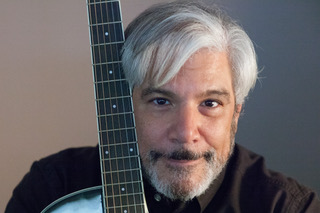
Gary Calamar is a film and television music supervisor who has been nominated five times for Grammy Awards. His credits include The Man In The High Castle, Six Feet Under, True Blood, House, Weeds, Entourage, Dexter, Varsity Blues, and 3 Body Problem.
As a DJ this century, he hosted a lengthy stint on radio station KCRW-FM before moving to 88.5 KCSN-FM in September 2018 with his Sunday 2-4 p.m. shift, The Open Road.
In 2010, Calamar’s first book was published by Sterling, Record Store Days: From Vinyl to Digital and Back Again, co-authored by music journalist Phil Gallo, with a foreword by REM’s Peter Buck. It examines the story of the development of record stores.
Calamar is also a singer, songwriter, and recording artist.
In 2014, Atlantic Records issued Gary’s debut EP, You Are What You Listen To.
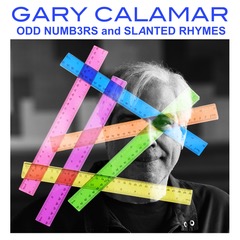
Calamar's new album, ODD NUMB3RS and SLANTED RHYMES, is now available via Big Stir Records. The album is a compilation of his previous singles along with 3 new tracks featuring Devo’s Mark Mothersbaugh on “I Got An Idea,” and Robyn Hitchcock on "Who Are We Gonna Be Today."
Calamar lives with his wife in Los Angeles, California. They have a daughter, Zoe.
If you are in Studio City, CA, on November 24th at 7:00 pm, Gary will have a record release party at Licorice Pizza. 12230 Ventura Blvd.
Q: Besides your radio and music supervision work, over the years, did you ever have plans to record as a solo artist? Were you in teenage bands or ever played in clubs?
A: NO. I was a big music nerd fan growing up, but it never crossed my mind that I would ever have an album of original songs out. Ever since seeing The Fab Four on my grandparents’ black and white TV in the Bronx in February 1964, I wanted to somehow get involved with this Rock and Roll thing one way or another. Fortunately, I had an older brother, Ronny, who guided me in the early days and turned me on to the great artists of the British Invasion and L.A. scene. My favorite afternoon was going through the racks in a record store. I always loved wordplay, and I would make up little songs about teasing my brother or mocking my teachers at school, but it never got to the point where I would call myself a songwriter.
I had a friend who taught me a few chords that I tried to wrap my fingers around, and I played, just for fun, in my bedroom. Eventually I got a little better and made some progress. I was playing sloppy versions of “Wild Thing” and “My Generation” and eventually started to write some songs. I recorded a rough cassette, “Four Dead Presidents”, and slipped it to Gary Stewart at Rhino Records, and he gave me $500.00 to go and properly record my handful of songs. I recorded the songs with Mike Randle and John Would and “released” a cassette, ADVANCE in 1991. I played a few local shows, and I continued to write.
When I was music supervising the HBO show Six Feet Under, I was working with Atlantic Records on the soundtrack, and I played the VP, Kevin Weaver, some of my songs. He liked them, and he offered to have them recorded, and we released the EP, You Are What You Listen To, which got some good reviews and airplay in 2014.
Q: You emerged from the record retail world and had managerial stints at Moby Disc, Rhino, and Licorice Pizza. Looking back, how might the retail experience have influenced your journey in the record and music world? You did write a book last decade about record stores and shops that coincided with Record Store Day.
A: I wanted to get close to the music anyway I could, and working at a record store seemed achievable. My first job was part-time at the record department at Gimbels in Yonkers, NY. I was so excited and so into it that they made me a manager after about a month. They eventually closed down that department, and I joined some friends on a road trip to Los Angeles. The weekend I got here, The Talking Heads were doing a free show at UCLA, Nick Lowe was playing at The Roxy Theatre, everybody was raving about a band called The Knack, and I was tuning in to Rodney Bingenheimer on the radio at KROQ. This Yonkers boy was thrilled to be in the land of The Beach Boys and The Byrds. It took a while, but I eventually landed a job as a manager trainee at Licorice Pizza in Pasadena, and I loved it. I eventually managed the Norwalk and West L.A. stores. We did in-store appearances with Madness and ASIA. I was offered an in-store with X early in their career, but I was afraid the punks would tear the store down, and regretfully I passed.
It was later at Moby Disc where I met my producer, John Would, who owned a cassette duplication business upstairs, and we worked on music together. Listening to full albums all day long was a perfect education for the radio and music supervision jobs which came later.
When working at the Rhino store in Westwood, I was introduced to KCRW who had a close relationship to the store. Several of the people I connected with at record stores are still in my life today.
Q: Let’s talk about your Sunday afternoon radio shift, The Open Road, on KCSN- FM (88.5), playing the signature sounds of "Adventurous Pop Music both timely and timeless." How do you program your shift, and what is the intention behind the programming and sequencing? You really don’t do interviews.
A: My wife, Ali, was friends with one of the DJ’s at KCRW, and I was very interested in getting my foot in there. They had a spot for me in the music library a few hours a week, but she made it very clear that if my goal is to get a show on the air, I should forget it. It’s not gonna happen. I got friendly with the then music director Chris Douridas, and he could see I was a serious music guy. One day, as I was entering CD titles in the computer, he mentioned that they were going to be looking for a Saturday overnight person. What? I jumped out of my chair and literally got on my knees and begged him to give me a shot. He did, and I am forever grateful to Chris.
Being a DJ on the radio is my favorite job. Fortunately, on KCRW and now at KCSN, I get to play what I want to play and don’t have to follow any pre- arranged playlists. I came up with that slogan “Adventurous Pop Music Both Timely and Timeless,” and it’s a good description for what I try to do every week. There is such a wealth of great music on my personal playlist since I saw The Beatles on The Ed Sullivan Show in The Bronx, and more great artists coming out all the time. I like to have some fun with the music, and let people know about bands coming to town and reflect on current events with fun and creative sets.
Q: You were previously heard on KCRW-FM. You did interviews with Brian Wilson, Jeff Tweedy, Wayne Coyne, and film composers Elmer Bernstein, Thomas Newman, Lalo Schiffrin, and Danny Elfman. Reflect on your tenure at KCRW-FM?
A: I owe a lot to my time at KCRW. I feel I was there during a great time for the station, and it really put me on the map. The station was the cultural center of Los Angeles, and I was honored to be a part of the team. I learned a lot from DJ’s Chris Douridas, Liza Richardson, and later Nic Harcourt. I was also impressed by their music supervision projects and inspired to try and follow their lead. I had some great interview guests at KCRW. At KCSN, I don’t do that as much but have had John Doe from X and Robyn Hitchcock sit in with me.
Q: You have a new album just released by Big Stir Records. It follows your 2014 EP on Atlantic Records. How did this just-issued album come together for Big Stir? I know the endeavor was partially birthed emerging out of your produced Mimosa Music Series at the Federal Bar.
A: Releasing an album was always something that was in the back of my mind, but I didn’t actively pursue it. I didn’t send tapes to record labels or anything like that. When I met Rex and Christina from Big Stir Records at The Federal Bar, they told me about their label, and we found that we had a common love for left-field pop music. They were somewhat familiar with my work as they were fans of the band Eggplant, who had done an early cover of my song, “I Got An Idea”. I casually mentioned that they should put out an album of mine and left it there. I didn’t really think anything would come of it, but they reached out to me a few months later to discuss a release.
Q: How did the series begin? I know it was first a gathering at your home, and artists like Donovan played in your backyard.
A: When I started The Mimosa Music Series my work as a music supervisor was peaking. I was working on Six Feet Under, Dexter, Weeds, House, True Blood, and others. So, I worked with the record labels to do a showcase series for their artists and invite music supervisors to my house in Laurel Canyon. It was a daytime series so it didn’t conflict with their evening shows. It caught on, and it was fun. We had great artists like Donovan, John Doe, Steve Earle, Roseanne Cash, Robyn Hitchcock, Dave Alvin, Iron and Wine, John Hiatt and many more. The crowds were getting bigger, too big for the house.
My beautiful wife strongly suggested that we move these shows out of the house. Fortunately, The Federal Bar in North Hollywood was very happy to continue the series there. It was great. We had more amazing showcases with free admission, free bagels, and free mimosas. When the pandemic hit, we pulled the plug, but it was a very special time.
Q: Mark Mothersbaugh and Robyn Hitchcock collaborated with you on the album. I imagine you knew them from your radio shifts. How was the creative process with them on the songs they were involved with? Did you have demos that were then brought to fruition?
A: YES. “I Got An Idea” was one of the first songs I ever wrote, and now having Mark Mothersbaugh on the track it feels complete. It came about organically. We live in the same neighborhood in Laurel Canyon in Los Angeles, and our daughters went to school together, and we shared carpools. Although we are friends, I was nervous about asking him, but thankfully he dug the track, and I am grateful that he wanted to work with me on it.
Robyn is an amazing artist and a beautiful guy, and our paths have crossed many times over the years. One thing I always remember is when I did my very first radio show, I was subbing for someone on the overnight shift. One of the songs I played was Bob Dylan’s “Desolation Row”, all eleven minutes. As it turns out, Robyn was scheduled to be a guest on the popular morning show at the station the next day, and he was driving into L.A. from Northern California. He tuned in to KCRW, and he heard me play the Dylan song.
When he was a guest on the morning show, he said on the air that he loved hearing Gary Calamari (sp) play “Desolation Row” last night as he was driving in. And I was ecstatic that Robyn heard me play it. So, we first bonded through the airwaves, and since then I would see him at his shows. We kept in touch and became pen pals. I had him as a guest on my radio shows several times over the years, and he’s played a showcase at my house as well.
I was working on “Who Are Gonna Be Today,” and I was happy how it was progressing. I thought, if I can get Robyn involved, it would take it over the top. He’s a busy guy, but thankfully he found time to work on it with me.
Q: Was there a concept behind the actual album title?
A: My daughter Zoe introduced me to the term “slanted rhymes,” which I was not familiar with but thought it was a cool term, and I thought my songs or “numbers” were a bit odd, so it just came to me.
Q: Discuss with me the other tunes/recordings on the album.
A: I had the idea for “She’s So Mid-Century” and liked the idea of comparing the cool lady in the song with mid-century architecture and pop culture. I had a good start to the song but was stuck, so I reached out to a new friend at the time, trash pop rocker Palmyra Delran and rockabilly queen Kim Lenz to see if they had any lyrical ideas. I thought they had a great sensibility for the song and they came up with some great lyrics.
“The Prince Of Pico Blvd.” This one came to me when I was a DJ at KCRW. I always thought it was cool that some of the great DJs all had a cool radio name like Cousin Brucie, Wolfman Jack, The Real Don Steele. So, I wanted a cool radio nickname too, and I came up with The Prince of Pico Blvd., as that was the street that KCRW was located in Santa Monica. I never really used it on the radio show, but I got a good song out of it.
Q: You produced five soundtrack albums for Alan Ball’s HBO Series' Six Feet Under and True Blood. How was working with Alan Ball and HBO?
A: He’s the best. Not only is he super smart and a very creative guy. He is very respectful to everyone on his crew. He loves to use a lot of music in his projects. So he keeps a music supervisor busy and is open to ideas and collaboration. It was funny. I started working with him on True Blood after working with him on Six Feet Under.
On Six Feet Under, we used some sophisticated and serious music. When I first started pitching music to him for True Blood, I started thinking in that direction, and he said, “Hey, this is a show about sexy vampires, and let’s have some fun with the music”.
Q: As a music supervisor, it seems this century, how has the role of a music supervisor for movies and television developed? Can you walk us through a typical scenario of getting the job and the various functions working with studios, directors, producers, and suggesting and coordinating licensing for film and TV?
A: Well, where to begin. I often think that it’s harder to get the job than to actually do the job. There’s a lot of talented music supervisors in town, and we are all competing for the good jobs in film and TV. In a nutshell, I start working when I receive the initial script and do some internal brainstorming of what style or genre might work overall as well as for each of the characters. Next, we have a spotting where we watch the rough cut with the showrunner or producer as well as the composer, writer, and editor. We go through the show and stop at all potential music spots and discuss what may be right for the scene.
After that, I go back to my music cave and try out different songs against the scene and see what is working. I report back to the showrunner with a handful of song ideas, and a favorite is picked. Then I reach out to the record label and the publisher and request the use and negotiate a fee.
Q: Is there a vast difference in working on a feature movie and a television series?
A: Yes. It’s case by case, but there is long lead time on a movie. It may be a year or more from when you start on a project and final decisions are made, and the movie gets mixed. On a TV series, once you get started, you are generally on a schedule, and things move more quickly. But these days of miniseries and shows that take a long time between seasons, anything can happen.
Q: You now have Go Music. When did this company formally begin?
A: I named my company GO Music after we wrapped Six Feet Under, which I co-supervised with fellow music supervisor Thomas Golubic, and our company was Super Music Vision. It was a good name but too long for me. When Thomas and I went in different directions, I decided I wanted a name a bit snappier and took the name from a free music paper that I used to pick up as a kid, GO Magazine.
.