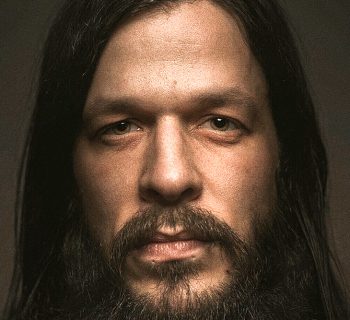

Founder & CEO
Vertigo Live
Years with Company: 3
Address: 24-28 Bloomsbury Way, London WC1A 2SN
Web: vertigo.live
Email: info@vertigo.live
Clients: OneRepublic, Christina Aguilera, Foreigner, Spinal Tap, KALEO, Billy Idol, Duran Duran
BACKGROUND
Vertigo Live is making concert films for a new generation. The spunky startup takes renowned artists and places them in exotic locales, then films them performing in front of no more than 250 fans. The results are distributed every which way, from online streaming to IMAX and beyond.
Becoming a Label Professional
I toured for a bit in various bands. After a while, I worked out I was never going to make any real money. A lot of people I was in bands with had part-time jobs at record companies. Someone said, “I can get you a temp job at a label.” I said, “Yeah, I’ll do that,” because I needed the money. I was putting rent on my credit card and living out the back of a van. It wasn’t sustainable. And I really enjoyed [working at a label].
Going His Way
I got a job at Virgin Records, pre-EMI merger. They had Smashing Pumpkins, Janet Jackson, Spice Girls, and The Chemical Brothers. They were doing really well and punching above their weight for their size at that time. There was a Lenny Kravitz record coming out. He came ‘round and shook every employee’s hand. I thought that was very smart. I can’t remember which studio it was at, Abbey Road or Olympic Studios in Barnes. Record companies used to dress up for showcases and have 100 international stringers and journos there with a pop-up bar. It was my job to put all the goodie bags [together], get them drinks, and make sure they had a good time. I remember watching Kravitz play in this famous studio. I said to my boss, “What a way to see your favorite artist. You should sell tickets.”
When Your Studio Becomes a Venue
I worked for Virgin and then EMI in the merger and then went on to Universal. My last job at a major record label was working all their visual [media]. I made hundreds of films, documentaries, and live concerts. Stupidly, I bought a big recording studio [Metropolis Studios]. It was hemorrhaging money. I thought, “We’ll do gigs in the studio for 100 people and film them.” I had an ‘80s series with Belinda Carlisle. We did The Zombies and Public Enemy. We did George Clinton. The last show I did was Noel Gallagher. We were selling tickets for about £1,500; we could’ve sold them for £10,000. When people came out, they were saying it was the most incredible experience of their lives.
Giving Fans Credit
Every audience member gets their name in the credit roll of the film. We filmed Duran Duran at The Aster in L.A. It was the first music film to premiere at the Dolby Theater in Hollywood. The film played, and the names [of the live audience members] were on the screen. That film will exist forever. If you’re a Duran Duran fan, having your name in there is the ultimate souvenir.
Everywhere You Want To Be
We have a global brand partner in Visa. There are two tiers of tickets: Visa tickets and non-Visa tickets. With non-Visa tickets, we work with artist managers to see how they want to make those tickets available. It could be a sweepstakes or a Willy Wonka-style thing. It could be first come, first serve. And Visa reward their customers by giving them access to these tickets.
Show Time
There are three or four components to every show. The main live show is a minimum of 60 minutes. For the super-VIPs, there’s another exclusive 30-minute performance for just 50 guests. Usually, it’s in the vicinity of the main show. And then there’s a Q&A with the director. Often, there’s a Q&A with the artist. Sometimes, there’s a meet-and-greet, depending on logistics. There’s after-show parties, exclusive merchandise, and things that aren’t going to be commercially available down the line. We collect memorabilia from the shows and work with charity partners. We’re working with Nurse Heroes, so nurses get the opportunity to see these shows. We try to make it all-inclusive.
Do Something Different
On its face, it might just look like a concert performance, but we’re making documentary concert feature films. To explain that to the artists and managers takes time. When I was at Universal, most managers’ strategy with audio/visual was to do a TV show and DVD. And those things would promote the album and tour. We’re trying to do something different. Lots of elements of what we’re doing have been done a million times over, but we’re trying to take the best bits of that and create a legacy product that stands the test of time.
What’s Your Monterey?
I’m a huge Jimi Hendrix fan. Everything I’ve ever read about Jimi points to Monterey being one of the seminal shows featuring electric guitar. If I had a time machine, I’d go watch that show. I tell this to artists and say, “What’s your Monterey? Do something people will write about in the history books. Play with an orchestra. Play with your heroes. What do you want to do?”
We contracted with OneRepublic. [Lead singer] Ryan Tedder is a huge James Bond fan. He said, “I’d love to play James Bond Island in Thailand.” I said, “Great. Let’s do that.” Which isn’t necessarily the most commercially savvy thing to say, because I haven’t worked out how much it’s going to cost. But we’re going to make it work. If it’s something that’s important to [the artists,] it becomes way more authentic.
Real Connections
I make it a point to go around to the fans after each show and say, “Tell me what you think.” We’ve gotten some lovely feedback. It’s so up close and personal that it really does feel different. They feel this electric connection. It’s hard to get that when you’re in Wembley Stadium. There was this push 15 years ago—the bigger, the better. It was a million fans in Rio and a million fans at the Champs-Élysées in Paris. You get so disconnected from the artists that it felt diluted.
At Universal, I was fortunate enough to see one of my favorite artists, Stevie Wonder, in Abbey Road with 200 people. I was maybe six feet from him for two hours. He broke down playing a song he wrote for his ex-wife, who died of cancer. Everyone started sobbing. To be that close to a hero, to really feel the music and have the hair stand up on the back of your neck, those are the moments we’re trying to create.
Breaking Acts
I grew up with MTV Unplugged. It’s one of the benchmarks of what an audio-visual music platform can achieve. That’s what we aspire to be—the contemporary version of that. But MTV wasn’t with established artists in the beginning. It was breaking artists through taking risks. We’re a small company, so we need to monetize these things. However, as the series matures and evolves, we want to help break artists.
The Way of the Walk
We’re doing Cypress Hill in April. We’ve filmed the documentary already and coming up is the live show. One of their mothers was a Cuban revolutionary in the ‘60s and imprisoned by Fidel Castro. She escaped prison and had a makeshift raft on the beach with her two seven-year-old sons waiting to go to Miami. The current made them travel up near New York. They nearly died and got picked up by a fishing boat with a Greek captain who was a resident. She married him to get into the States, eventually migrated to L.A., and Cypress Hill was born. We took them back to Cuba for the first time since then. It was very emotional for them. That documentary is going to set the world on fire.