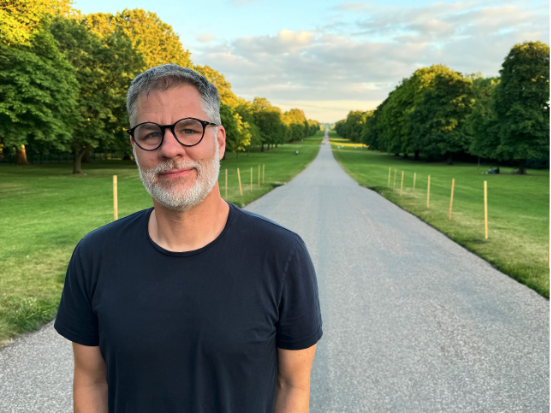
DOC NYC will host the world premiere of the Christopher Booker-directed documentary on photographer Ethan Russell, Let It Be, Let It Bleed, on Friday, November 13, 2026. 6:30 PM at the Village East by Angelika. A second screening is set for Saturday, November 14, 8:45 PM at the Village East by Angelika. An online screening will then be held November 14-29th.
Karen McMullen, DOC NYC Senior Programmer, described the Ethan Russell documentary.
“Photographer Ethan Russell rose to fame by capturing legendary musicians at their most candid and unguarded, from the Rolling Stones to the Beatles. Russell’s relationships with subjects were built on access and trust, resulting in stunning and intimate images. Through stories behind his most iconic photographs—including Altamont, the Beatles’ rise and decline, and John Lennon and Yoko Ono—the film offers a vivid visual record of a seminal chapter in rock history.”
The first screening will be followed by a Q&A with director Christopher Booker, producer Genna Terranova, and protagonists Ethan Russell and Michael Lindsay-Hogg. The second screening will be followed by a Q&A with director Christopher Booker and producers Aron Baxter and Brice Matson. The second screening will be followed by a Q&A with director Christopher Booker.
The Morrison Hotel will present Let It Be, Let It Bleed, a photographic retrospective celebrating the extraordinary lifework of legendary music photographer Ethan Russell.
Opening in New York on Thursday, November 12, 2026, and on public view through December 6. 116 Prince St.
https://morrisonhotelgallery.com
Ethan Russell is a multiple Grammy-nominated photographer and director. In 1968, Ethan was a young American with a Nikon camera living in London and aspiring to become a writer. A few years later, he was one of the foremost rock and roll photographers in the world. And, to date, is the only known rock photographer to have shot album covers for The Beatles, The Rolling Stones and The Who.
The Beatles’ album Let It Be was released on 8 May 1970, and then became a ’70 movie of the same name, directed by Michael Lindsay-Hogg.
In November, Michael Lindsay-Hogg, who is interviewed in Booker’s documentary, emailed me about helming the Beatles’ Let It Be.
“The Father of Let It Be was the 1968 ‘Hey Jude’ video we did together. In the breaks, when the video reels were being reloaded, The Beatles found themselves playing for our crowd of 200 or so who’d appeared in the video. And enjoying it, having fun, playing for an audience again, for the first time since they’d stopped touring in 1966.
“So, what turned into Let It Be was first going to be a Concert, a big fabulous one somewhere in the World. Then that fell apart, and we were making a Documentary. I knew we needed a conclusion for the movie, for this part of their story. So, I suggested we go up a couple of flights of stairs and do a Concert on the Roof. And we did.”
In 2007, I interviewed Brian Wilson about Let It Be.
“Paul McCartney’s song ‘Let It Be’ saved many bad nights of mine when I was going through a really rough trip, and ‘Let It Be’ would come right to me. Out of nowhere. It healed me. I would call Paul McCartney a very wonderful singer. I love Paul’s ‘The Long and Winding Road.’ Because of the chord structure and the message. My favorite John Lennon song is ‘Across The Universe.’”
The Rolling Stones’ Let It Bleed was issued in November 1969. I witnessed two 1969 concerts by the Rolling Stones in Southern California.
“In a way, maybe when you write songs without even knowing it, you’re kinda saying, ‘Can I do this live?’ And so, in a way you add that in,” Keith Richards stressed to me in a 1997 interview around a Rolling Stones’ concert in San Diego, California. “You don’t know if it’s gonna work, but I guess what you keep in the back of your mind is, ‘We’re making a record here; what happens if they all like it and we gotta play it live?’ So, in a way, maybe in the back of the mind that sets up the song to be playable on stage,” underlined Keith.
From the Morrison Hotel Announcement: Ethan Russell Biography
Born in Mt. Kisco, NY, Ethan and his family moved to California in 1952. While attending UC Davis, where he majored in English and Art, he became interested in photography.
After graduation, Ethan moved to London, where he worked part-time in a home for autistic children. His fate was sealed one day in 1968, when he received a casual invitation from a journalist friend to accompany him as a photographer on an interview. His interview subject turned out to be Mick Jagger, and his next shoot was with John Lennon. Hired as the photographer for The Rolling Stones American Tour 1969, The San Francisco Chronicle described him as “one of only 16 people on the tour, including the band. With unprecedented access to the Rolling Stones, he captured photos that have become classics.”
Ethan’s images of Mick Jagger and the Rolling Stones' production Rock and Roll Circus attracted the interest of The Beatles, where his shots at Twickenham Film Studios ended up on the cover and gatefold of their album Let It Be. Shooting The Who’s 1971 cover Who’s Next led to shots for the book that accompanied Quadrophenia, and that work led to a Grammy nomination.
For years, Ethan’s images documented a virtual who’s who in rock and roll history: Jim Morrison, Janis Joplin, The Moody Blues, Cream, Traffic, Eric Clapton, The Eagles, Linda Ronstadt, Rickie Lee Jones, Rosanne Cash, Jerry Lee Lewis, Carlos Santana and Phil Everly.
As Bill Wyman of the Rolling Stones said, “Ethan has taken some of the greatest pictures in rock and roll… maybe the greatest ever.” In 1978 he shifted his focus to film and video, becoming a pioneer in the music video industry, producing and directing several films for Hank Williams, Jr., Joni Mitchell, Paul Simon, and k.d. lang. Ethan produced and directed the final footage of John Lennon and Yoko Ono walking in Central Park a week before John’s death.
He lives in Marin, California with his wife, stepson, and son.
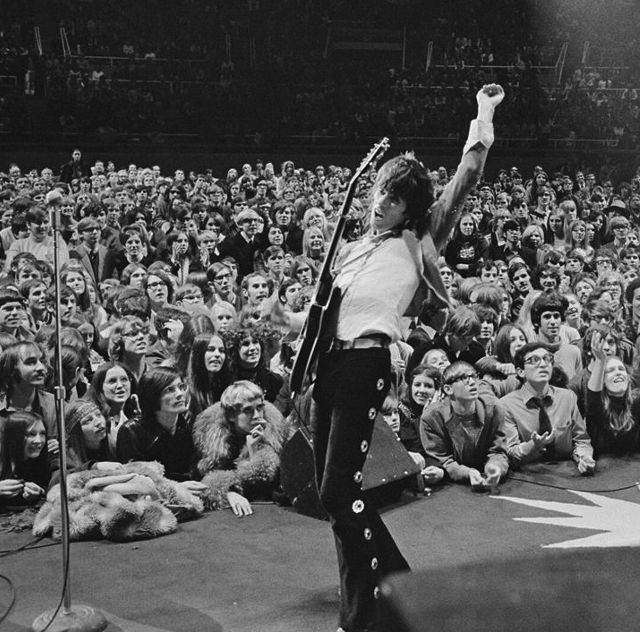
Let It Be, Let It Bleed: The Unlikely Rock n’ Roll Journey of Ethan Russell.
As the 1960’s came to a close, a young American was invited into the inner circle of the London musical world. The untrained photographer captured some of the most culturally consequential moments of the 20th century and watched as the walls closed in around the forces that made it all possible. This is the true and, at times, unbelievable story of Ethan Russell: The only photographer to shoot album covers for the Rolling Stones, The Beatles, and The Who.
While the film is undoubtedly anchored by iconic moments in rock n’ roll history and the breathtaking photography that defined an era, this is not a traditional music documentary. It is a film about survival. It is an exploration of what happens to young idealism when it meets the friction of reality, and how an artist navigates the space between the "dream" of the 1960s and the decades of life that follow. It is a raw look at the discipline required to survive the very culture of excess he was tasked with immortalizing.
Ethan Russell’s images helped create the mythology of the 20th century, but the man himself provides a profound case study in the endurance of the human spirit. We see the idealism of a generation get challenged, bruised, and reshaped, and we watch as an artist survives the weight of his own history.
Christopher Booker is a special correspondent and producer for PBS NewsHour & PBS Weekend. From music, culture, and the downstream politics of America, he speaks with people about what they do, why they do it, and how they found it.
In 2023, Booker founded Tree Branch Films - an independent film & television production company producing short and long-form content. His films, Relentless Cycle: NYC long dance with opioids and Fighting for Space: The Clash Over Low Earth Satellites were both recognized with Telly Awards in 2024, and his 30-minute podcast A Year of Harm Reduction was recognized with a regional Edward R. Murrow award.
He also teaches at Columbia University’s School of International and Public Affairs.
Christopher Booker sent over his Director Statement on the career of Ethan Russell and his Let It Be, Let It Bleed expedition.
“My goal for this film is to transport viewers back to a pivotal moment in music history through the lens of one of its most remarkable chroniclers, Ethan Russell. As he tells it, his journey began with a deep love for music and an unwavering belief in the power of the moment.
“But this film is not just a look back at iconic photographs; it's an exploration of the man behind the camera. While his images place us directly in the room, Russell's personal journey helps us understand how he created such a powerful and complex window into that era. It offers us a chance to explore the difference between the myth of that time and the true history that unfolded - and what happens to idealism after the ideas fall out of favor.”
In November 2026, I conducted an email interview with Christopher Booker.
Q: How did the genesis of your documentary initially happen? Were you a fan of his books?
A: I first met Ethan via Zoom from my kitchen table during the summer of 2020. I was a producer/correspondent with the PBS NewsHour Weekend, and I was profiling him ahead of the release of his latest photography book, Ethan Russell Photographs.
My piece ran, his book was released, but in a journalism rarity, we had formed a friendship and stayed in touch.
Ethan sent me a copy of his incredible (and very heavy) Rolling Stones book Let It Bleed, which documents his time with them during the 1969 tour.
I had loosely covered music /arts through my time with the show - had interviewed several interesting music people (Art Garfunkel, Jeff Tweedy, Ani Difranco, among others), but Ethan and I really hit it off for some reason. Our emails weren’t about music though - more general banter - politics, life, etc.
The next year, Disney and Peter Jackson released Get Back - Like so many, I was enthralled … there in exquisitely restored color - the Beatles were alive again - writing, recording and dissolving in real time and there was Ethan, capturing it all. I couldn’t believe this person I now knew had played such a role in this moment that had long loomed large in my musical consciousness. My wife suggested I see if he were up for a documentary…and here we are.
I was born well after the Beatles were an active band. John Lennon was killed when I was two, but the shadows of that era helped define the boundaries of my life: a mythology calcified in part by the very pictures taken by Ethan Russell.
And while I love hearing all of Ethan’s backstories, what motivates me to tell his story is a desire to explore how a creative life was lived. Having spent time in the center of the cultural universe…and how he reconciled his early motivations with the life that unfolded. I often think the central question of this film is not What was it like on the roof with the Beatles, but what happened to your idealism as the ideals were tested?
Q: How did the documentary evolve, and were Let It Be, Let It Bleed sessions/collaborations always going to be the spine of your film?
A: The film started with a visit to watch (and capture) one of Ethan’s live photo shows. For nearly a decade, he had toured North America - showing his pictures and telling this unbelievable story. I stopped in on a 2022 show that had been delayed /postponed due to COVID. It was a great experience as it helped me see Ethan in action as a storyteller, but also see how an audience responded. It was from this moment that the central kinetic idea of the film was born.
As Ethan signed images and spoke to audience members, someone asked if he knew what happened to the location of the Who’s Next cover - the infamous obelisk. Turns out, a very kind English gentleman had been keeping tabs on the pee rock since the album was released and had been sending Ethan photos through the years. Ethan shared this incredible photo of a grassy field with just the top of the obelisk sticking out. As a fan, I was flabbergasted…I loved envisioning this before and after…and assumed fellow music nerds the world over would feel the same way.
So, my proposal to Ethan became - let's sit down and get your life story on film - this will be the spine - and then let's go back to the location of some of your most famous images and see what happens.
This is, of course, a fairly straightforward approach, but it was through this conceit that a visual metaphor began to emerge. Ethan’s story is fundamentally about movement - he got up and went to England, he snuck down to Twickenham, he popped in on the Stones in LA before the ‘69 tour…and these incredible things happened for him. But, he also hit roadblocks…cultural, commercial, personal, but he kept moving…and somehow never seemed to crash out on the rocks of cynicism.
I didn’t think much of it at the time, but through the edit - seeing Ethan moving through these spaces created these wonderfully calm, contemplative moments of past and the present, and as I thought more about what it means to move through life, I felt like I had found a bit of my narrative footing.
As I write this, I look at these moments with two minds. As a music nerd,- it is incredible to visit the actual spaces where these images were created…to walk around and experience these spaces that have lived in my musical and philosophical mind felt incredible. On the other hand, as a filmmaker, I was hoping that the power of seeing the contemporary Ethan person move through these spaces might help fill in this bigger idea about past and present. Life keeps going, and so must we.
Q: As the documentary was wrapping, what sort of things, moments or photos start to really have an impact on you and your crew?
A: While this project was very difficult and took a huge chunk out of my brain, there are highlights from each moment. Sitting with Ethan for the five days to capture his story was really wonderful - we did long sessions together. While he is filled with anecdotes galore, hearing him recount how a young person with ideas set out into the world and what became of that young person and their ideas not only made for what I hope is a compelling film, but changed me…and how I think about my own life.
What strikes me now is the folks I have been lucky enough to meet throughout this project. Michael Lindsay-Hogg was a huge help throughout and proved to be a guardian angel of sorts.
While he offers some great lines in the film, something he said off camera really sticks with me. I asked if he missed directing - and this is not a direct quote, but said, “No, but I miss the assembled crew - getting together with a group of people and working on something together.” This is exactly how I now feel…and fear saying goodbye to. This project introduced me to some really lovely people who happened to do amazing work that many people know, but because of the nature of documentary (question, after question, after question,) it was far less about the work - and more about the person.
In response to Ethan’s images though, I think of it this way. When I was in college, I saw the Charles & Ray Eames film Powers of Ten. The film explores the relative scale of the Universe by orders of magnitude based on a factor of ten - “every 10 seconds it moves, the camera pulls back by a factor of ten, widening the field of view until it reaches the outer limits of the observable universe (100 million light-years out).”
My - and I believe most people - relationship with these mammoth artists has, historically, hovered around 1,000 feet up. Ethan’s photos - I believe - are 10-feet up - and through this proximity, we can see so much more of the human being in the image.
And yet music imagery is so complicated…we all have an idiosyncratic relationship with music…our memories, ideas, and ideals may have similar soundtracks, but our true relationship with music is our own…
In some ways, photos of the people who create the abstract wonder that is music…function as a form of reverse synesthesia. I can look at one of Ethan’s photos and not only can I hear the music, but I can feel it.”
(Harvey Kubernik, a music journalist since 1973, met the four Beatles, interviewed three of the band members and conducted interviews with Keith Richards, Charlie Watts and Bill Wyman of the Rolling Stones. Kubernik is the author of 21 books, including 2009’s Canyon Of Dreams: The Magic And The Music Of Laurel Canyon, 2014’s Turn Up The Radio! Rock, Pop and Roll In Los Angeles 1956-1972, 2015's Everybody Knows: Leonard Cohen, 2016's Heart of Gold Neil Young and 2017's 1967: A Complete Rock Music History of the Summer of Love.
Sterling/Barnes and Noble in 2018 published Harvey and Kenneth Kubernik’s The Story Of The Band: From Big Pink To The Last Waltz. In 2021, they wrote Jimi Hendrix: Voodoo Child for Sterling/Barnes and Noble.
Otherworld Cottage Industries in 2020 published Harvey’s Docs That Rock, Music That Matters. His Screen Gems: (Pop Music Documentaries and Rock ‘n’ Roll TV Scenes) was published in February 2026 by BearManor Media. Kubernik is currently researching a book on the Beatles for a UK publisher which is scheduled for fall 2027 publication.
Harvey spoke at the special hearings in 2006 initiated by the Library of Congress held in Hollywood, California, discussing archiving practices and audiotape preservation. In 2017, he appeared at the Rock & Roll Hall of Fame in Cleveland, Ohio, in its Distinguished Speakers Series and as a panelist discussing the forty-fifth anniversary of The Last Waltz at the Grammy Museum in Los Angeles in 2023.)