The Bob Dylan Blonde On Blonde Bob Johnston-produced recording sessions began in New York City in October 1965 at CBS studios and relocated to Nashville, Tennessee at the company’s facility until March 10, 1966.
Dylan and Johnston during April ’66 in four days did the bulk of the final monaural mixdown session at Columbia's studios in Hollywood. A stereo mix was subsequently done in a four-hour booking before the double LP (Long Player) was released to AM radio stations and retail outlets on June 20, 1966.
Opening on July 18th at The Bob Dylan Center in Tulsa, Oklahoma will be Thin Wild Mercury: Dylan 1966. It’s an immersive multimedia exhibition that captures the spectacle, power and fury of Dylan’s landmark year following his controversial electric performance at the 1965 Newport Folk Festival.
From his fall 1965 US concert dates with The Band, to the recording and release of Blonde On Blonde and the writing of his first novel, Tarantula, to the raucous and defiant 1966 World Tour, Thin Wild Mercury: Dylan 1966 features numerous never-before-seen manuscripts, photographs and newly restored film footage from the era.
Along the way, visitors will experience Dylan’s emergence as a cool and at times combative rock star, rubbing shoulders with the likes of The Beatles, The Stones, Marlon Brando, Françoise Hardy and Andy Warhol, who captured Dylan in two iconic yet seldom-seen screen tests. Visitors will be able to make their own screen tests by way of an interactive Screen Test Machine, on loan from The Andy Warhol Museum in Pittsburgh.
Highlights will include:
Original Blonde On Blonde lyrics including “I Want You” and “One of Us Must Know (Sooner or Later)”
- Original typescript drafts from Tarantula and associated writings from his mid-’60s oeuvre
- Never-before-seen photos and documents and footage from the 1966 World Tour
- Brand-new hour-long film program featuring never-before-seen footage and newly conducted interviews with key figures from the era including Jerry Schatzberg, Richard Alderson and Harvey Brooks.
“The year following Newport is one of the most visually and musically exciting periods of Dylan’s long career. With his wild hair, impenetrable sunglasses, and hip tailored suits, Dylan was unequaled in style and attitude. And yet, he bristled at being called a pop star, sparring with the press and audiences alike. It was Dylan and The Band against the world.” ---– Mark Davidson, exhibition curator and senior director of archives and exhibitions at American Song Archives
Since 1975 I’ve interviewed sound engineers, record producers, session musicians, and photographers who helped create Blonde On Blonde.
I’ve also asked writers, authors, poets, filmmakers and friends about the album.
Allen Ginsberg: Dylan said that Jack Kerouac’s Mexico City Blues had inspired him to be a poet. That was his poetic inspiration. We were being more candid and truthful than most other public figures or writers at the time. We were switched over to writing a spoken idiomatic vernacular, actual American English, which turned on many generations later.
“In the days of Wordsworth, who in his preface of lyrical ballads suggested that poets begin writing in the words and diction of men of intelligence, or talk to each other intelligently, instead of imitating another century’s literary style.
“I thought the whole 40’s, 50’s literary movement was historically really important, and was kind of a wall built against authoritarianism, that there would be a counter reaction building on the suppression of literature.
“I don’t think I would have been singing if it wasn’t for younger Dylan. It was a concert with Happy Traum that I went to and saw in Greenwich Village. And I suddenly started to write my own lyrics, instead of Blake. Dylan’s words were so beautiful.
“The first time I heard them I wept. I had come back from India, and Charlie Plymell, a poet I liked a lot in Bolinas, at a ‘Welcome Home Party’ played me Dylan singing ‘Masters of War’ from The Freewheelin’ Bob Dylan, and I actually burst into tears. It was a sense that the torch had been passed to another generation. And somebody had the self-empowerment of saying, ‘I’ll Know My Song Well Before I Start Singing It.’
Johnny Cash: I became aware of Bob Dylan when the Freewheelin' album came out in 1963.
“I thought he was one of the best country singers I had ever heard. I always felt a lot in common with him. I knew a lot about him before we had ever met. I knew he had heard and listened to country music. I heard a lot of inflections from country artists I was familiar with. I was in Las Vegas in '63 and '64 and wrote him a letter telling him how much I liked his work. I got a letter back and we developed a correspondence.
"We finally met at Newport in 1964. It was like we were two old friends. There was none of this standing back, trying to figure each other out. He's unique and original. I respect him. Dylan is a few years younger than I am but we share a bond that hasn't diminished. I get inspiration from him.
“I keep lookin' around as we pass the middle of the 70s and I don't see anybody come close to Bob Dylan.”
Al Kooper: During Blonde On Blonde, I was astounded by everything. (laughs). I was astounded by the musicians. I mean, astounded by the musicians. Do you know at one point in ‘Most Likely You Go Your Way (And I’ll Go Mine,’ Dylan refused to overdub things. He just wanted to play it live right there, and forget about the fact that you could overdub. OK. I said to Bob, ‘horns would be really nice on this.’ (imitates marching horn line). And he said, ‘well…There’s no horns here.’ So, Charlie McCoy says, ‘I play trumpet.’ So, Bob said, ‘I don’t want to overdub anything.’ So, Charlie said. ‘I can play the bass and the trumpet at the same time.’ And Bob and I looked at each other, and Bob was laughing, and Charlie said, ‘no really, I can.’ He played them at the same time.
“There are a few reasons Blonde On Blonde holds up. The main reason is the chemistry of the participants. That’s the main reason. And the other reason would be the songwriting. I think the combination of those two things could make if they were as wonderful as those two were on that record it could make any record last a long time. The credit has to go to Bob Johnston. It was his idea. He had tried to get Dylan to record there in late 1965. He knew about the chemistry. I also think he felt more comfortable there because he lived there and knew all the musicians intimately.
“During the day, Bob had a piano in his room and I would go up to his room and he would teach me the song and because there were no cassette machines in those days, I would play the song over and over for him and he would write the lyrics. Actually, I think of myself as the music director of that album. ‘Cause that’s what I did.
“The other thing was, by then, Bob and I were friends. We had spent a lot of time together. Off hour time together. Just sitting around bars and shit like that. Going to the movies and all this kind of stuff, so it was a much more comfortable situation and Robbie Robertson came to. Robbie and I split a room together at Roger Miller’s King of The Road Motel. So, Bob brought Robbie and I for his comfort level, rather than just go in there cold.
Bob Johnston: After Tom Wilson produced ‘Like A Rolling Stone,’ I was working with Bob Dylan in New York on Highway 61 Revisited and I flew in Charlie McCoy from Nashville. I introduced him to Dylan, and the first thing we cut was a version of ‘Desolation Row,’ with Dylan on acoustic, Charlie on electric, and Harvey Brooks on bass.
“I was standing by the sound board and I said to Dylan ‘Listen man, you ought to come to Nashville sometime. I got a fix up down there with no clocks and the musicians are fuckin’ great.’ He’d never answer you, he’d just go ‘hmmm,’ like Jack Benny.
“So, I finished Highway 61 Revisited and then Dylan called me about six months later and he said, ‘I got a bunch of songs. What do you think about going to Nashville?’ ‘That’s what I was talkin’ about!’
“In 1966 we went down there for Blonde On Blonde and the first thing was beautiful. He said, ‘Well, I got an idea…’ He stayed out in the studio 10 or 12 hours. He never left it. He’d eat candy bars and drink milk shakes and all, and nobody does that much.
“I sent the musicians away and told them to do anything you want to and be in phone contact. Don’t go home… you can be in the studio down here if you need some beds or something. About 2:00 in the morning Dylan came out of the studio and said, ‘I got a song, I think. Is anybody left here?’ First thing we did was ‘Sad Eyed Lady of the Lowlands.’
“I’ll tell you something else I did recording with Bob Dylan and Johnny Cash. Everybody else at the time was using one microphone. Which means you have to sacrifice something. If you’re gonna have a band you can’t have the band playin’ full tilt, if you’ve got him in the middle because and can’t understand everything with different people in there raising the guitar up, raise the drum up, and do shit like that. And what I always did was that I had three microphones because he was always jerking his head around, and I put the microphone on the left, center and right and it didn’t matter where in the fuckin’ room he went. And then I’d mix and start on the left and go all the way over on the right.
“So, I’d usually have the piano on the outside left, without any echo. And then I’d put the echo on the right side. And then I’d have one of the guitars on the right and put the echo on the left. And then I’d match it all alone and brought up everything even so they could fight it out. And then that’s the way the band was.
“The band was there and he was full tilt. Then you could go any place in the room and understand him. And I never heard another word from him about anything. What I did was put a bunch of microphones all over the room and up on the ceiling. I would use all those echoes when everything got through and I could do that as much as I wanted. I wanted it to sound better than anything else sounded ever, and I wanted it to be where everybody could hear it. And I don’t know what Dylan would have been if he stayed in New York with those people, and been mixed like that. And I know he would have never done that shit like he did in Nashville.
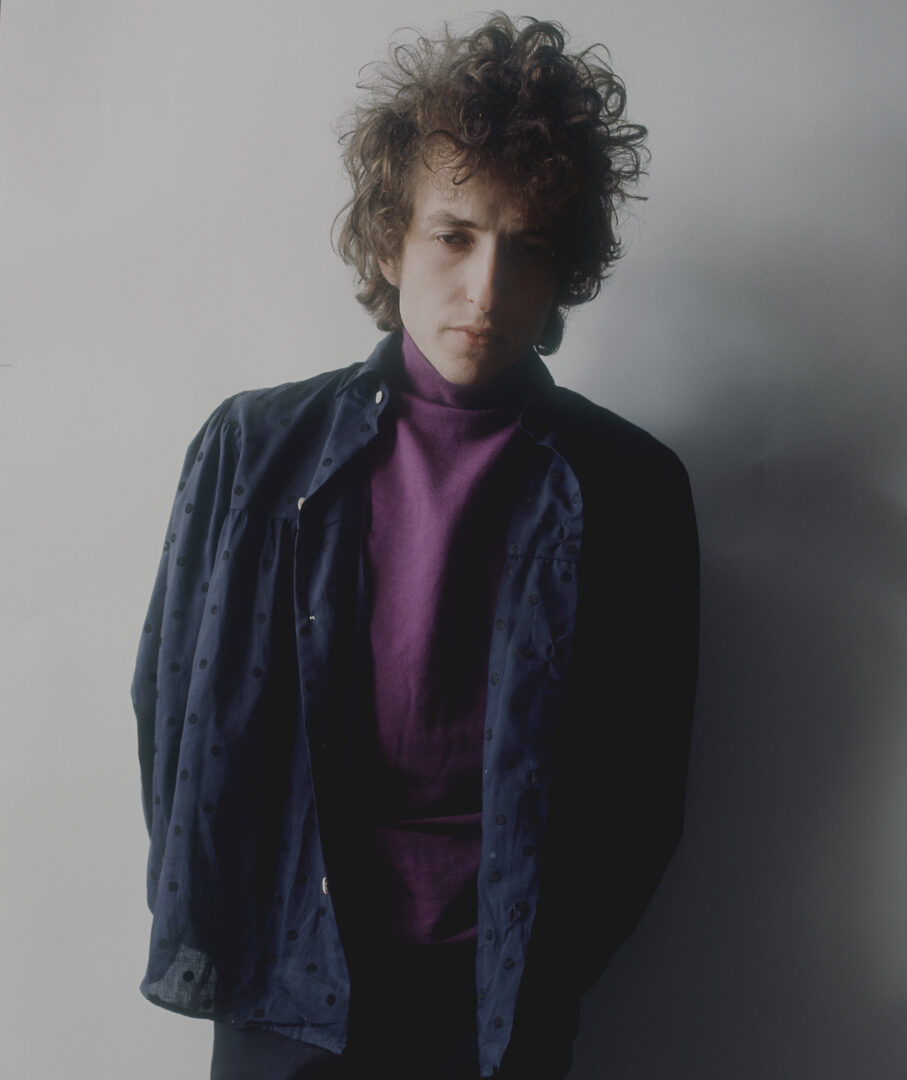
Jerry Schatzberg: Everybody was trying to figure out what kind of drug trip we were trying to portray for the Blonde On Blonde cover since it was out of focus. Nothing to do with that. It was January. Dylan had on a light jacket and I just had on a light jacket and a number of the images while we were moving around were moving, you know. So, they were blurred a little bit. I must say Dylan chose that one and I was delighted. I knew there are a number of other good images from that shoot that were quite good which I use now. For a while I used just the Blonde On Blonde cover. But now, at shows and different places, I show them. They are quite good and absolutely sharp. But people thought we were trying to say something more than what we were.
“I think any photographer that photographs another person tries to capture that person as best he can. By this time, I knew Dylan quite well. I’d been photographing him for about a year. We’d hang out together and go places. When you’re in that kind of a relationship you are getting into somebody’s soul.
“That is one thing. A lot of people want to know where it was photographed. To the best of my recollection, it was a meat packing district in Manhattan. I liked the meat-packing district in contrast to Dylan. I felt that would be a good place to shoot.
Richard Williams: In the summer of 1966, everything about Blonde On Blonde was a mystery. The title, certainly. The bold statement of a vinyl double album (before the Mothers’ Freak Out, the Beatles’ White Album and Hendrix’s Electric Ladyland). That cover photo: great hair, great scarf, great suede coat, and the most enigmatic facial expression since the Mona Lisa – but out of focus. Why on earth would Bob Dylan choose that one? What was he trying to tell us?
“And then to kick off with the Salvation Army Band march of ‘Rainy Day Women Nos 12 & 35’: as uncool a piece of music, despite the injunction that ‘everybody must get stoned, as you could imagine in the year of ‘Reach Out, I’ll Be There’ and ‘Walk Away, Renée’. Followed by the Chicago-style eight-bar blues ordinaire of ‘Pledging My Time’, a throwback to Highway 61 Revisited, although that shivering harmonica solo at the end suggests that something different might be in the offing.
“As it indeed is, with ‘Visions of Johanna’, where the mysteries stop being riddles and become poetry. A song whose incantatory melody and atmospheric, image-filled lyric – ‘Lights flicker from the opposite loft / In this room the heat pipes just cough’ – take everything we already know about Bob Dylan one step further. And adding Johanna herself to his gallery of elusive, sphinx-like women.
“Here is where the album really begins, the album we knew we wanted back then without knowing what it would be, sweeping us through one mystery after another. The exuberant piano of ‘One of Us Must Now (Sooner or Later)’, the spring-heeled jangle of ‘I Want You’, the low-slung narrative of ‘Memphis Blues Again’, the Beefheart pre-echo of ‘Leopard Skin Pill Box Hat’, then the plunge into the beady-eyed erotica of ‘Just Like a Woman’ – ‘her fog, her amphetamine and her pearls’ -- and on and on and on through cryptic hints (‘Temporary…’ ‘Absolutely…’ ‘Obviously….’) all the way to the culminating 11 minutes of ‘Sad Eyed Lady of the Lowlands’, an endlessly unscrolling love letter to the muse and to a world of matchbook songs, gypsy hymns, dead angels and a cowboy mouth, a world that was his alone and yet in which he invited us to immerse ourselves.
“Six minutes and 31 seconds into this masterpiece, at the start of the fifth line of the fourth verse, Joe South, who is playing bass guitar in Columbia’s Nashville studio, makes a mistake. He forgets that the first four lines of the melody are repeated and picks the wrong chord change. I love that. His minor lapse of concentration would normally mean the junking of the take. But we’re in the early hours of the morning. Even though this is the fourth take, Dylan hasn’t made it clear to the exhausted musicians how many verses the song will have.
“Was there even a decision to be made? South’s little goof is left in, acting as a reminder that this music was made by human intelligence and skill, prizing the intuitive and spontaneous. It survives as part of a work that has lost none of the power to enthrall and mystify so coolly wielded by its maker 60 years ago. We were hungry then, and it fed us.
Robbie Robertson: Blonde On Blonde was an unusual time which caused all those songs to be written.
“We’ve been playing with Bob for years there’s no surprises involved. We know the technique very well.
“There was a thing that happened between Bob and us that when we played together that we would just go into a certain gear automatically. It was instinctual, like you smelled something in the air, you know, and it made you hungry. (laughs). It was that instinctual. And the way we played together was very much that way.
“And whether, we were playing in 1966, or 1976, or when we did the tour together in 1974, we would go to a certain place where we just pulled the trigger. It was like ‘just burn down the doors ‘cause we’re coming through.’ And it was a whole other place that we played when we weren’t playing with him. It was a whole place that he played when he wasn’t playing with us, so it was like putting a flame and oil together, or something. I don’t know.
“When we did the Dylan and Band tour in ’74, where we went and did a lot of the same things we did back in ’66, and peoples’ response was ‘this is the shit and I knew it all along.’ It was like you weren’t really there all along. It’s interesting and it’s one of the things I talked about in my keynote speech that I had to make at this [SXSW] conference. It’s really a very interesting experiment to see.
Patti Smith: The Bob Dylan Live 1966 Royal Albert Hall record. I can tell you this. I saw Bob Dylan in that period. I saw him right before he went to England in 1966. I was really lucky. I saw him in 1963 when Joan Baez introduced him. I saw him through various changes. Then when he started wearing a jump suit, this lion-like hair and had a band, The Hawks, behind him. I saw him booed by the people even though he was really great. When I hear that record, I see him in my head because I can remember when he sang ‘Visions of Johanna’ acoustically for the first time. He said, ‘This song is called ‘Seems Like a Freeze-Out.’ He didn’t have that title, you know. So, when I listen to that record it’s almost like a visual experience for me.
Gene Aguilera: So, how do you follow Highway 61 Revisited? Simple . . . you just make one of rock’s best double LP’s . . . Blonde On Blonde. This is Dylan’s 1-2 ‘knockout punch’ for you all. In my humble opinion, the crest of Zimmy’s career: 1965-1966. Following the formula of Highway 61 Revisited, Dylan brings back producer, Bob Johnston, who then convinces him to relocate to CBS Studios in Nashville for that trademark country ‘butter’ sound. Parlay Highway 61 Revisited returning musicians Al Kooper (piano and organ) and Charlie McCoy (guitar); then toss in key musicians Joe South and Jaime (Robbie) Robertson just for good measure.
“Some trivia on Blonde On Blonde for its 60th anniversary. The original inside cover pressings of the album included a picture of 60’s Italian movie actress, Claudia Cardinale--used without her permission. After complaints from her management, Claudia’s photo was removed from subsequent pressings, making it a collector’s item. Also on the album cover, note there is no title, no artist name (no writing, except for the spine and record company logo) . . . if you know, you know.
“It was an honor to personally meet Bob Dylan on two sit-down drink occasions in the 90s. Photos or autographs were not in the cards; but knowing Dylan was a gentleman, a true artist, and an all-time favorite, is a memory worth keeping forever.
Gary Pig Gold: Although in actuality not rock 'n' roll's first-ever double long-player; that honor belongs to Frank's Freak Out! our boy Bob's 1966 piece-of-resistance remains as undeniably inventive today as it was to innocent listeners six long decades ago.
"And while Jerry Schatzberg's utterly iconic 12-by-26 cover image may appear a trifle off-focused, the Dylan imagery across all four sides therein is as precise, clear and surgically cutting as anything he had up until then created ...or has blessed us with since for that matter.
"Said words of wit and wisdom were then accompanied by downright flawless arrangements and performances via some of Music City's finest - despite their initial misgivings towards this high-voltage cat from NYC - and ultimately Bob Johnston's production of perfection resulted in, with 'I Want You' in particular, three minutes absolutely without equal during a year that also gave us 'Paint it, Black,' 'Tomorrow Never Knows' and, dare I say it, even Brian's 'Vibrations.'
"After emptying my teenaged bank account circa 1971 and bicycling home with every single Dylan album I could carry from the nearest record store, it was Blonde On Blonde I eagerly slit the shrink wrap to play first ...right after Self Portrait, that is. And I've been most merrily stuck inside its leopard-skinned blues ever since.
"P.S.: yes, and the true mixes are of course the mono's, need I remind anyone.
Dr. James Cushing: The website rateyourmusic.com lists 31 ‘popular music’ double-LPs released prior to 1966. (The list excludes opera recordings, which were double or triple-LP packages out of necessity.) Of those 31, eight were by Ella Fitzgerald, two by Judy Garland. Other artists included Benny Goodman, Louis Armstrong, Stan Getz, Glenn Miller, Stan Kenton, the MJQ, Dave Brubeck, Charles Mingus, and Miles Davis, with most of those being concert recordings. The closest thing to Bob Dylan was Peter, Paul and Mary In Concert (1964), only because it included ‘Blowin’ in the Wind.’
“You see the pattern: the double-LP was made for sophisticated grown-ups, not for teenagers. To make a double-LP was to announce that your target audience was adults, and to own one was evidence of one’s adult status — doubles cost twice the money, after all. They were an investment, and what kind of person thinks in terms of investments, kids or adults? So, it’s not too far-fetched to say that Freak Out! and Blonde On Blonde served as ‘announcements’ by Frank Zappa and Bob Dylan that their music had now achieved adult status, and had to be taken seriously as an art form for grown-ups. And both albums insisted on that seriousness with their endings, ‘Sad-Eyed Lady of the Lowlands’ and ‘The Return of the Son of the Monster Magnet,’ both AM-radio-unfriendly at 11-minutes-plus, and both examples of Modernism in lyric (Dylan) and sound (Zappa). So, in a way, these albums suggest that the very definition of ‘adult’ was in flux.
“I was age 13, certainly not an ‘adult,’ when I first heard and fell in love with these albums, and I love them both to this day. Part of why I loved them then was the sense that they were ‘adult’ music and hence conferred that status, at least while they were playing, on me. These double-albums offered a kind of map out of the frustrations of childhood, and suggested that the adult world, in all its bizarre complexity, could be negotiated with humor and honesty. The surreal parables of ‘Help, I’m a Rock’ and ‘Stuck Inside of Mobile with the Memphis Blues Again’ were contained enough to be digested (even memorized, and I memorized both), yet opened out into the larger world. They gave me lenses through which the world around me could actually make sense, even thought was changing as fast as I was.
Daniel Weizmann: The romantic love songs on Blonde On Blonde, are as radical, more radical than ditching protest or embracing surrealism or going electric. They're cinematic, intimate, filled with complex feeling, ambivalence, longing and, ultimately, a sense of defeat and catharsis that was not just totally new for him but totally new for the romantic love song. To cite just one example, ‘One of Us Must Know (Sooner or Later)’ wavers like a flickering electron between defensiveness, loss, guilt, and finally a total bewilderment about communication and miscommunication, attachment and detachment. It's like a high stack of misunderstandings, an apology that reverses itself yet somehow manages to still be contrite and it’s a permanent farewell that permanently bonds. We already knew he was a visionary and a poet, we already knew he was a wizard, but Blonde on Blonde might have been Dylan's first appearance as a man.
Kenneth Kubernik: There is another American original, a musician whose body of work, scope of influence, and inscrutable personality mirrors so many of Bob Dylan's most singular attributes. Pianist Keith Jarrett is not a name that leaps to mind when talkin' 'bout Bob's imperishable impact, that litany of artists long identified with his idiosyncratic approach to song craft, interpretive wanderlust, and rousing conviction.
“There is nary a one that reeks of jazz. But Jarrett - revered by players and serious students of improvisation, reviled by the jazz constabulary for his irascible nature - has, since the '60s, spun closely within Dylan's musical orbit. When jazz was moving uncomfortably towards rock and funk, Jarrett had his trio perform ‘My Back Pages,’ and ‘Lay Lady Lay,’ coping a Floyd Cramer groove more redolent of Nashville's skyline than Manhattan's hot house revelries.
“In an interview with England's Melody Maker, Jarrett cited Dylan's insight that artists ‘walk a razor's edge,’ when asked to describe the opaque process behind his mesmeric solo piano recitals. More than Monk and Miles, Trane and Bird, Jarrett found common cause with Dylan's redoubtable independence of thought and action. It is amusingly apt that Dylan, in recent years, has turned to performing the American songbook – ‘standards’ - that provide the beating heart of every educated jazz musician. He's on Jarrett's turf here and one can only imagine that aching croak nestled inside the pianist's ineffable accompaniment. Wonder boys...
“Outside of maybe Bob Marley and Jimi Hendrix, no popular musician commands a more robust, enthusiastic international following than Dylan. His ‘voice’ is heard in every language that speaks through music to celebrate the resiliency of the soul against the tides of a world gone wrong.
(Harvey Kubernik is the author of 21 books, including 2009’s Canyon Of Dreams: The Magic And The Music Of Laurel Canyon, 2014’s Turn Up The Radio! Rock, Pop and Roll In Los Angeles 1956-1972, 2015's Every Body Knows: Leonard Cohen, 2016's Heart of Gold Neil Young and 2017's 1967: A Complete Rock Music History of the Summer of Love.
Sterling/Barnes and Noble in 2018 published Harvey and Kenneth Kubernik’s The Story Of The Band: From Big Pink To The Last Waltz. In 2021 they collaborated on Jimi Hendrix: Voodoo Child for Sterling/Barnes and Noble.
Otherworld Cottage Industries in 2020 published Harvey’s Docs That Rock, Music That Matters. His Screen Gems: (Pop Music Documentaries and Rock ‘n’ Roll TV Scenes) was published in February 2026 by BearManor Media. Kubernik is researching a book on the Beatles for a UK publisher and planned 2027 publication.
Harvey spoke at the special hearings in 2006 initiated by the Library of Congress held in Hollywood, California, discussing archiving practices and audiotape preservation.
In 2017, he appeared at the Rock & Roll Hall of Fame in Cleveland, Ohio, in its Distinguished Speakers Series and as a panelist discussing the forty-fifth anniversary of The Last Waltz at the Grammy Museum in Los Angeles in 2023.
Harvey was an interview subject with Iggy Pop, the Beach Boys’ Bruce Johnston, Love’s Johnny Echols, the Bangles' Susanna Hoffs, Victoria and Debbi Peterson, and members of the Seeds for director/producer Neil Norman’s documentary The Seeds: Pushin' Too Hard. During 2026, GNP Crescendo will release a DVD/Blu-ray. Author Miss Pamela Des Barres narrates).
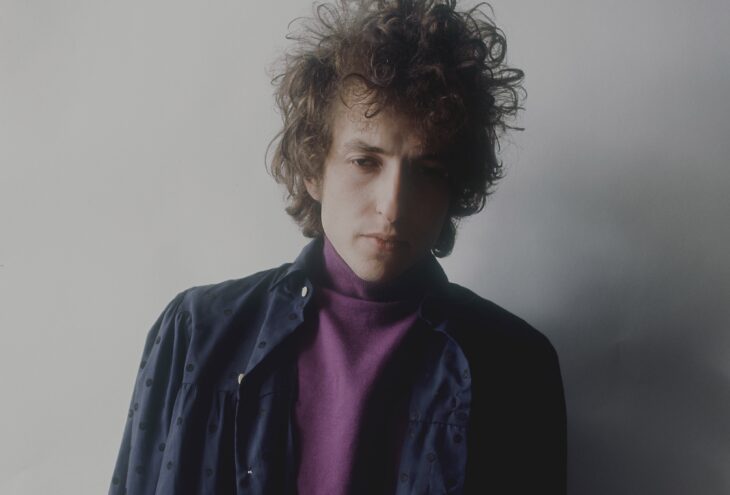
Bob Dylan photo by Jerry Schatzberg, Copyright Jerry Schatzberg
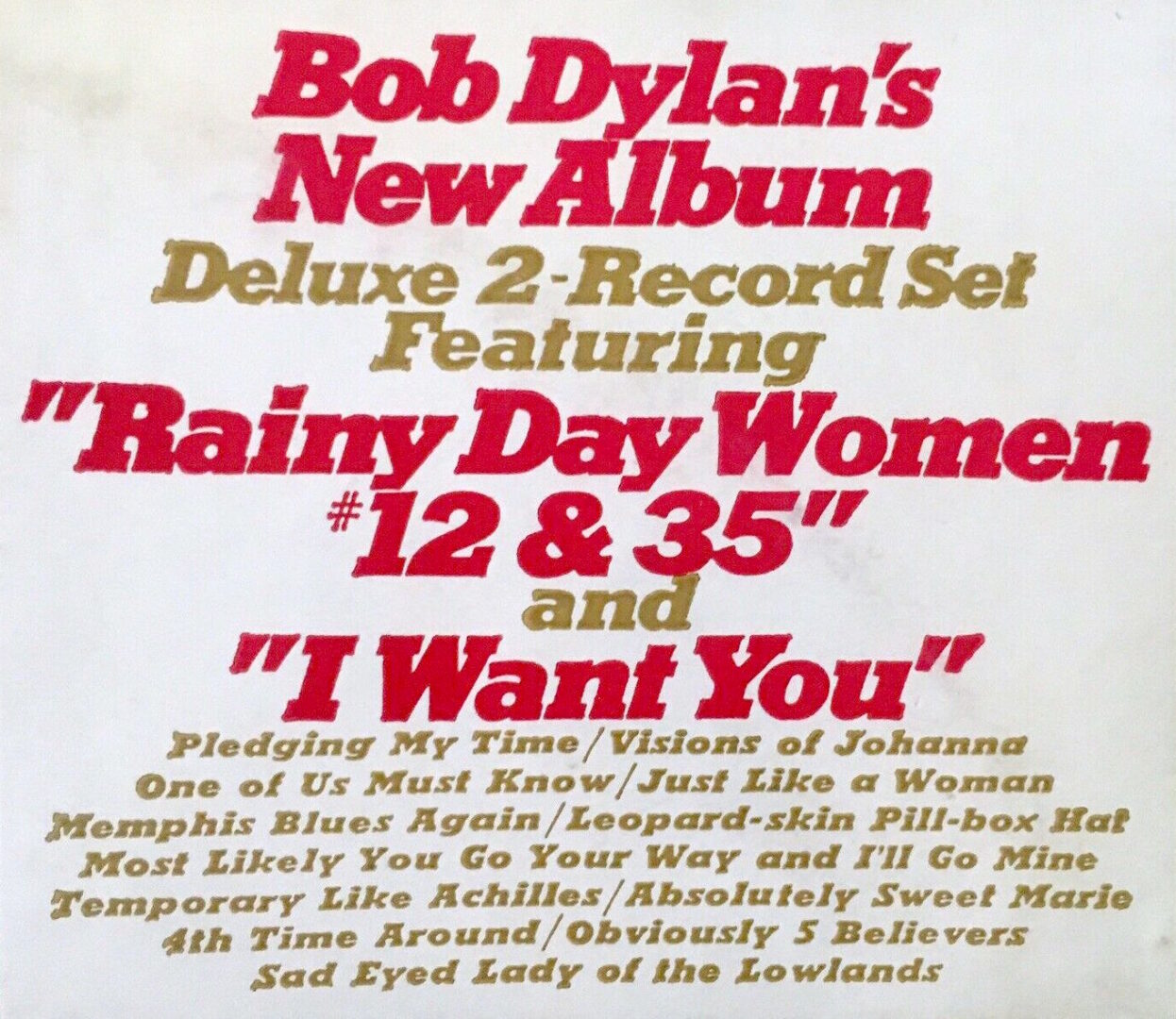
Promotional Item, courtesy of the Gary Pig Gold Archives.