Celebrating over 100 years of superior and historic audio achievement in 2024, Beyerdynamic was founded in Berlin in 1924 by Eugen Beyer. Beyerdynamic pioneered cinema loudspeakers before launching the world’s first dynamic headphones, the DT 48, in 1937. Relocating to Heilbronn after World War II, the company became a global leader in professional studio headphones and microphones, with a century-long dedication to handmade German-engineered audio innovation. Beyerdynamic released its first studio-grade dynamic microphone, the M 19 in 1939. The M 19 was lauded by the audio industry the best of the first studio-ready dynamic microphones. Featuring an omnidirectional moving coil with an aluminum diaphragm it gained immense popularity for radio reporting, with a robust metal-cased version built to withstand tough field conditions, including being tested by being dropped from the second floor of the Berlin broadcasting center.
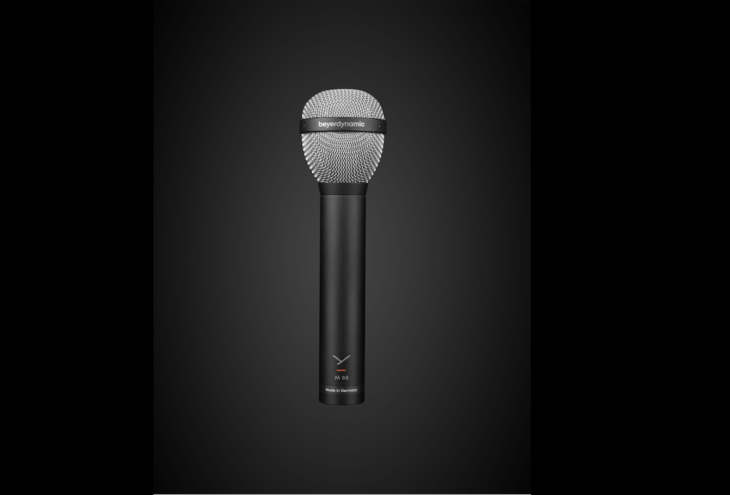
Cut to the M 88. Introduced in 1962, M 88 Dynamic Microphone has been in continuous production ever since. A hand-made hyper cardioid dynamic microphone renowned for its wide frequency response of 30Hz-20kHz, high sound pressure level (SPL) handling exceeding 150dB, and pronounced proximity effect, it was initially designed for speech but quickly became a studio standard for high SPL applications like brass and bass drums. The M 88 gained notoriety when it received a Royal Endorsement in 1963. Chosen exclusively for Queen Elizabeth II’s visit to Australia, its reputation for voice clarity was solidified on the world stage.
The M 88 has a detailed, smooth treble up to 20 kHz, capturing high-frequency harmonics without harshness. It’s generally flat in the low midrange, with a slight, broad boost starting around 1 kHz and extending through the high frequencies. The M 88 has a greater frequency response when compared to most dynamic microphones and can handle any task for which a dynamic mic is the right choice. The M 88 is one of the few microphones equally suited for both the rigors of touring as well as the studio. The M 88 TG was introduced in the late 1980s as part of the “Tour Group” series. This version updated the mic for live sound with a reinforced, coarse-meshed black basket and foam pop filter to protect the capsule. 2000 saw a limited-edition reissue of the original silver, high-end design, technically similar to the TG model called the M 88 Classic.
The M88 was upgraded from a ceramic alnico magnet to a much more powerful rare earth neodymium magnet in 2003. This engineering change allowed for an output increase of over +5dB, while still retaining the character of the sound and frequency response that the M 88 is known for. This increased output reduces the need for extreme preamp gain, thus keeping system-level noise low and the microphone itself has virtually no self-noise. The M 88 contains an integrated “hum-buck” coil, which reduces magnetic hum interference by as much as -20dB.
Often called “The Phil Collins mic,” the M 88 was famously used by Collins for both vocals and drums, as well as by David Bowie and The Beatles. The M 88 of today is the continuation and culmination of 64 years of continuous hand-made manufacture, and the perfection of the M 19 from 1939. Since the microphone was great from its inception, the refinements over the years have been minimal, but significant. The M 88 is considered one of the very finest dynamic microphones ever made. A top-notch microphone for stage and studio. $549.99