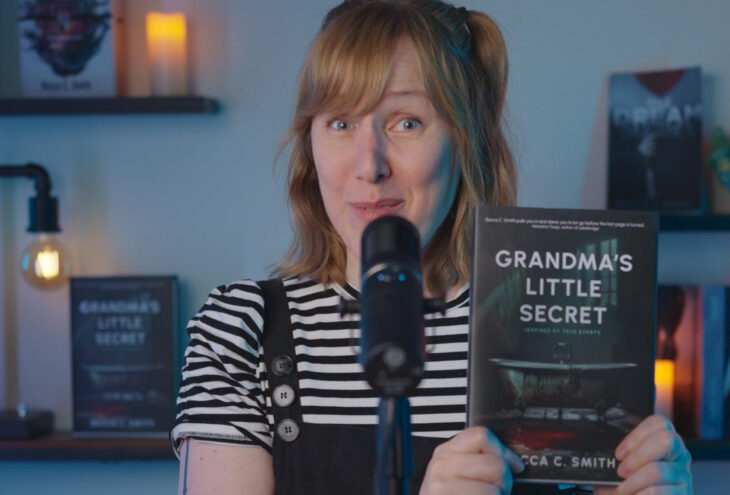
For many authors, stepping behind the mic to narrate their own audiobook can feel like a natural extension of storytelling. For Becca C. Smith, it became something more personal—a way to reclaim and retell a story rooted in her own past, all from the confines of a carefully constructed home studio.
Smith, a prolific writer whose catalog spans paranormal, mystery, thriller, and science fiction, recently recorded the audiobook for Grandma’s Little Secret, a novel inspired by real events from her childhood. Rather than hand off narration duties, she chose to voice the story herself, aiming to preserve its emotional authenticity. The challenge? Doing so in a DIY recording setup that had to compete with the real-world noise of everyday life.
Working out of a closet transformed into a makeshift vocal booth—complete with quilted blankets draped over a PVC frame—Smith built a functional, if humble, recording environment. A standing desk, a monitor for reading, and a mic arm with a pop filter rounded out the setup, while her computer remained outside the closet to keep fan noise at bay. Still, as anyone who’s attempted home recording knows, even the most creative setups can’t always silence the outside world.
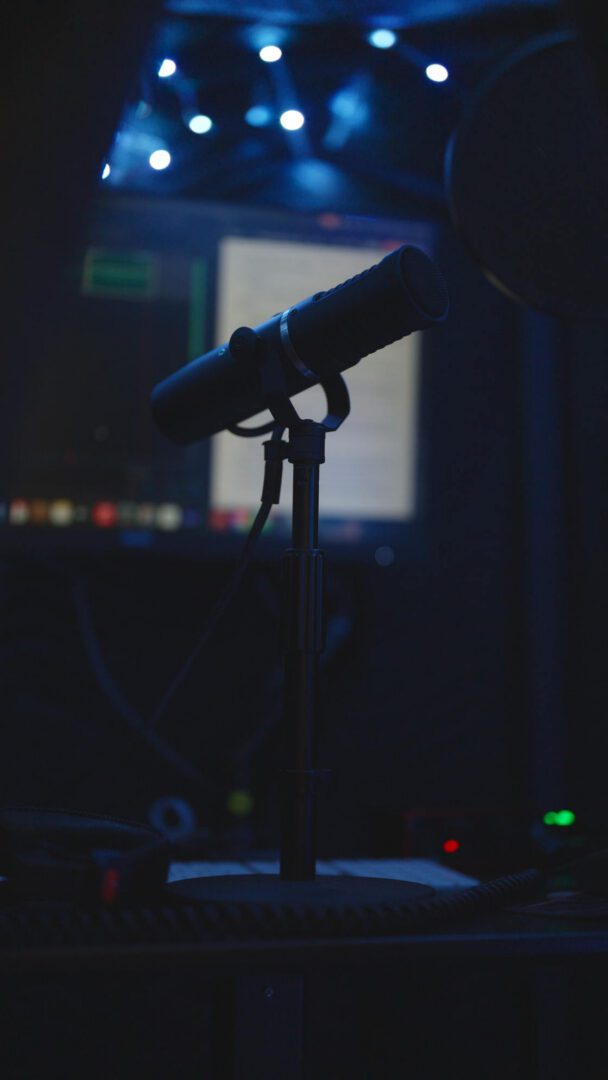
“Recording an audiobook at home can feel like a battle with your environment—creaks, cars, computers, everything,” Smith explained. “With the KU5A and my little closet booth, it finally felt like the room was working with me instead of against me. I could focus on pacing and emotion instead of constantly worrying, ‘Did that noise ruin the take?’”
That shift came with the introduction of the AEA KU5A Ribbon Microphone, a piece of gear known for its directional pickup and ability to reject off-axis noise. For Smith, it proved to be the missing link between a workable setup and a truly usable one.
Before switching microphones, she found herself at the mercy of her surroundings. “The previous microphone I was using kept picking up planes and traffic outside,” she said. “I’d have to do retakes or pause the recording until the noise went away. Sometimes I wouldn’t even notice all the noise it picked up until the editing process.”
With the KU5A in place, those interruptions became far less frequent. Its focused capture allowed Smith to maintain consistency in her recordings—even stepping slightly back from the mic—while still delivering a warm, controlled vocal performance. The result was not just cleaner audio, but a more immersive narration process.
“With the KU5A, there was none of that background noise,” she added. “I don’t have to stop every time a car goes by, and I can step back a bit and still get this really smooth, warm sound. It let me relax and actually perform the story instead of worrying about every little noise.”
The recording itself was handled in Adobe Audition, a staple for many home producers and voice artists, further underscoring how accessible professional-quality audiobook production has become. What once required a full studio can now, in the right hands, come together in a closet—with the right tools and a bit of ingenuity.
For Smith, the experience wasn’t just about overcoming technical hurdles; it was about creating space—literally and figuratively—to tell a deeply personal story on her own terms. And in that sense, the success of the recording goes beyond sound quality. It’s about control, comfort, and connection—three things every good story deserves.