When Ari Lennox picks up the phone, she’s already in motion. She’s on her way to the gym—because of course she is—but she doesn’t sound harried or distracted. She sounds exactly like herself: warm, funny, completely present. Within 30 seconds of ”hello,” you understand why people who’ve met her never stop talking about how real she is. Beyond the stage, Lennox doesn’t perform. No carefully calibrated version of “candid.” Just a woman who laughs easily, thinks out loud, and puts weight behind every word she says. Screw a PR-friendly filter, Lennox is just a woman who skips the small talk to tell you about her acid reflux.
The gym session tracks. These days, Ari Lennox is in the business of taking care of herself—physically, mentally, creatively. After years of grinding through self-doubt, battling depression, and nearly letting the internet talk her out of making the music she loves, she’s on the other side of something. Not in the “everything is fine now” way. In the genuine way. The kind that’s earned.
Vacancy, her latest offering, is out now, and it lands with the confidence of an artist who finally trusts her instincts.
Lennox—born Courtney Shanade Salter—grew up in the DMV area of Washington, D.C., in a household that treated music like liturgy. Her mother loved soul. Her father collected jazz. Between the two of them, she was marinated in a tradition that ran from Minnie Riperton to Ella Fitzgerald to Billie Holiday.
“My mother, my dad, they played a lot of soul. Amazing soul legends,” she says. “So I grew up listening to a lot of Minnie Riperton, and there are these two radio stations in particular—102.3 and 96.3—and just riding around with my mom, I would listen to those stations. Lots of ‘70s, ‘80s, ‘90s legends that were R&B and soul.” Her father, meanwhile, “used to collect—he had a major CD collection. So, I would steal his CDs. I got into Common and John Legend.”
But perhaps the most delightful detail of Lennox’s musical origin story is this: Pocahontas. Specifically, the soundtrack. “My mom, being so sweet and, like, caring and interested in what I liked as a kid growing up—which was Pocahontas—we would just drive around listening to that,” she laughs. “I wanted to sing like her.” It was a very supportive household of music lovers, she says, and you can hear every single note of that upbringing in her catalog today.
D.C. also gave her the hustle. Before music was a career, Lennox was grinding. She’s worked more odd jobs than most people can keep track of—Wendy’s, Papa John’s, Pizza Hut, Whole Foods, Planet Fitness. She drove for Uber. She worked at Commander Salamander, the legendary D.C.-area alternative fashion store that sounds like something out of an ‘80s coming-of-age film. Through all of it, she was still writing songs, still uploading music to SoundCloud, still believing, even when the evidence was thin, that something was going to crack open.
Eventually, it did.
Before J. Cole and Dreamville and Shea Butter Baby, before any of it, is the story of how Ari Lennox became Ari Lennox, and it’s exactly as cinematic as you’d expect from someone who grew up skipping school to catch whatever was rolling out at the cinema.
“I’m a big movie fan. I love movies,” she says, and you can hear the grin behind it. “I loved going to the movies in high school. I would skip school and movie hop, you know—see one movie and then go see another movie for free, because I did not have the money. Luckily, I never got in trouble.”
Sometime during those illicit matinees, she caught sight of The Secret Garden, and it burrowed into her. “The Secret Garden was an awesome movie that I saw somehow growing up, and it became one of my favorite movies,” she says. The main character—Mary Lennox—was spunky, sharp, and refused to feel sorry for herself. “This girl, she was really feisty. I believe she was an orphan because her parents passed away... She wound up living with some family, I think her father’s sister, and she was kind of mean. And there was her cousin that lived there, and he was sick, but he just needed some encouragement.”
Mary, she says, didn’t believe in self-pity. And that resonated. “Mary was very feisty and didn’t believe in being down on yourself. And I love that, because that’s what I need. I think we all need a Mary Lennox in our life. And I just loved her feisty nature, her encouraging nature. She wasn’t one to be smiling. She had a little attitude. But when she did smile, you could tell she was very happy. Just genuinely.”
She wanted a rock-star-sounding name, even though, as she clarifies, she doesn’t do rock (though she listens to plenty of it). She wanted an English last name. A cool three-letter first name. Ari Lennox it was. Now, the artist had a name and a sound. Next, she needed a deal.
It was SoundCloud that started the chain reaction. Lennox had been uploading her music there, building a small but devoted following the way artists did in the early-to-mid 2010s—one stream, one comment, one shared link at a time. J. Cole’s Dreamville Records caught wind, and in 2015, she became the first woman signed to the label. It was a moment. Not just for her career, but symbolically—for what it said about who Dreamville was willing to bet on.
She spent years in the creative ecosystem that Dreamville fostered, collaborating, developing, finding her footing in a more professional arena while also learning to navigate the particular gauntlet that the music industry reserves for Black women. The expectations, she’s spoken about it plainly, are exhausting. There’s always a box. Always a lane someone wants you to stay in, a sound they think suits you best; along with the pressure to be palatable, to be predictable, to make choices that are legible to marketing teams and radio programmers.
Ari Lennox has never been particularly interested in other people’s boxes, lanes, or opinions.
Her 2019 debut album Shea Butter Baby was a revelation—a lush, throwback R&B record that had music critics scrambling for adjectives. The album went certified Gold, produced the beloved single “Whipped Cream,” and established Lennox as the real thing—forget the trends, the gimmicks, and bring on the generational voice.
She has a gift for specificity that sets her apart from the crowded R&B field, an “if you know, you know” vibe. Where other artists reach for universality in ambiguity, she does it by being precise. “Ricolas ain’t enough for me” (“Chicago Boy,” Shea Butter Baby) is not a metaphor. It’s a real moment, fully rendered. She describes meeting a man at a CVS in Chicago—”handsome, so tall, so chocolate, so fine”—when she was in town to record. He helped her find what she needed. They swapped digits. And then Elite— her executive producer, creative anchor, and, as she puts it, “warm, comforting blanket”—was in the studio making this beautiful beat and she immediately thought of that Chicago boy.
“I think it starts with the beat,” she says of her songwriting process, “and then I remember the experience. And then it all just marries. It all elopes.” It’s like the guts of a grandfather clock: one cog set in motion causes a gnashing, a relentless sequence where every chime is earned by a thousand tiny teeth in perfect congruency. The beat unlocks the memory. The memory becomes the story. The story becomes the song. Simple and yet almost impossible to fake.
Seven years after Shea Butter Baby, and after a pandemic, a string of high-profile features, and a period of serious personal reckoning, Lennox released Vacancy in early 2026. It is, by almost any measure, her most ambitious and fully realized work.
She explains what the title means with characteristic honesty. “Vacancy has just constantly been a space that I’ve just been in where, you know, I’m a very avoidant human being, an anxious human being. And so it’s a lot easier for me to run. It’s a lot easier for me to block someone, to be in and out of people’s lives.” The paradox, she says, is that she’s also deeply affected when people do the same to her. “The irony of that—and then being upset when I’m drawn to men, or just people in general, that want to be in and out of my life.”
“So it basically encompasses the fleeting feeling of love, the infatuation phase. It’s like this consistent, familiar feeling that I’m always in and I’m trying to evolve from. But it is just where I’m at, and it gets real lonely, it gets real empty. But then at the same time, I find myself getting to know myself more.”
But Vacancy isn’t just an emotional portrait. It’s also a statement of artistic intent. “I’m here to show the world that I can do anything that I want. I can make beautiful, jazzy songs, R&B songs, soul songs. I can make pop-leaning alternative records. I can yodel. The sky is the limit. I can make a song that sounds like it should have dropped in the ‘60s—songs like ‘Wake Up.’ I can also just shout out my beautiful hometown, D.C. There is no limit.” She pauses. “It was also a means to let people know: I’m here. No matter what. I'm not going anywhere.”
That last line lands with weight when you understand what she went through to get here.
Making Vacancy was no smooth ascent. It was, in Lennox’s own telling, combat; a fight with self-doubt, with the internet, with her own fears. “These last three years, I’ve battled lots of depression, trying to figure out if music is really what I want to do, and if people really want to hear from me.”
A song called “Smoke” had preceded the album, and the reaction wasn’t what she’d hoped for. People were vocal and unkind. And she let it scare her—started second-guessing her instincts, started trying to lean into sounds that weren’t quite hers. Then “Soft Girl Era” happened, and something in her got stirred up.
“After ‘Soft Girl’ happened, I was like, you know what? I love this song. I don’t care. And so with all of that hoopla, I just dug deeper. I dug deeper. I got back in the studio. I made ‘Mobbin in DC,’ ‘High Key’—there’s plenty of other songs. There’s so many other songs I made after I was dragged last year.” She laughs at herself. Properly. “But I’m grateful. Ultimately, I wound up making probably five more records at the end of last year after being dragged.”
That’s the quintessential Lennox pivot: transforming public friction into private fuel. Rather than retreating, she channeled that external noise into a renewed creative sprint, proving that for her, being “dragged” isn’t a setback, it’s a catalyst. It’s a rare flex to be criticized into your best work, but it’s exactly that grit that defines the album’s standout moments.
Among the album’s highlights—and there are several—is “Twin Flame.” It’s a stunning piece of work: lush, melodic, emotionally intelligent. She lights up talking about it.
“’Twin Flame’—just a beautiful record that encompasses a relationship with someone, or a situationship with someone, that seems familiar. They seem like they could be a soulmate. But with that flame aspect—it could literally grow into a huge fire if you’re not careful. Or an explosion, if you’re not careful. But that excitement at the beginning, that flame is just so fiery and exciting. But we all know what can happen when a fire gets out of control.” A pause. “So, yeah. That’s basically ‘Twin Flame.’ It’s borderline toxic.”
Then there’s “Horoscope,” which almost didn’t make it. She’d recorded a version of it years ago (when it was still called “The Signs”) and had essentially dismissed it. At some point, she’d made the mistake (or the great endowment, depending on how you look at it) of sending her master folder to a handful of her most devoted fans. They’d been sitting on “Horoscope” ever since, begging her to finish it.
“I didn’t see the vision, really, with ‘Horoscope.’ I recorded a rough years ago, and—so this is what happened: one time I sent my fans my master folder. And I probably should have never done that. But, like, there are about five or 10 core fans that at one point had all of my songs that I’ve ever created. And ‘Horoscope’ was one of those records that stood up. They were like, ‘You need to finish this.’”
She resisted. Then one day years later she walked into the studio and Elite was playing the demo for her manager Justin. She was not pleased. “How dare you,” she told Elite. “[He] got [Justin] all excited. ‘I don’t want to do this record. I don’t want to do this record. Like, why would you do this?’” she said. “But they won by unanimous vote.” And “Horoscope” ended up being one of the record’s strongest-performing songs. She remains, on this point, gracious enough to let them have it.
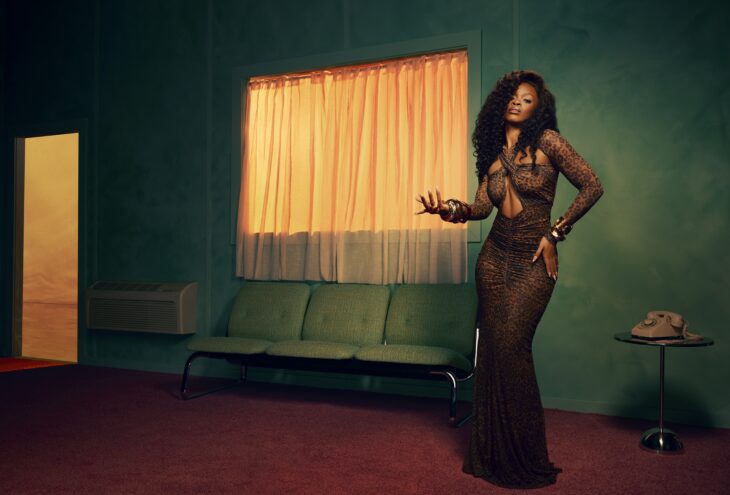
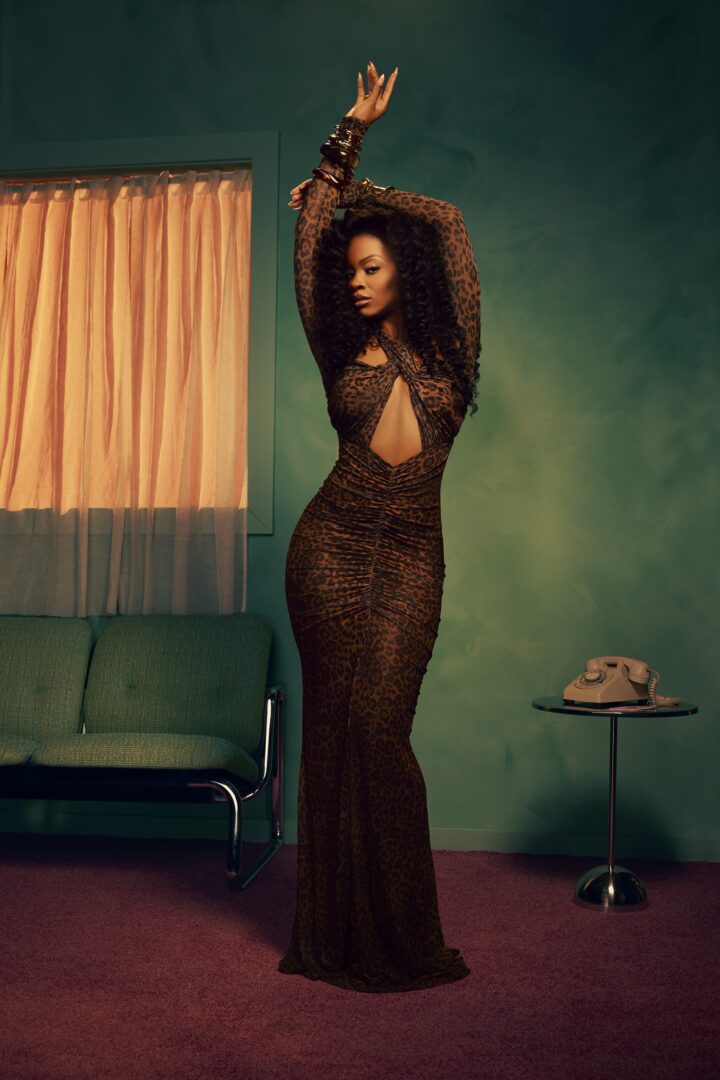
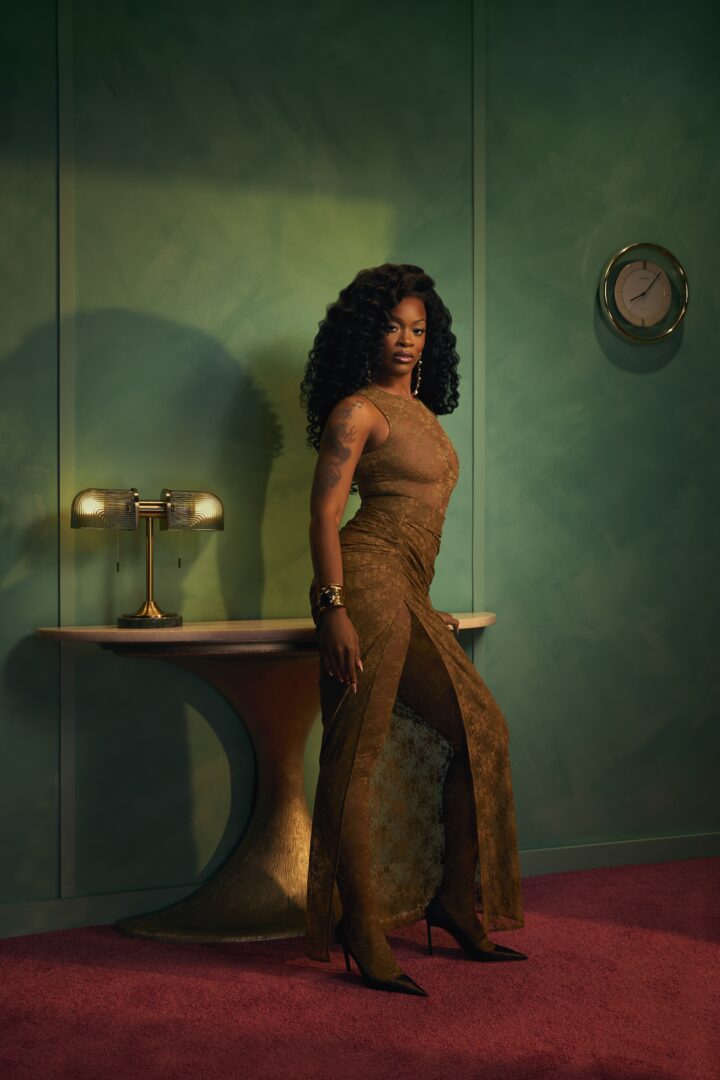
As for the glorious Vacancy cover art, they’d already done an entire album cover shoot with Interscope—with a photographer named Tosin [Gbadamosi] who she describes as incredible, with results she loved. Done. Finished. Beautiful. And then her psychic friend Boots started talking about a window.
“We did an album cover shoot, and it was beautiful. It was everything. I loved it, and I was satisfied. But I have a friend who is a psychic, and my friend was like, ‘I need a little bit more pizzazz. Like, I need to see a window.’ She kept saying, ‘I see a window. I see a hotel room.’”
She trusted Boots and went back to Interscope, who had already paid for one shoot, and said she needed to do it again. This time with photographer Gizelle [Hernandez], who had shot the artwork for 2022’s age/sex/location project and who Lennox knew would deliver. “Let’s go to Gizelle," she'd said, "She killed it with the ASL album cover. I know she knows what to do.”
The new shoot came together beautifully. Same glam team—makeup artist Khamilia, stylist Jeremy, hairstylist Barbie—and Gizelle built a set that included, organically, a window. “I never told Gizelle that I see myself in some type of room or, like, a window. The fact that it wound up being that way—because my psychic friend just kept saying, ‘I see a window. I see a window.’ But Gizelle, without even knowing any of that, built this beautiful set with her team. And there was a window there. And the window is kind of like a focal point.” She laughs. “I mean, if that ain’t a little psychic energy, I don’t know what is.”
It takes a certain kind of audacity to ask a label for a do-over when the work is already “beautiful,” but Lennox is no longer interested in just being “satisfied.” She is chasing a version of herself that is entirely unfiltered and unafraid of the unconventional. That refusal to settle isn’t just about aesthetic perfection, it’s a preemptive strike against future regret.
When asked what keeps her creatively brave, she doesn’t dress it up.
“You only get one life, and I don’t want to be 87—God willing, 87—and look back like, ‘Dang, I should have tried a pop song, a pop-leaning song, or I should have tried rock, or I should have done this or that.’ Like, I never want to regret—when it’s technically maybe at the end of my road—that I could have done this or that. Even when it is really hard as a woman, but also as a Black woman, a person of color. So many barriers to try to surpass. But yeah, it’s just me personally. I just want more for myself, and I don’t want to be sad later on in life, regretting. I don’t want to live with any regrets.”
When we point out that her creed is essentially the millennial catchphrase “YOLO,” she doesn’t hesitate. “Yes, exactly. YOLO. Literally. So cute.”
The Vacancy Tour is coming, and if the album is any indication of what she’s bringing to a live room, the people in those seats are in for a treat.
She can barely contain herself when she talks about it. “Oh my goodness, I’m so excited. My fans are the best part of this. It’s sad, because when the years go by, I tend to forget how much I’m cared for and loved and, like, admired musically. And so touring is some of the best time to really see your hard work being appreciated.”
She talks about the range of faces she sees at her shows—"all different backgrounds”—and then she mentions the babies. The babies that should not technically be there, given the lyrical content of the set, but show up anyway. “It’s such a blessing to see children that love my songs, and they’re singing it—even though I feel bad because you shouldn’t be singing this. But it’s so sweet at the same time.”
And then she gets to something more tender. She talks about seeing women at her shows who share her features—women who look like her and who, in a world that doesn’t always celebrate those features, find something affirming in watching Lennox command a stage. “Because sometimes I feel like, as a Black woman, or as my specific self—my features aren’t necessarily the most celebrated universally. So to see women that look like me, or that I look like, and to see I’m not alone in this. There are women who see me for me, and I see them for them. And we’re beautiful, and we’re affirming each other.”
She tells them they’re beautiful in the meet and greet lines. They tell her their stories. She receives them. “It’s spiritual. It’s magical. And that’s one of the best parts of it all.”
Between cities, she plans to sneak off alone when she can. Walk around. Explore. Go to the movies, probably. She mentions she’s particularly excited about the D.C. and Philly shows.
But the “magic” of a live room doesn’t just happen by accident; it’s supported by a much more terrestrial kind of discipline. Between the psychic windows and the spiritual exchanges, there is the unglamorous reality of the tour bus and the toll it takes on a body. For Lennox, staying “creatively brave” has become synonymous with staying physically resilient.
Health—physical and mental—has become a real priority. It’s not the kind of wellness-influencer wellness she’s describing. It’s messier and more honest than that. She’s heading to the gym when we talk, having already done her stretch routine that morning—she’s been working on her flexibility ahead of the tour, “because I can’t be singing songs like ‘Pretzel’ and I’m stiff like a cow or something,” she says laughing, though entirely serious. “I’ve been stretching. It’s important. I find that it helps with my anxiety and depression sometimes. Running—that runner’s high really helps me. So I try to do at least two miles of cardio when I’m in the gym.”
She’s also drinking more water. A lot more water. She’s been dealing with acid reflux, so the diet sodas have been scaled back significantly—a sacrifice, given that she also listed them as studio essentials in the same breath as tea and bubble gum. “I feel the difference in my body, and it feels so good. It gets a little boring, but it feels so good.”
There’s something in the way she says all of this that communicates something larger. Ari Lennox is investing in herself. After years of making herself smaller, of doubting herself, of letting other people’s reactions determine how much space she was allowed to take up, she’s choosing herself.
Vacancy is out. The tour is coming. But Lennox is just getting started.
“I’m just so happy the album’s out,” she says. “I’m happy the tour is coming up, and I’m just excited to keep promoting the album and the tour, and excited to drop more music.” Then she adds, almost casually: there’s a deluxe coming. And she’s trying to get an EP out before the end of the year—an EP made up of songs from an earlier version of Vacancy, back when the album was still taking shape. “A lot of people don’t know that Vacancy—there were, like, three other versions. But this third version was the ultimate, like: this feels good. The album is done. But this other version, there were some songs on there that I’m going to have released as an EP.”
Three versions. Years of work. A bout of depression, a bout of doubt, a dragging on the internet that led to five more songs. A psychic who saw a window. An attitude after her namesake that refuses to stay down.
You only get one life. Lennox knows this. And she is spending hers, finally and fully, exactly how she wants to.
Vacancy is available now on all streaming platforms.
The Vacancy Tour kicks off this year. Tickets are available at arilennox.com.