Musicians create the sounds we love, shaping their artistic visions in the studio and bringing songs to life on stage in living color. While the art they make remains the essential ingredient, every profit-minded artist needs a team behind them to help guide their career. One key player is the A&R representative. These individuals match songs with artists, oversee the recording process, and assist in developing a creative entity’s artistic flavor. They’re the ones discovering diamonds in the rough, then nurturing their talents until the rest of the world recognizes their brilliance.
To kick off 2026, MC spoke with four leaders in this competitive field. Each provided priceless insights into their profession, exploring topics such as how they find clients, what makes them want to work with someone, and the ways in which their job is evolving.

Nick Guilmette
Sr. Director, A&R, Prescription Songs
prescriptionsongs.com
What is the most important quality you look for in an artist or songwriter?
What they’re writing or producing has to be something that’s already good or has the potential to be great. But there are also two important factors outside of quality. One is passion. Being a musician is such a grind, especially in the beginning. If you don’t want it with all your body, it’s very difficult to be successful. The other thing is you have to be good with people. Much of the job of a producer or songwriter is becoming an artist’s best friend and being a safe place for them to talk about the songs they want to write. The best ideas get created when everybody is comfortable with each other. There’s that characteristic certain people have where everybody wants to be their friend. When I meet an artist or songwriter that has that, it’s typically a good sign.
How do you find musical acts?
It happens a lot of different ways, most often through recommendations, whether it’s a manager working with a developing client or a lawyer who just signed somebody. But often it’s coming from my other clients. I discovered EJAE through another Prescription Songs songwriter, JT Roach. He knew EJAE through a friend. He sent a demo they did together to my old colleague who’s no longer at Prescription, Shari [Fitch]. That demo was the first time we heard EJAE, and we realized we had to meet her.
How do you match songs to artists? How do you learn that skill?
It’s a bit of research, talking to the artists’ A&Rs or managers, and hearing what they’re looking for. Also, what the artist might be going through in their personal life. And it’s a bit of luck. Sometimes an artist or label team has to hear the song on the right day and be in the right headspace to receive the song. A lot of variables have to align, but it makes it so rewarding when you are able to land a song with the artist. Ultimately, everybody’s looking for something special, that’s different from what they’ve been making. It makes it easier when your songwriters or producers are creating something unique.
How do you think artificial intelligence is going to impact your role as an A&R?
I’m not sure. There are ways it could really help. I’ve been messing around with using A.I. to change the gender of the singer on demos. It opens up a world of ideas. There have been a couple different placements come from that. I don’t know if A.I. could ever fully replace the role of A&R or songwriter or producer. It’s just about how we use it to make us more effective.
What is your advice to people who would like to get into A&R?
Find songwriters and producers you are really passionate about, and see what you can do to help them. Seeing how you can champion them and connecting the dots with other talented songwriters and producers is the first step. And the other thing is building with other aspiring A&Rs, managers, label reps, publishers, etc., that are at your level. Many of my friends and colleagues, we’ve been working together one way or another for 10 years. This is such a relationship business, and building genuine relationships with people at and around your experience level, those are relationships you should aim to have for your whole career.
How do you think the role of A&R will change?
The music industry will always change. And the role of A&R has always shifted. I don’t know what the future will look like, but what will stay consistent is being an artist’s advocate and championing your artist, songwriter, or producer to the best of your ability. And trusting your gut on what you think is right for them. No matter what the music landscape looks like, being that advocate for creatives you believe in, that’s never going away.

Hannah Montgomery Bay-Schuck
Founder, 7Hills Music
instagram.com/7hills.music
What is the most important quality you look for in an artist?
I’m always looking for someone who is going to complement what I do well. With 7Hills, I’m borrowing from the ethos of what Prescription created. I worked there for eight years; I’m now a consultant at Prescription and have my imprint through Prescription. We have this idea of quality over quantity. We are not the right home for everybody, but we’re competitive. We want to make sure we keep it small and that we’re 100 percent able to service whomever we sign. I’m not just looking for something that’s doing good numbers and trending. I’m looking for something with good engagement. [An artist] might have a lot of talent, but can I be a part of that? Am I going to be able to lift this up? I’m also looking for writers, artists, and producers who work hard and know how to tap into what they do well.
How do you find musical acts?
It’s a million different ways. Obviously, there’s reaching out to attorneys and managers. I also hear about people from sessions that my writers do. Scoot Teasley is one of the artists on 7Hills. I found him on TikTok. And I was like, “This kid is so cool. He’s from Georgia. I understand him. I get the music he cares about and what he’s trying to share.” My sisters will reach out. “This kid from Columbus, Georgia, is doing music. Can I share it with you?” My school choir teacher sent me Will Terry’s stuff. It didn’t make sense for me to sign him at the time, because he was 17. And then he popped up on TikTok about a year and a half, two years later. The growth was insane. That’s what I’m looking for.
How do you match songs to artists? How do you learn that skill?
Having that ear is as important as knowing the community. It’s about knowing the A&Rs and managers working on these projects, understanding what the artist not only is willing to say but wants to say. For some, alcohol’s off their list. Or talking about relationships is off-limits. Or that’s all they want to talk about. So listening to songs is super important, and taking the time to talk to writers and producers about where these artists are in their lives, so you have an understanding of what would make sense. Also, I love a team project. I love being around people. I don’t want to be on an island by myself. At Prescription, I might know what Luke Bryan’s cutting, but somebody else might know what Dua Lipa’s cutting. Who is Olivia Rodrigo working with? What changes have they made on Blackpink? So it’s utilizing other people’s knowledge and relationships. And sharing that with your writers and producers, and saying, “If you’re writing for Teddy Swims, he already has these songs.” So we’re not wasting their time.
How do you think artificial intelligence will change the role of A&R?
I don’t know. It would be a disservice to just say, “I’m not using it.” It’s here, and it’s going to be here. The devil you know is better than the devil you don’t. You need to get familiar with it. Why I love working in music is it changes culture. I don’t know if I see A.I. making music that is going to have an impact on humans’ lives. But how will i t affect A&R? It’ll be another way of assisting. I don’t think we’re going to see a huge rise in A.I. artists. Also, legislation’s going to come in, and we’re going to have to move with that. What’s the legality around A.I. artists and what they’re able to do? But I don’t think it’s going to take over. There’s going to be a happy medium.
What is your advice to people who would like to get into A&R?
Find ways to engage. I was talking to a young intern. She created this fan page that amassed over 200,000 followers and the label reached out to her. When I was coming up, I felt like there was one path. I went to Florida State and then transferred to Belmont, which was a great school. But I felt like that was the only option. I look back and don’t know if that was necessarily true. There are a lot of different avenues to getting that A&R position. If you’re the assistant, be the best assistant and, when appropriate, be like, “I’ve been looking at some artists I want to share with you.”
How do you think the role of A&R will change?
In the last 10 years, the lines have become blurred. I’ve now signed two country artists to 7Hills. We also represent them on the label side with our incubator label, Amigo Records. We have every intention of upstreaming them to a major when the time is right. But this is a way for us to put some money behind them and develop them. Especially in the beginning, it doesn’t have to be so structured. I think that’s where it’s changing the most. We’re seeing blurred genres and a bit more flexibility with these roles.

Mara Kuge
President and Founder, Superior Music Publishing
superiormusicpub.com
What’s the most important quality you look for in an artist or songwriter?
I’m looking for somebody who has their career actively going and their act and general presentation together enough that they’re either booking shows or sessions or getting work on their own. If somebody doesn’t have their act together enough to have some basics in place, they’re less likely to have their act together enough to work well with a publisher. There are a lot of people getting their music out, in comparison to when I started doing A&R over 20 years ago, so it’s really important to make yourself stand out from the crowd.
How do you find musical acts?
A lot of it is via people that I’ve worked with – managers or attorneys, people like that. I still go to a lot of shows, and sometimes I make note of a band or opening act I want to reach out to. I will check my sources and see if they have a publishing deal already. I also sign a lot of back catalogues. Back catalogue is an area that is generating more revenue now than when it was new. I work with a lot of ‘80s new wave bands that are getting more syncs now than ever. Nothing goes out of print anymore, so it’s perfectly viable to sign a band that broke up 40 years ago and build a career for them out of syncs, reissues, and cover versions of their songs.
Is that because of the media landscape, that now everything’s available all the time?
I very much think it is. Even 10 years ago, there would be songs that a music supervisor couldn’t hear unless somebody sent it to them. But between Spotify and all the reissues, there are very few songs that have been released that aren’t on some streaming media service. Really small, niche records are on streaming media now. Since nothing goes out of print, that means songs can have lives for much longer. And there’s a lot of television shows that use songs from the past. When we had COVID and the writers’ and actors’ strikes, we started producing a lot more documentaries. And a lot of documentaries use music from the past to establish time period. In general, it used to be about the newest, hottest songs as syncs in your show. Now, it’s a combination of that and the coolest, most unheard song.
Can you talk about the art of sync and connecting songs with media? How do you learn the skill of matching songs with movies, TV, video games, etc.?
Lots of practice. It takes a while being in the sync world and getting to know the different players. It used to be there was a small amount of supervisors, and now there are thousands. So it’s about getting to know supervisors, getting a feel for what they need, making sure what you send over is something they’re going to find useful. There are some artists that sell well but don’t really lend themselves to sync.
Is there any way songwriters can shape their songs to be sync-able?
Yeah. I don’t like to speak too much on content, like actual music and lyrics for sync, because songs turn out better when they’re sincere and aren’t written with the purpose of sync in mind. But don’t use samples, because that will make it harder for the music supervisor to clear the song. And try to stay away from profanity. Even things you might not consider profane, networks owned by Disney might. If you want to have profanity in your songs, that’s fine, but it’ll rule you out for a lot of networks.
How do you think artificial intelligence will change the role of A&R?
My hope is that some of the tools of A.I. can make the processes of A&R and sync easier by helping in a search engine, behind-the-scenes manner. As far as A.I. taking over for actual singers and musicians, I don’t think that’s going to happen. I don’t know what enhancements will happen, but people are still going to want to see performers. Taylor Swift just had the biggest live tour in history, so there’s clearly a demand to see people live and have actual personalities that they connect with. Hopefully, A.I. will be a useful tool rather than a hindrance. I don’t think people are going to prefer listening to A.I.-generated music [rather than] human-generated music. There’s always going to be a demand for human-generated music that people can form parasocial relationships with.
I discovered an artist on YouTube that turned out to be A.I. and immediately lost interest.
I think that’s the reaction of a lot of people. People connect to music because of the shared humanity. People are not going to be drawn to robots. I have more concern for my friends who work in production music, because a lot of that is more likely to be replaced by A.I. Those libraries have their dedicated fan bases in the industry, but they don’t cater directly to consumers.
What is your advice to people who would like to get into A&R?
Getting to know A&R people is probably the key. In my case, I just started doing it and started a company. That’s always a way to go. To do A&R, you don’t have to have a huge roster of artists. You can have your own company where you have two or three artists. And then if you want to increase your role in the A&R community, you’ll have some experience behind you. There are more opportunities than ever for anyone who wants to do some kind of independent A&R work. That wasn’t really a thing in the ‘90s, but it’s something you can do now.
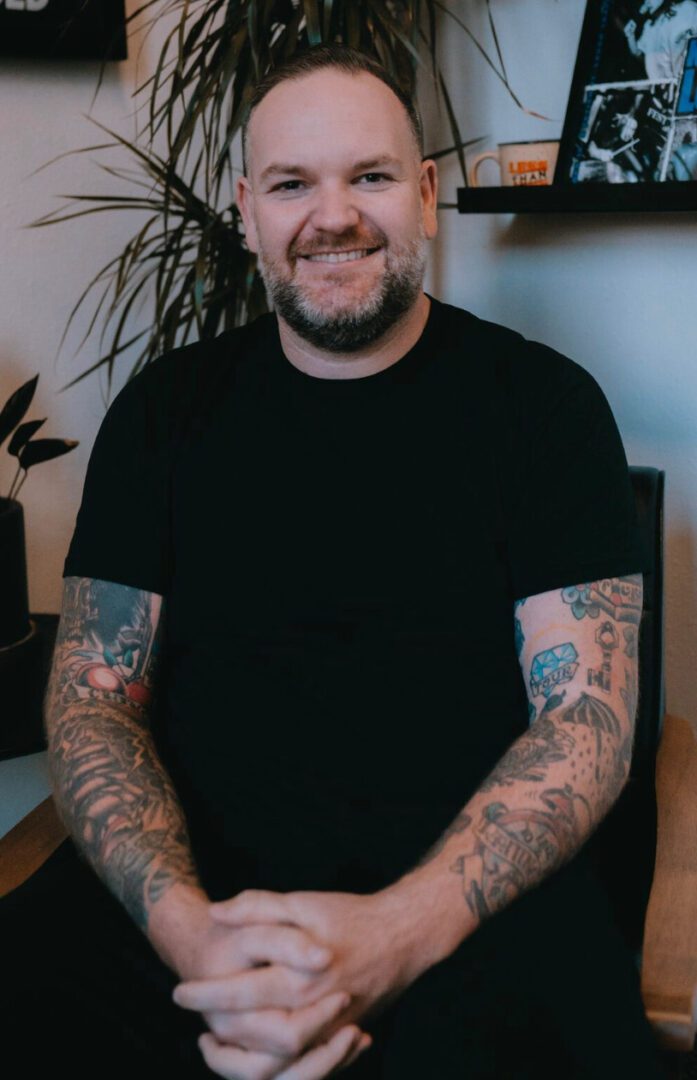
Jake Round
President and Founder, Pure Noise Records
purenoise.net
What’s the most important quality you look for in an artist?
That’s difficult to answer. I’ve always done A&R kind of by feel. And I’ve been so immersed in the space for the last 25 years that, for the most part, I’m pretty aware of who the up-and-coming artists are. But more than anything, it starts with the music. I generally have a pretty good idea if something’s interesting in the first 90 to 120 seconds of listening. And then I dive into intangibles like vibe and visuals, social media presence, touring history, and so on. But it starts with whether I like the music.
How do you find musical acts?
In the early days, many of them slept on my floor. I toured and did a bunch of Warped Tours. So at that time, if there was a young punk band I didn’t know, it probably wasn’t far enough along. These days, I’m not going to D.I.Y. shows, so we have a little A&R team. I get turned on to things from agent friends and managers. If one of my pals thinks something’s interesting, we’ll share that with each other and get a feel for whether I’m going to be able to build a team around this. Is there additional interest, or am I the lone wolf here? Our biggest successes are Knocked Loose and The Story So Far. These were bands that were selling less than 50 tickets when we discovered them. We’ll often come in first. It’s not unusual for me to come in without a team. Sometimes, a manager brings it to you, they’ve got booking representation, and it’s ready to rock. You’re the last piece of the puzzle. But that’s not always the case.
Do you bring songs to artists?
Not at all. All our artists have some hand in writing their own songs. I would say 90 percent of the material is self-written. With some of the poppier stuff, there’ll be co-writes. One or two or more members [of a band] will be in the room for the session. I do lots of records where it’s just the band and producer, where the producer may get a bit of writing credit. That’s the most common for us. When we’re making records, we have a meeting and talk about ideas for producers. More often than not, I’m like, “Right on. Let me set it up.” And I’ll book the time and negotiate the rate for the band. Sometimes, the artist will have their dream situation and their second choice. I’ll work through those and find the most appropriate match.
How do you view your role in terms of artist development?
That’s the service we offer that makes us relevant, especially with as much as the music business has changed and how artists are able to grow their audiences through social media. What differentiates us from some of the bigger record companies is long-term artist development and culture building. What we do is very niche, but in a broad spectrum. We’ve been working with Knocked Loose for over 10 years. We’ve been working with The Story So Far for close to 15 years. And those bands have built themselves into lifestyle artists. They are pillars and soundtracks to a community. When we sign a band, we’re looking to replicate that kind of growth. Maybe one out of 20 artists can achieve this, or even less, but that’s our goal. Can we build this band into a long-term, lifestyle brand that people will want to rally behind for decades? That’s kind of what a hit is in my space. We have very little radio. We’ve had few viral hits. Probably no true viral hits. It’s all been long-term audience building. Our top artists could build festivals around themselves in the same way Slipknot does.
How do you think artificial intelligence will change the role of A&R?
I wish I knew. I’m certainly aware of it. I read a lot about it. I’m not scared of it. But it’s going to be a disruptor. In the short term, I don’t think we’ll see A.I.-driven artists getting super successful. So much of the punk and alternative space is about going to shows and being part of a community. And you need real people to build that. So in the short term I don’t think it’s going to be a major issue, but in the actual album making I think it’s going to be massive. There’s A.I. being used in almost every writing session. We use ChatGPT in our office to do everything from proofing artwork to running comparables on purchase orders. In the short term, I don’t think there’s going to be a ton of humans replaced by A.I. in the independent music business. But I do think it’s going to be important that the humans working in the independent music business be able to use A.I. Someone who’s A.I.-proficient is going to have a leg up on an employee that’s not.
What is your advice to people who would like to get into A&R?
Everybody wants to be a bartender when they’re 22, but you can’t get a bartending gig without bartending experience. A&R’s kind of the same—you can’t get an A&R gig without A&R experience. Find an internship, get in wherever you fit, and just hang around. Be available. Networking is a long game. And if you love music and you’re at shows all the time and getting yourself in every internship opportunity you can, share artists that you think are cool with the A&R people above you.
Do you have any tips for artists on getting a label’s attention?
If you’re doing the right things, it’s going to happen eventually. For my label, you can send your demo straight to our website. It’s rare for us to sign something through that, but it’s not unheard of. Make the best demo you can, put some songs on the internet, and go play shows. If you’re doing something unique, it’s going to get discovered.