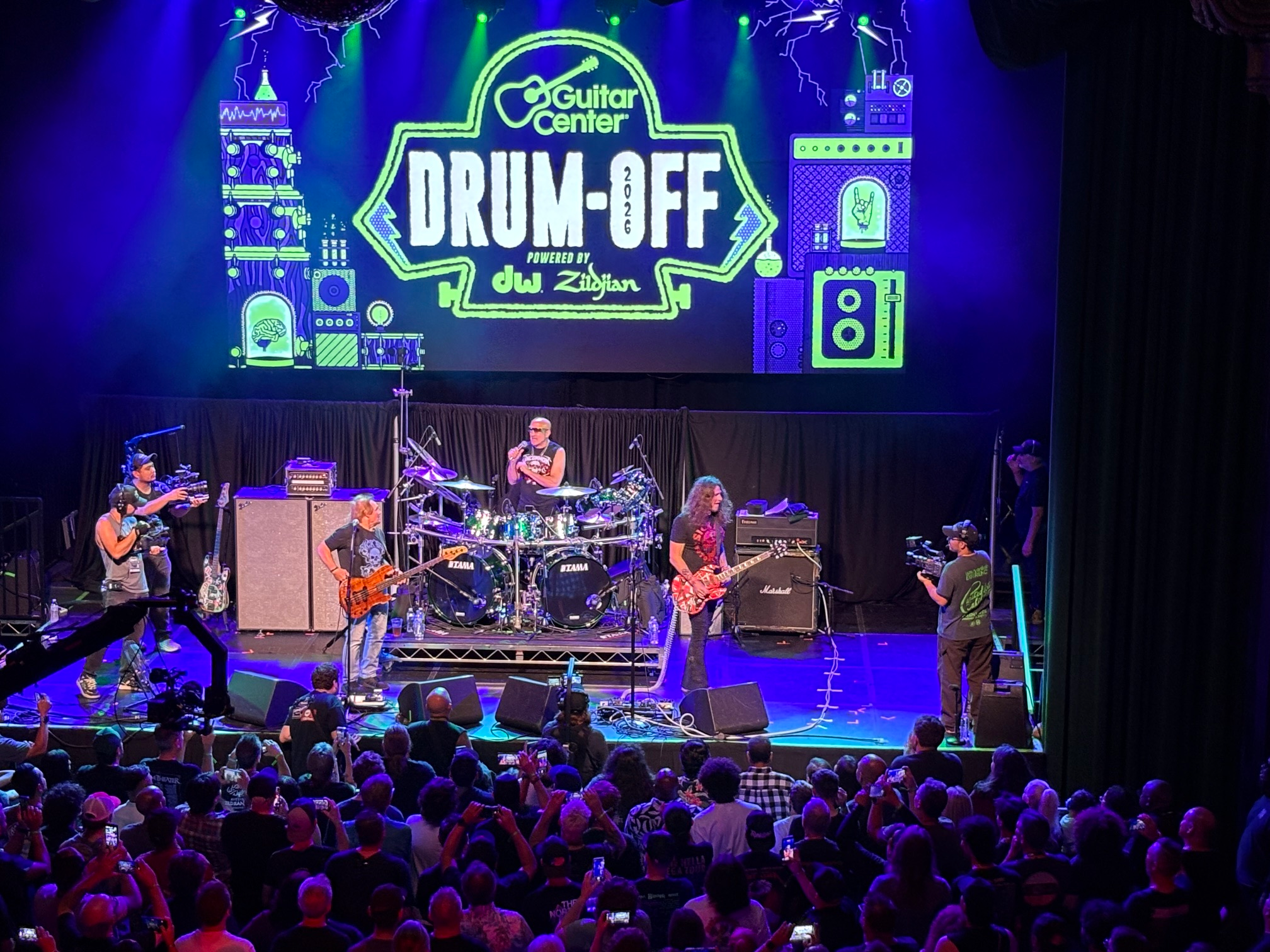

The Band Members: Jansen Hogan, lead vocals; Carson Hogan, guitars, keyboards, vocals; Jack Crane, bass.
The Storyteller: Jansen Hogan of The Wldlfe
The Song: Warm and rolling, the bright, lilting guitar of John Mayer’s “The Age of Worry” effortlessly floats above a complex, swirling rhythm of a waltz-like, swaying cadence, creating a comforting, nostalgia-inducing soundscape. This soothing, rhythmic sleight of hand is further amplified by a set of free-verse lyrics, in which whispers of worry about attaining perceived self-perfection are ultimately quelled by a serene, simple mantra of existing unmasked as oneself.
By bypassing predictable pop patterns and rigid lyrical schemes, Mayer cleverly manipulates traditional musical formulas to achieve an emotional prosody that comforts the subconscious. This juxtaposition of off-kilter rhythm and rhyme allows the song to stay steeped in its inherent worry while morphing it into an anthem of resilience.
The Background: Adopting the old-school band-in-a-van, life-on-the-road principle—eschewing the fleeting, frantic rush of immediate digital boom-or-bust—the Indy-to-Music City band The Wldlfe embraced the local circuit, a traditional grind where die-hard fanbases are forged through the irreplaceable chemistry born on a live stage. This slow-burn causeway became the engine of the polished indie-pop outfit’s survival, fueling the grit required to drop their first self-released EP, New (2016) — propelled into streaming circulation by the sweet-sounding, painfully passionate single “Waterfalls.”
While continuing their tireless touring sojourns, the band found a fertile sanctuary within their pockets of time to hone their songwriting skills, eventually helping them craft their guitar-driven, retro-glow melodies. Through a rapid succession of self-funded releases spanning from 2017 to 2020—highlighted by the multi-single compilation Waking Up Is Hard To Do (2020) —The Wldlfe steadily boosted their visibility across digital platforms with readily accessible music, while injecting their setlists with fresh tracks for the I-65 faithful.
Continuing to navigate their van-to-studio routine for a few years, they eventually settled in Nashville, surrounding themselves within its historic songwriting roundtables. Seeking to build on this new creative foundation, the band expanded their digital dossier and refined their sonic identity, while sustaining a relentless release schedule. This prolific work ethic resulted in a diverse catalog of music that includes the bright grooves of their defining release Repaint My Mind (2021), the cinematic evolution of Goodbye To All Of That (2023), and the unforgettable hooks and catchy rhythms of Heaven is a place (2024).
Fast forward to the present, and the trio is entering their most ambitious era yet. With their upcoming full-length album, Revolver, scheduled to arrive via Riser House Records, the band is primed to channel years of self-funded creativity into a definitive new chapter. As The Wldlfe prepares to step onto larger national stages, they hold fast to the foundational lessons learned, drawing on the concept of unmasking oneself to achieve true artistic integrity.
The Story: There is a distinct, almost magical synergy in the way music and physical movement intertwine; when they align, a song can effortlessly loop a listener back to a specific place and time. This form of neural nostalgia, specifically auditory-motor entrainment, is especially common in a highly creative mind. Many artists find themselves pulling melodies, rhythms, or harmonic textures from the past; however, it is also their intrinsic nature to look toward the future: always observing and searching for the special spark needed to create what does not yet exist.
While this backward-and-forward-looking vantage point is often unsettling — where the creator is trapped in a paradox, and tomorrow's anticipation overshadows today's reality — syncing with a song that settles into the present can instantly snap the subconscious back to the safety of its origins. For Jansen Hogan, hearing John Mayer's "The Age of Worry" pulled off this rare trick: it used the comforting sounds of yesterday to secure him in the present, helping him make the conscious choice to simply exist unmasked.
“I remember listening to John Mayer's Heavier Things in the car with my dad and that kind of being the catalyst for me loving music," he recalls. But while those early records lit the initial spark, a deeper, more individual connection was waiting down the road. "I think the first song that really felt personal for me was a song of John's called 'The Age of Worry.' Although Born and Raised aged quite well for me over time, 'The Age of Worry' was one of the few on the record that felt like what I remembered listening to with my dad, and something that was fresh and new."
Beyond that childhood connection, Hogan was drawn to the song because of its specific musical layout. “The cadence of it felt similar to a hymn, and that has always been an ear-catcher for me personally. It feels like the best way to tell a story while maintaining a melody that feels familiar,” he notes. That rhythmic familiarity offered a peace of mind for the threads of thought that easily unravel. "I've always been a person who is thinking toward the future and not always living in the moment," Hogan admits. "Spending so much time thinking about what has yet to come can sometimes turn into a vacuum of 'worry.' This song put that into perspective in a way that felt really positive for me."
To break out of that overwhelming mindset, he found comfort in the track's straightforward lyrics. “‘Smile in the age of worry’ is the punchline, so to speak, and maybe it isn't the most poetic lyric in this song, but it represents that, to a certain point, there can be a conscious choice when it comes to how we view life day-to-day. It's a good reminder."
The track’s unique arrangement also revealed a brilliant lesson in artistic contrast that directly influences Hogan's own approach to music. "I really like the juxtaposition of taking something that lyrically has maybe a somber tone to it, and making it into something that feels light," he explains. "I could only hope to write a song as good as this one though!"
This realization of how a song can balance heavy emotions with a light atmosphere completely changed how Hogan approaches his songwriting. It allowed him to shed the pressure of trying to create perfect music, revealing that the act of simply playing often yields the best ideas. “I feel like I fall in love with songs when it's just a guitar or piano and I can just freestyle. I think sometimes what needs to be said finds its way out when you take away the 'box,' and give lyrics the freedom to fall where they may."
Photo Credit: Alex Green