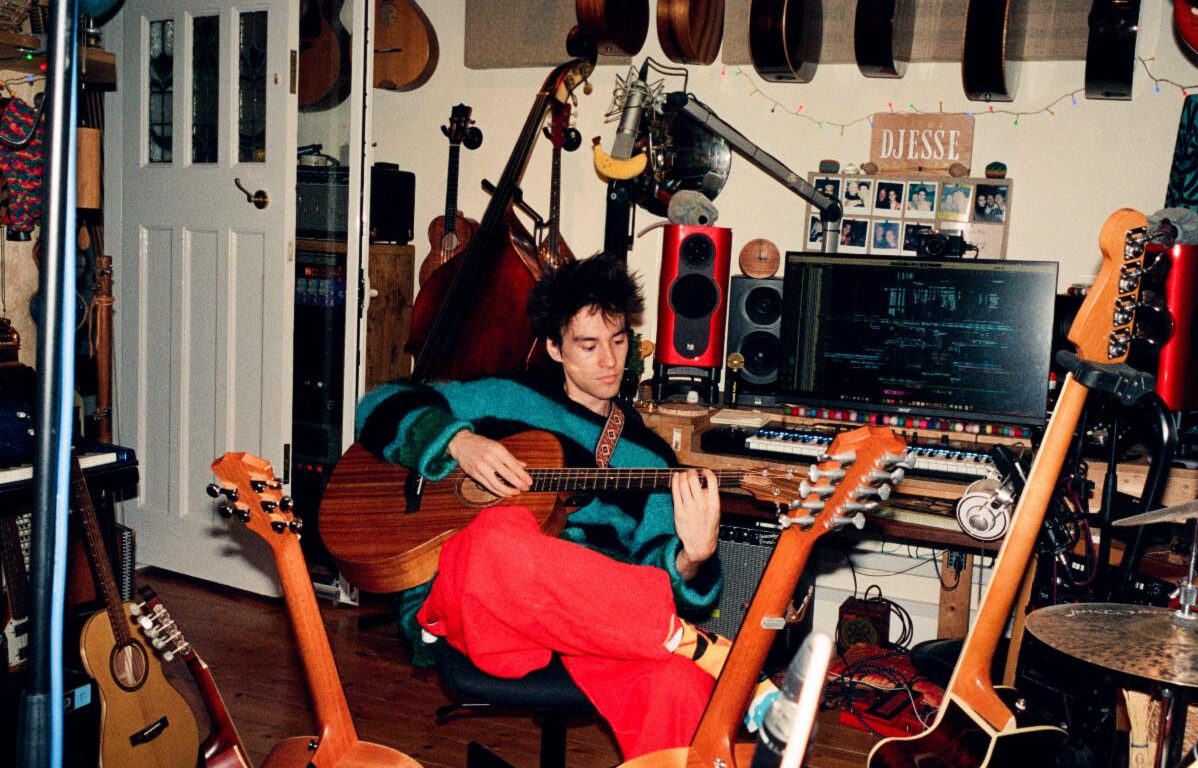
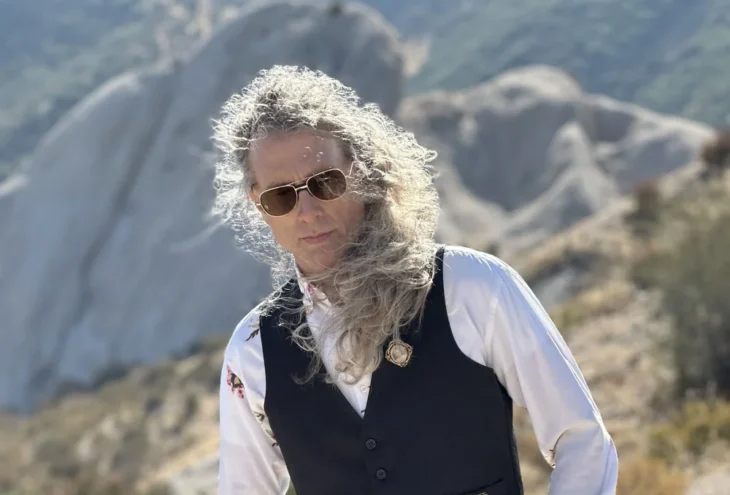
The Artist: David Haerle, singer-songwriter and President of CMH Label Group.
The Storyteller: David Haerle
The Song: Driven by an easy-rolling country rhythm — amplified by Tanya Tucker’s gravel-laced, preternatural timbre — “San Antonio Stroll” functions as a preeminent bellwether of country music’s expressive force. The recording signals how a deceptively sweet narrative, carried by Tucker’s outlaw authenticity, cuts through the lacquered haze of 1970s rock and disco-era glaze, securing a lasting place in country music’s storied canon.
That same permeability resonates today, as artists like Brandi Carlile and Shooter Jennings reframe Tucker’s influence as a model of vocal identity — where the voice itself functions as an instrument of emotional transmission, capable of unlocking nostalgia and transforming sound into memory.
The Background: Growing up surrounded by music, singer-songwriter David Haerle moved across multiple channels — his father’s work in country music with CMH Records (Lester Flatt, Wanda Jackson, The Osborne Brothers), and his mother’s connection to WENO country radio. In Haerle’s world, country music was constantly being transmitted, with rock ‘n’ roll running beneath it as an equally present current.
That early immersion eventually expanded into a broader professional path, ultimately leading him to become president of CMH Records, where he oversaw a vast country and bluegrass catalog while also expanding into crossover projects, including the Vitamin String Quartet’s resurgence through Bridgerton and modern pop reinterpretations of songs such as Ariana Grande’s “thank you, next” and Billie Eilish’s “bad guy.”
Over time, listening, curating, and creating collapsed into a single practice that naturally extended into songwriting, resulting in multiple full-length releases. His recent single, “Tucumcari Tonite!,” draws from long summer drives through the American Southwest, where memory and imagination blur into the same landscape. Its accompanying visual project with filmmaker Sabrina Doyle, expands that idea into a dreamlike reawakening of place and time. At its core, the song’s sensibility circles back to “San Antonio Stroll,” an origin point where voice, feeling, and memory first became inseparable — a thread that continues to echo through his work today.
The Story: “In August of 1975, Tanya Tucker released the song “San Antonio Stroll.” I must have been 9 years old when I heard it on the radio in my dad’s car. It immediately captivated me: Her voice, the melody, the mandolin, and the fiddle.
I was mostly into rock and pop music at the time, but my dad’s love and career were in country music. It would be many years into the future before I would embrace country music more fully as my father did. Instead, I gravitated toward rock bands and rock artists like David Bowie, Black Sabbath, Aerosmith, Jimi Hendrix, Led Zeppelin, The Cars, Frank Zappa, Ted Nugent, Van Halen, and so on. Quite a musical distance from Ms. Tucker, these were the artists that inspired me to take up the electric guitar.
But Tanya Tucker, only 16 years old at the time of that release, showed me something that I would more fully reflect on only as I got older. An AM radio single of 2 minutes and 50 seconds in length reached out from the speakers and touched my heart profoundly in a way that was very different from how rock music touched me.
With rock music, I was taken in by the power of the amplified sound, by the mystique of bands, by improvised lead guitar playing, by boundary pushing and experimentation in performance and instrumentation, by sounds that struck me as cool, and by innovation with songwriting forms. And with rock, I did not necessarily focus on lyrics intently.
But there was something so beautiful about Tanya Tucker’s voice, the tone of it, her southern accent, and her singing style. With “San Antonio Stroll,” it was the exquisite melody and the telling of a sweet family story that was itself about the emotional power music can have. Hearing it that first time, it felt like she was singing to me.
Many, many years later, a song idea came to me: ‘I Want To Sing With Tanya (Before I Die).’ I imagined meeting Tanya Tucker in person before a show of hers and having the chance to tell her of her musical influence on me. By the time I wrote this song, I had developed a fuller knowledge of country music, including artists who were heroes of hers. In my song’s imagined storyline, Tanya invites me to sing a song with her before she has to go on stage. She suggests we sing an old Johnny Cash or Merle Haggard song, singers I also love. Perhaps I’ll release that song on an upcoming album as a tribute to how much Tanya’s artistry means to me.
We all have our influences, and those artists have their influences. It is a beautiful thing how it all ties together. There I was, a skateboarding kid in LA, with her song [about growing up and set in] South Carolina. But we were brought together in 1975 — me as a young listener, her as a singer coming across the airwaves.
I can’t do what Tanya Tucker does, but I can hope that my music might touch someone’s heart in some way as she did mine.
Thank you, Tanya.”
David Haerle, 2026
Photo Credit: Kim Debus