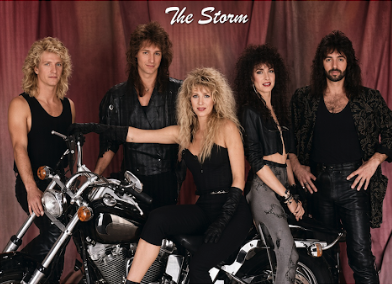
I always enjoy a really good rock ‘n’ roll saga…and I now find The Storm saga continues with demo cassettes and re-sold cd’s selling all over the world at more than $3-400.00 a shot.
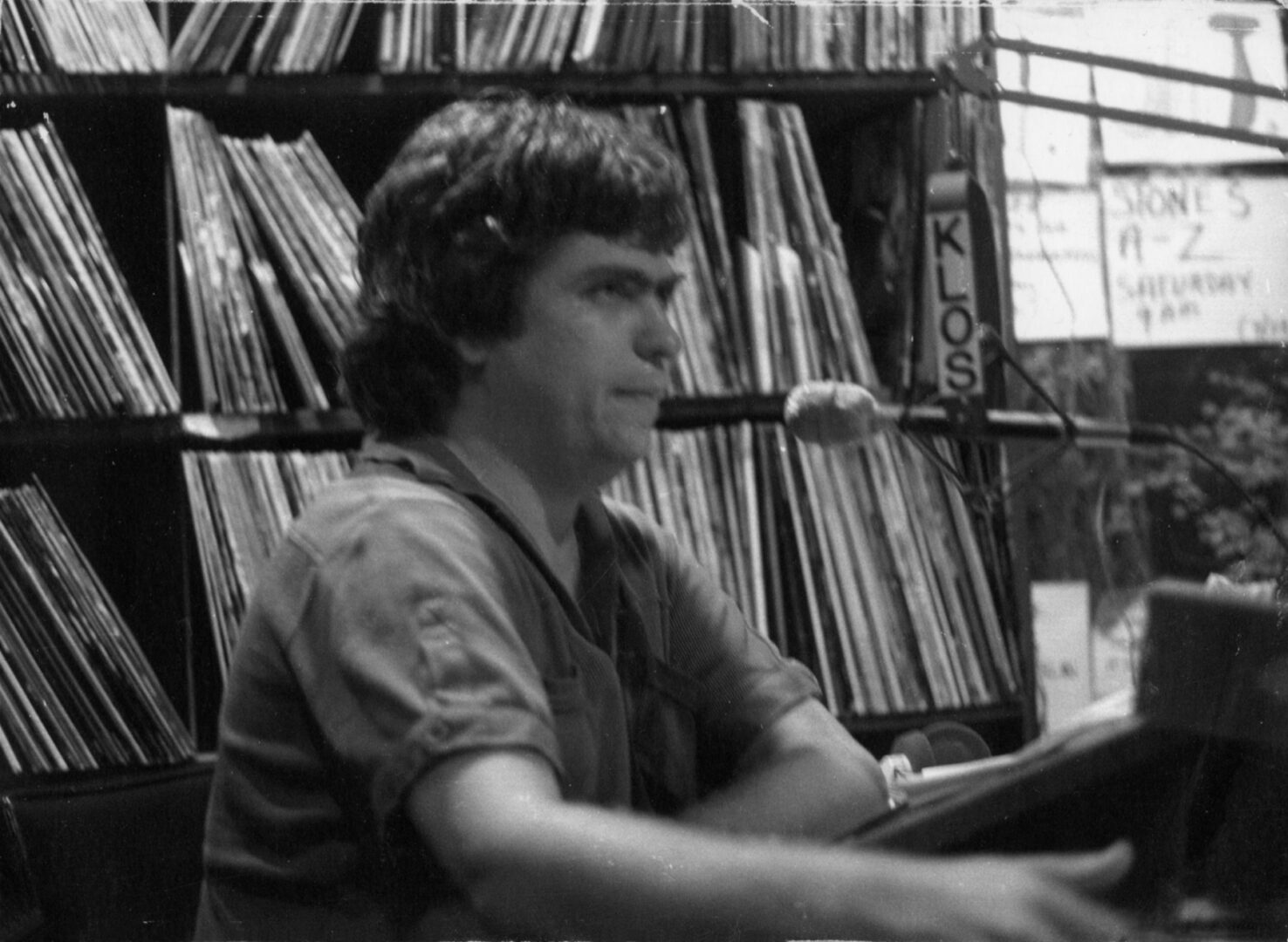
In order to explain this phenomenon, let me start at the beginning. In the 80s, The Storm was a highly touted local hard rock band in Southern California. I would hear The Storm on KLOS-FM played by the late and well-respected DJ Joe Benson, who hosted programs on the powerhouse channel like Off the Record, Local Licks, and The 7th Day. Benson provided seminal airplay in the Los Angeles radio market for emerging bands on Sunday nights.
KLOS-FM served the greater Los Angeles area. I had a very brief DJ tenure at the station in 1981, and would on occasion chat with Joe Benson. He championed the regional bands like The Storm for many decades and made sure I was on his mailing list.
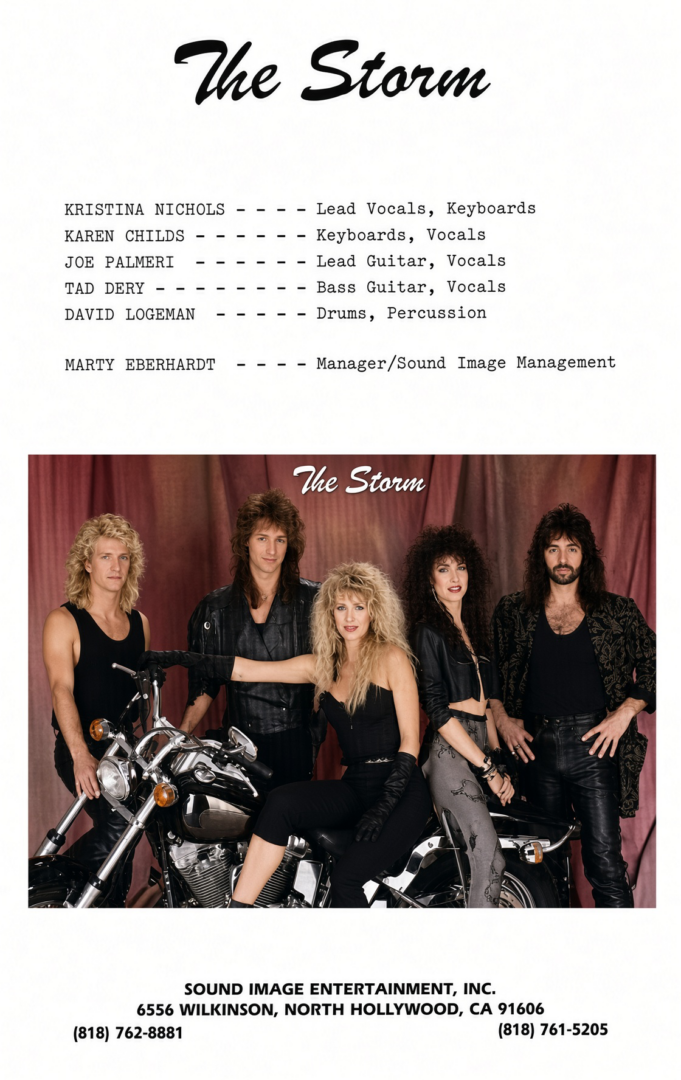
In the ‘80’s, a local musician, Joe Palmeri of The Storm, had sent a cassette of his band, The Storm, along with a biography prepared by the North Hollywood-based Sound Image Entertainment production company owned by Marty Eberhardt and David Chatfield.
The 1982 biography listed the band members: KRISTINA NICHOLS – Lead Vocal, KAREN CHILDS – Vocals and Keyboards - JOE PALMERI – Guitar and Vocals, TAD DERY – Bass and Vocals, and DAVID LOGEMAN — Drums.
Unlike most of the demo tapes and independent pressed records Benson usually received, The Storm’s recording was engineered and produced by the award-winning Guy Charbonneau, the owner of the remote recording truck, Leeds/LeMobile, who had taken The Storm under his musical direction. Singer Karen Childs had met Charbonneau and played him a demo that he liked.
I was well aware of Guy’s acclaimed recording credits and the sonic aspects of his endeavors in the eighties, and marveled at his work last century. Charbonneau, from Montreal, Quebec, Canada, began his career recording and mixing the Montreal Jazz Festival for television broadcasts in the 70's. Producer Phil Ramone saw Guy and Le Mobile in 1977 when he recorded in New York's Carnegie Hall for the Canadian Broadcasting Corporation, and then asked Guy to record the movie soundtrack to Paul Simon’s One Trick Pony in Cleveland.
In 1984, Guy moved to Southern California, and Le Mobile had a permanent home. Over the last handful of decades, Charbonneau and his legendary remote truck have recorded hundreds of artists, including David Bowie, Jerry Garcia, Queensryche, Roger Waters, Sting, Herbie Hancock, Joe Jackson, Van Morrison, Eric Clapton, Peter Gabriel, Faith Hill, Lenny Chesney, and Gwen Stefani...and The Storm.
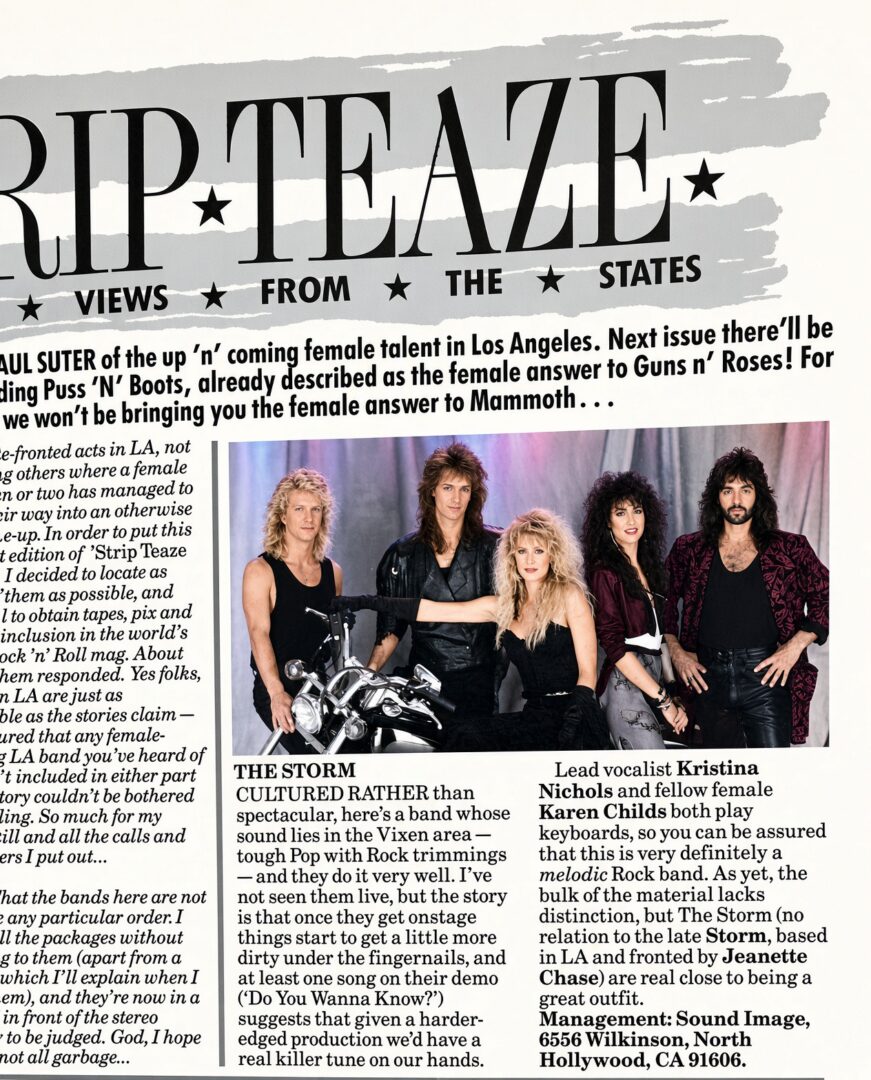
In the eighties, I glanced at a music magazine, RAW, which touted The Storm, and reviewed them: “Cultured, rather than spectacular, here’s a band whose sound lies in the Vixen area, tough pop with rock trimmings.” The Storm were also hailed in Music Connection magazine.
So, I was curious to see The Storm play a residence in Studio City at the Sash nightclub. The venue was the former site of The Cinnamon Cinder, where The Beatles held their July 1964 press conference before their Hollywood Bowl concert. This century, the club became Platinum Plus.
At The Storm Sash gig, besides all the throngs of women clad in spandex grooving to the action and relating to Karen and Kristina on stage. I was on the floor with Kiss’ Gene Simmons and members of Quiet Riot. The Storm were definitely not a hair metal band.
In the late seventies, I had gone to the press party for the launch of the band Heart on Portrait Records, after their success on Mushroom Records, and was intrigued by The Storm, who also featured two female lead singers.
For the last third of a century, although I never really thought or heard about The Storm, there was a growing undercurrent of excitement about the band internationally after they had released their debut album on Retrospect Records that had quickly sold out their self-titled LP initial 10,000 pressings. It turns out that those CDs have become highly coveted.
During 2024-2026, I noticed that the lone eighties recordings by The Storm, as well as 2026 remixes of their original material with producer Chatfield on his Harmony Records’ subsidiary Sound Image label, were generating digital online airplay, and The Storm recordings were not only garnering large fees in the collectibles market, but also had developed a cult following I had just become aware of.
I decided to do the forensic work and track a band member down, Joey Palmeri, as well as a producer, David Chatfield, who is collaborating with Joey on current remixes for Chatfield’s Harmony/Sound Image record label.
In 2026, I sat down with Joey and David to discuss The Storm’s still ongoing journey. What I thought was a long-forgotten band is now enjoying a renewed renaissance.
“I came at age 20 in Los Angeles in 1980 from Rochester, New York,” remembered Palmieri. “As a kid, I played a lot of jazz. When I came to Hollywood, I started a band called Fahrenheit. We played around town and worked with engineer/producer George Massenberg. He had many credits with Earth, Wind & Fire and was a partner in The Complex studio. He recorded us live in Utah.”
Joey then started another group, Character, who evolved into The Storm. “I always made it a point to play original material, no covers, and not go on the road out of Southern California.”
Palmeri’s vision for The Storm developed.
“We were awesome on stage,” underlined Joey. “Marty had a concept. We will only do one club, Sash. We could control the sound. It had a very good sound system. And the people would always know where we were booked.”
“Karen and I wrote a lot of songs in a rented house in Van Nuys. We would just write songs for hours. ‘I got this idea…’ We’d focus on Karen’s lyrics and the bridges in the tunes. I always wanted the power of the songs to emerge. Then we would bring the songs to the band. That is what happens when you write demos, and the song grows. Some of our compositions were love-driven, like ‘Broken’ (a song Gene Simmons later produced for Doro Pesch from the band Warlock in Germany.) They had real emotions that people could relate to. We heard a demo from a mother and daughter team, the Randalls, and took it to another level.”
Eventually they started recording with Guy Charbonneau after he heard their demos, and signed a production deal with Eberhardt and Chatfield at Sound Image Entertainment. Eberhardt shopped the finished Storm recording done with Charbonneau, along with other songs recorded at Sound Image’s studio.
“We loved working with Guy,” emphasized Joey. “At the Leeds facility when LeMobile was parked, I remember one night when Guy brought me into the parking lot and told me to put my Marshall amp there as he was in the truck. I played a screaming solo, and then Guy said in his French Canadian accent, ‘You have a visitor.’ I looked, and Eddie Van Halen was watching. “Fuckin’ great, man. Crankin’, dude. Love it.’”
Gene Simmons of Kiss was interested in signing them to a label deal he had with RCA, and the tape attracted the interest of A&R executive Derek Shulman at Polygram Records, who offered them a 3-year deal. Negotiations then went on for 6 months as Palmeri auditioned new band members as time dragged on, and then the deal suddenly collapsed.
Joey and The Storm continued playing stellar shows at the Sash club while Eberhardt shopped the Charbonneau tape and eventually signed with an independent record label, Retrospect, who manufactured CDs and distributed them internationally independently.
There were some personal decisions, unsatisfying auditions for potential touring, and then Joey left The Storm.
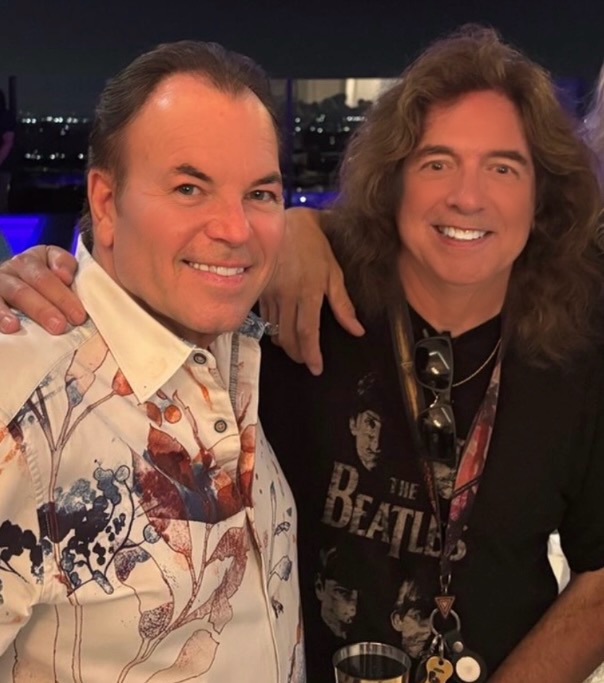
Palmeri then formed City of Faith. They were a very popular group, headlining the Roxy Theatre and The Troubadour. David Chatfield saw his new group in a rehearsal, and they stayed in touch over the years. Around live shows with City of Faith, Joey worked at Dick Clark Productions in Burbank. “Dick loved the band. Al Schwartz in his office arranged a phone call for me with the composer Lalo Schiffrin.” Coincidentally, Chatfield’s father had served as one of Dick Clark’s publicists.
Palmeri subsequently played in a new outfit, The Corporation, and with Billy Tulsa and The Psycho Crawdads, technically a country-influenced version of City of Faith. He also logged time as a session musician on albums by Evan Biegel, and always had and operated a home recording studio, Seasound, where he produced and appeared on multiple and unknown artist albums and demos.
“Over the years I kept in touch with David,” Joey happily volunteered. “He came to see City of Faith. I was involved with a movie, did the soundtrack, and David was my lawyer reviewing the contract. I also co-wrote a song, “Keep This Love Alive,” on Doro Pesch’s 1990 album that Gene Simmons produced. David negotiated the contract with Gene.”
During our trio interview, I asked Chatfield to reflect on The Storm, and his renewed involvement with their sonic legacy.
“I noticed in the last couple of years that Storm cassette tapes, CDs, or copies of them were showing up on Ebay, Discogs, and the internet in various countries around the world,” laments Chatfield. They were selling for 395 euros each! Some were only 4 or 5 song cassettes!”
“Recognizing the band’s percolating worldwide popularity, during 2023-2026, I rearranged, remixed, and remastered two songs from the original recording sessions, “Hold On” and “Sweet Surrender,” and each song went top 5 for weeks on Spotify Local Pulse Charts in the USA and on iTunes in Europe. “Hold On” made it to #1. Still, in late 2026, in addition to pirated CDs, there are also cassette tapes floating around with handwritten notes and some pictures of the band. I recognize that they were copied from the original tapes Marty sent to record labels for the A&R people to review both in the US and internationally.”
“What I discovered is that there is an underground market for just about every band I ever worked with,” Chatfield realized.
“I was again contacted by promoters in Scandinavia about The Storm. Joey, Karen and I had decided in 2023 that their music should become available to the world. This October I am planning to release “Leave Well Enough Alone” and follow that up with a digital and physical release of the entire first album. It was inspiring to see The Storm ahead of Beyonce, Drake and Snoop on the Spotify charts. Joey and I have now started to pull together enough recordings for a second album by The Storm, a live album, and a full show video of The Storm at the Sash.”
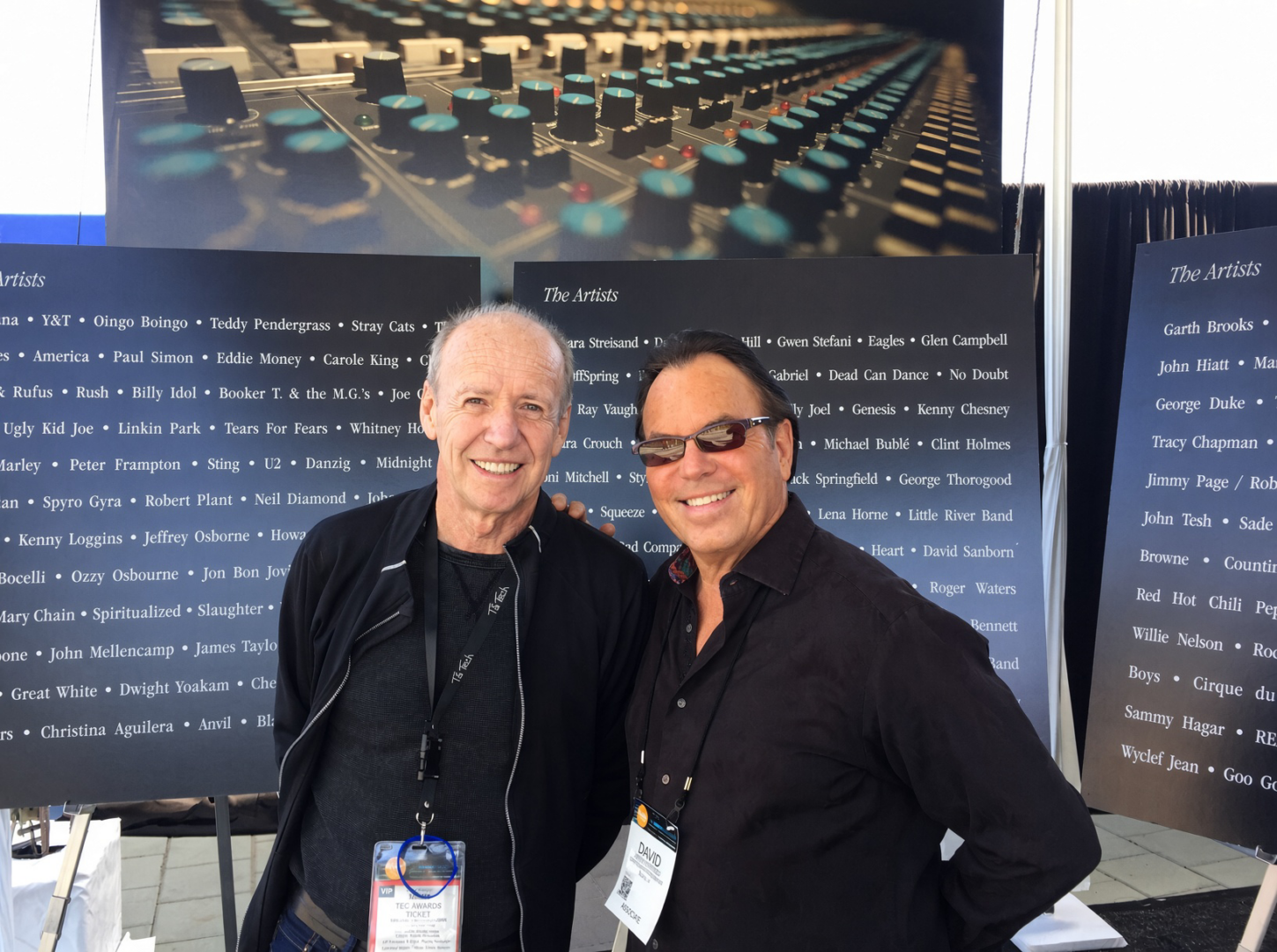
“So, I started reacquiring old masters back and getting them out. The Storm now seems to be considered one of the best eighties female vocal-led AOR bands that ever existed. The songs are good and timeless, and the performances and recordings or an another level. It’s very emotional to me. They have reached people now without promotion. As for the collectors and fans, some think it’s a new band. The others all know it’s a band from the eighties,” explained Chatfield.
“I think the honesty of the performances is apparent. Joey and I are reviewing some additional material, such as rehearsal and working demos, to prepare for release. I have found some vintage color photos, articles, fan letters, and international inquiries. There has always been a demand for melodic AOR internationally. However, now it seems that young kids in their twenties, when they hear it, love the music. It’s so well recorded and my years of remix experience come in very handy,” underscores David.
“In 2022, I was in a Zoom meeting with the AIMP and the Guild of Music Supervisors, people who put recordings in soundtracks. At the conference, I was told, ‘We don’t want music created now that is supposed to sound like eighties music. We want real eighties music!’ Ever since I have been remixing and re-recording my masters from the 80’s, in fact, I just did a sync for an upcoming movie where one of my 80s recordings opens the film spectacularly.”
Looking back on The Storm, and their recordings that are now being heard globally over the last 2 years owing to the efforts and monitoring by David Chatfield, Palmeri is upbeat when discussing the Storm’s journey.
‘Both David and I knew it was potent. Every band I started succeeded. When I start a band, I do it for real. I push it to the limit. David and I never stopped believing. I admit, we all had a lot of hair!
“For The Storm, it’s not really a second life, because it never really had a life. We had a lot of professional musicians watching us at the Sash nightclub. David and I, along with Marty, Guy Charbonneau, and the band members, always felt it was important. And now we’re being heard around the world,” he smiled. As the band sings “Hold on…just a little longer, hold on…love leads the way” to The Storm.