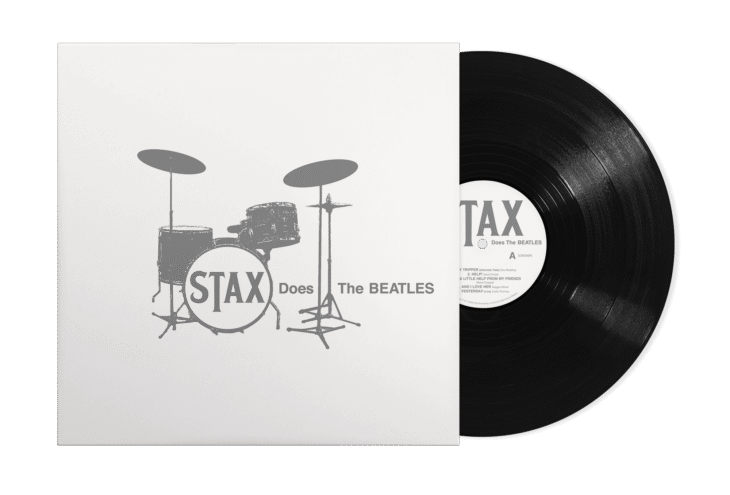
Stax Records and Craft Recordings announce a long-awaited wide vinyl reissue for Stax Does the Beatles. Released nearly two decades ago on the influential Memphis soul label, Stax Does the Beatles boasts members of the iconic label’s roster putting their indelible touch on Beatles classics. Among the highlights: Otis Redding’s exhilarating take on “Day Tripper,” Isaac Hayes’ epic (at 11-plus minutes), heart-tugging version of “Something,” Carla Thomas’ live, velvety interpretation of “Yesterday,” and Steve Cropper’s upbeat, brass-laden adaptation of “With a Little Help from My Friends.”
Available for pre-order today, Stax Does the Beatles returns to vinyl for the first time since its limited Record Store Day 2019 exclusive pressing. This newly curated edition distills highlights from the original CD release by Stax luminaries into a streamlined 1-LP format, offering a focused listening experience. Stax Does the Beatles is pressed on black vinyl, while fans can also find exclusive variant drops: a rich Translucent Ruby (Barnes & Noble exclusive), sunny Eggdrop Yellow (indie retail exclusive), and Silver Smoke (Stax Records/Craft Recordings exclusive).
The Beatles’ impact across several music genres is sprawling to say the least, influencing everything from rock to soul — and the legendary musicians at Stax Records were likewise inspired by the Fab Four. From the mid-1960s onward, Stax artists had begun covering Beatles tracks for the label, with their output peaking towards the late 1960s and early 1970s. Released widely on vinyl for the first time, this eight-track LPincludes vocal and instrumental performances alike from legendary Stax Records artists, who imbue the Beatles’ catalog with a rousing mix of soul, funk, and R&B.
The album also contains a funk-soul rebirth of “Eleanor Rigby” from Booker T. & The M.G.’s. “I was moved by the Beatles,” Booker T. famously remarked in the book Stax: Soulsville, U.S.A. “I thought they were doing really great things. Their records didn’t sound alike ever."
The feeling was mutual. The Beatles’ appreciation of Stax, which was founded nearly 70 years ago, is storied. In particular, an unearthed 1966 letter from the late George Harrison revealed that the Beatles once hoped to recruit famed Redding producer Jim Stewart to help them record Revolver at Stax Studios. During 1965, Paul McCartney also suggested to Brian Epstein, manager of the Beatles that he also wanted the band to record at Stax. Epstein had concerns about security issues and protecting his popular group away from the confines of Abbey Road in England.
To that end, Beatles bassist Paul McCartney enthused years later about Stax, “The only reason you want to record in those kinds of studios is because you love the records that come out of the studios.”
Tracklist:
Side A
1. Day Tripper (Alternative) - Otis Redding
2. Help - David Porter
3. With a Little Help from My Friends - Steve Cropper
4. And I Love Her - Reggie Milner
5. Yesterday (Live) - Carla Thomas
Side B
1. Something - Isaac Hayes
2. Eleanor Rigby - Booker T. & The M.G.’s
3. Hey Jude - The Bar-Kays
Stax Records, now owned by Concord, was founded by Jim Stewart in 1957 in Memphis, Tennessee. It rose from a small, family-operated company to become one of the most influential record labels in the world, helping create “The Memphis Sound” and launching the careers of icons such as Otis Redding, Isaac Hayes, Booker T. & The M.G.’s the Staple Singers, Sam & Dave, Rufus and Carla Thomas, The Bar-Kays, and dozens of other artists who helped change popular culture forever. In all, Stax placed 167 hit songs in the Top 100 in Pop and 243 hits in the Top 100 in R&B.
In my recently published Screen Gems: Pop Music Documentaries & Rock and Roll TV Scenes I devoted a chapter to Stax Records. I’ve been writing about the Stax legacy for over half a century.
Wayne Jackson was an R&B musician who played trumpet in the Mar-Keys and in the studio house band at Stax Records. Later, a member of the Memphis Horns. In 2007 I asked him about the label and some of the recording artists he knew and was in the studio with.
“You can tell the horn sound,” underscored Jackson. “Me, Andrew Love and Floyd Newman sound a certain way. All those records had that in common. All those records had Steve Cropper’s guitar, Al Jackson’s drums, Duck Dunn’s bass and Booker’s organ. Those things are very distinctive and that made up Stax sounds. And that’s where Otis came from,” Jackson remarked.
“I loved Otis and he loved me. We were big friends. ‘Cause we all liked to laugh, and we were all young and the testosterone levels were out of this world. That’s what you heard in that music. Al Jackson was a joy to watch. He was the most fun drummer I ever was around. He was just the best drummer you ever heard and the best drummer you ever saw. He was a great musician.”
“Musicians are not in competition. No one in that band was in competition. We were one thing. We were there to support and glorify Otis Redding. And we did that. And it shows on screen. We were there to respect glorify and hold the singer up to glory. Whether it be Otis, Eddie Floyd or Sam & Dave. We did that. That was our job and we loved it and did it good. Everybody in that band had his position. Like Duck Dunn. Have you ever seen anybody work that hard on bass? It makes my hands cramp up.
“Otis used a guitar to write songs and would use open key. So, he could just bar it put a bar on his finger and play up the scale and chords. He could easily write with it. When I was with Otis, he was on another energy track. Otis was like a 16-year-old boy with a hard on all the time.
“Duck Dunn and I are both left-handed, born on the same day in the same hospital. It was a real spiritual and astrological happening at Stax,” acknowledged Wayne. “Andrew Love is three days older than me and he and David Porter were born the same day. Booker is a musical genius. Otis always brought a great contribution to all the sessions he was on. He was educated. Steve Cropper invented a style of guitar where the little guitar parts were singular. He played licks that became part of the song. The horns were part of the song. Without us they would not have been the same.”
During 2007 I also spoke with Stax mainstay, guitarist/songwriter and producer Steve Cropper.
“I don’t think there ever was or ever will be a band that had the magnetism that Booker T & the MG’s had. Whether they back somebody or played on their own. In our high school days and upbringing. We had that band mentality thing ‘cause we worked as a unit. Because if some guy wants to go out there and ego on stage, he’s gonna blow it for everybody else. We learned to play as a unit in the studio. We were there not for ourselves but for the artist we were playing behind. In the studio when I was writing songs and starting to record them, I always saw it in my head as a finished product. I knew where to go with it.
“Al Jackson, Booker, Duck and I grew up playing nightclubs in Memphis. Wayne Jackson grew up that way. So, we had that band mentality thing and we worked as a unit. You know what I’m saying? You have to play as a unit. Playing live, like at Monterey Pop, if a vocalist is not there, I’m playing vocal parts. when a vocalist is there, I back off and play rhythm and fills.”
Oscar-winning documentarian Morgan Neville in 2007 directed and produced a terrific deep-dive exploration of the Stax world in his Respect Yourself: The Stax Records Story.
In my 2021 book, Docs That Rock, Music That Matters, Morgan and I discussed Respect Yourself: The Stax Records Story.
“It has a link to my Brill Building documentary in the sense that Stax Records was about opening a studio in South Memphis and letting the kids in the neighborhood like David Porter, Isaac Hayes and Booker T Jones come in and make music. The moment where somebody created a moment and situation where young people could come and do the best creative work they were capable of. They were challenged and they rose to that challenge.
“Just a great story of these people who ended up writing music that scored a popular culture for many years. But it’s such an unlikely story. I really think Stax is one of the rare stories where the music is as amazing as the story. Everything about Stax is a big story with big characters. And, it’s about race in America the sixties and seventies. But the music is freaking good! If I’m picking music, I’ll pick Stax over Motown any day.
“I started to learn about Stax through Peter Guralnick. Reading his stuff and becoming friends with him. I did a documentary with Peter about Sam Philips and Sun Records. Through Peter I got to know Robert Gordon. We did a Muddy Waters documentary and I started spending a lot of time in Memphis. And Stax was like the great untold story of popular music in the south to my mind. It had all the elements. It was like a Greek tragedy with an amazing soundtrack. It took a couple of years to get that film made.”
I remember a Hollywood May 1975 visit to Cherokee Studios on Fairfax Ave. Rod Stewart Atlantic Crossing sessions. Cropper, Stewart and engineer Tom Dowd regaling me with anecdotes about Stax and staff.
I went out to eat with Rod and Cherokee co-owner Con Merton, at the Cock ‘n Bull tavern on Sunset Blvd. Excellent trout. It was a watering hole of television and movie actor/television producer Jack Webb.
I interviewed Rod at the Beverly Wilshire Hotel. He loved talking about Sam Cooke and Stax. David Bowie’s “1984” from Diamond Dogs was playing on an FM radio when I met Stewart at the Beverly Wilshire. Rod remarked after listening to the opening guitar riff, “sounds like David has been listening to Isaac Hayes’ theme from Shaft.”
That 1967 Stax/Volt tour of the UK really made an impact not only on Stewart’s record collection but his career.
“Rod Stewart was foaming at the mouth when I got the horn section in for Atlantic Crossing,” underlined Wayne Jackson in our 2007 exchange.
“Before that we did Smiler. I recently heard Smiler. Boy, we were some excited folks. I mean me and Andrew were like 31, 32, so anyway we were in England again and recording with a rock star. It was so exciting. He was in love with all of us. Peter Gabriel. I went up to Bath. He saw Otis in Brixton (at the Ram Jam club). I did the arranging on ‘Sledgehammer.’ (The song was written as a tribute to Redding). Stevie Winwood told me personally that our ’67 tour changed his life that night.”
That applies to Keith Richards, too. The Rolling Stones have never shied away from their love and appreciation of Otis Redding and his Stax/Volt catalog that Jim Stewart and staff brought to the world.
The band have recorded “That’s How Strong My Love Is,” “Pain In My Heart,” “I’ve Been Loving You Too Long,” and on their 2005 Bigger Bang tour performed “Mr. Pitiful” at concerts.
On the debut LP from the Rolling Stones produced by Andrew Loog Oldham, the lads cut Rufus Thomas’s “Walking the Dog.”
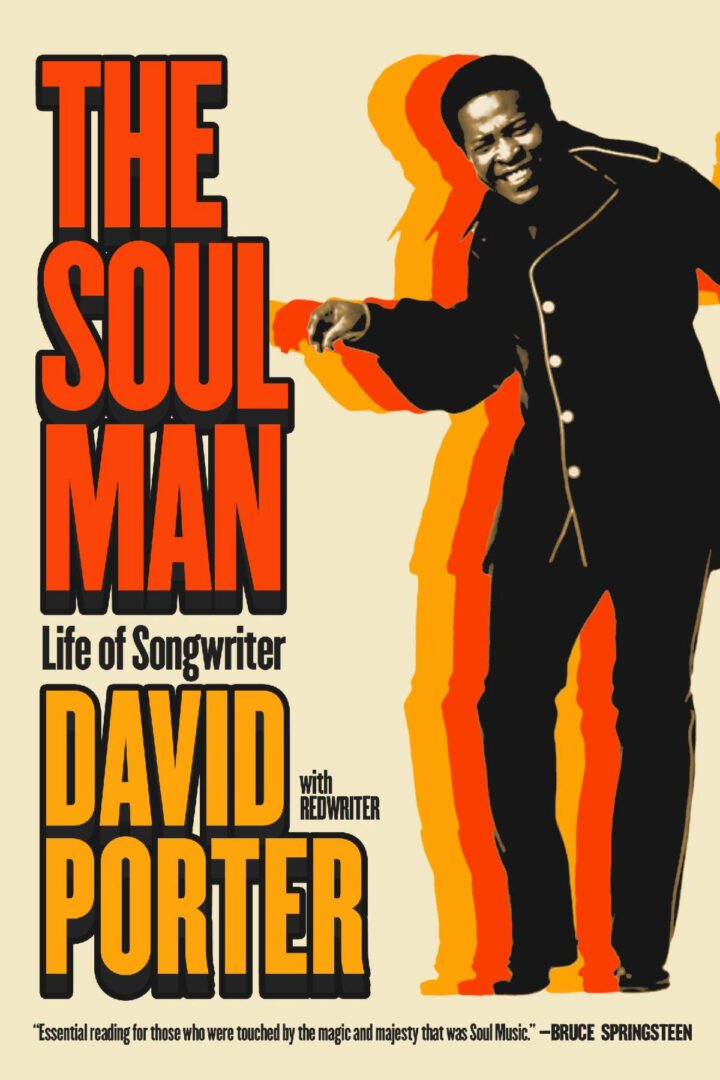
For more than six decades, Stax Records icon David Porter has been writing the soundtrack of our lives. He tells his own story for the first time in his debut memoir, The Soul Man: Life of a Songwriter, that was published April 14, 2026. The GRAMMY®-winning song writer and producer, recently hailed as “the architect of the Memphis sound,” by Quest love, offers readers an inti mate look at the life and career behind some of the most enduring songs of all time. As Keith Richards has put it: “There ain’t no soul music without David Porter. He is a huge part of it and, with Isaac Hayes, laid it all out. It’s a great read about an important part of American music!”
(Harvey Kubernik is the author of 21 books, including 2009’s Canyon Of Dreams: The Magic And The Music Of Laurel Canyon, 2014’s Turn Up The Radio! Rock, Pop and Roll In Los Angeles 1956-1972, 2015's Every Body Knows: Leonard Cohen, 2016's Heart of Gold Neil Young and 2017's 1967: A Complete Rock Music History of the Summer of Love. Sterling/Barnes and Noble in 2018 published Harvey and Kenneth Kubernik’s The Story Of The Band: From Big Pink To The Last Waltz. In 2021 the duo wrote Jimi Hendrix: Voodoo Child for Sterling/Barnes and Noble.
Otherworld Cottage Industries in 2020 published Harvey’s Docs That Rock, Music That Matters. His Screen Gems: (Pop Music Documentaries and Rock ‘n’ Roll TV Scenes) was published in February 2026 by Bear ManorMedia. Kubernik is currently researching a book on the Beatles for a UK publisher with a summer 2027 publication date.
Harvey wrote the liner notes to CD re-releases of Carole King’s Tapestry, The Essential Carole King, Allen Ginsberg’s Kaddish, Elvis Presley The ’68 Comeback Special, The Ramones’ End of the Century and Big Brother & the Holding Company Captured Live at The Monterey International Pop Festival.
During 2006 Kubernik appeared at the special hearings by The Library of Congress in Hollywood, California, discussing archiving practices and audiotape preservation. In 2017 he lectured at the Rock and Roll Hall of Fame in Cleveland, Ohio, in their Distinguished Speakers Series. Amidst 2023, Harvey spoke at The Grammy Museum in Los Angeles discussing director Martin Scorsese's The Last Waltz music documentary.
Kubernik served as Consulting Producer on the 2010 singer-songwriter documentary, Troubadours: Carole King/James Taylor & the Rise of the Singer-Songwriter, directed by Morgan Neville.
Kubernik was interviewed for the August 2025 documentary, The Sound of Protest being broadcast on the TVOD Apple TV broadcasting service. https://tv.apple.com › us › movie › the-sound-of-protest. Director Siobhan Logue’s endeavor features Smokey Robinson, Hozier, Skin (Skunk Anansie), Two-Tone's Jerry Dammers, Angélique Kidjo, Nina Simone, Holly Johnson, David McAlmont, Rhiannon Giddens, and more.
Harvey is also an interviewed subject with Iggy Pop, Bruce Johnston, Johnny Echols, the Bangles' Susanna Hoffs, Victoria Peterson and Debbi Peterson, and the founding members of the Seeds in director Neil Norman’s documentary The Seeds - The Seeds: Pushin' Too Hard. In summer 2026, a DVD with bonus footage will be released via the GNP Crescendo Company).