Joel Zimmerman, professionally known as deadmau5, licks his finger then rubs it against his phone’s camera lens to clean it. In his home in the outskirts of Toronto, Canada—connected to the farm he owns—he sits on a Restoration Hardware Cloud sofa where he says he spends most of his at-home time. “I eat dinner on this couch. I watch TV on this couch. I work on this couch. I fucking sleep on this couch,” he says. “Two things in your life you need to really spend money on: a good bed and a good couch.”
Roman columns rise to the ceiling on either side of him, gracious and majestic, at odds with Zimmerman in his Kitties of Doom T-shirt and black-and-white baseball cap—not a mau5head in sight. He grabs a cigarette and lighter but doesn’t light up for at least 15 minutes. Instead, they’re like props for emphasis points in his conversation. Once he lights the cigarette, the number of times it makes contact with his lips is minimal, but he knocks the ash off intermittently.
Zimmerman is in fine form—animated and chatty, intelligent and biting, like a combination of Steve Jobs and Steve Wozniak. One of the most high-profile electronic dance music artists of the last 25 years, he has been nominated for eight GRAMMYs. He performed at the awards ceremony in 2012, bringing the rave to the mainstream stage while Dave Grohl headbanged in the pit. He has collaborated with Mötley Crüe’s Tommy Lee, My Chemical Romance’s Gerard Way, The Neptunes, Imogen Heap, Skylar Grey, Foster the People, and Portugal. The Man, among many other household names. He’s been integrated into Rocket League, Fortnite and World of Tanks Blitz, and built his own game, Meowingtons Simulator, named after his beloved cat.
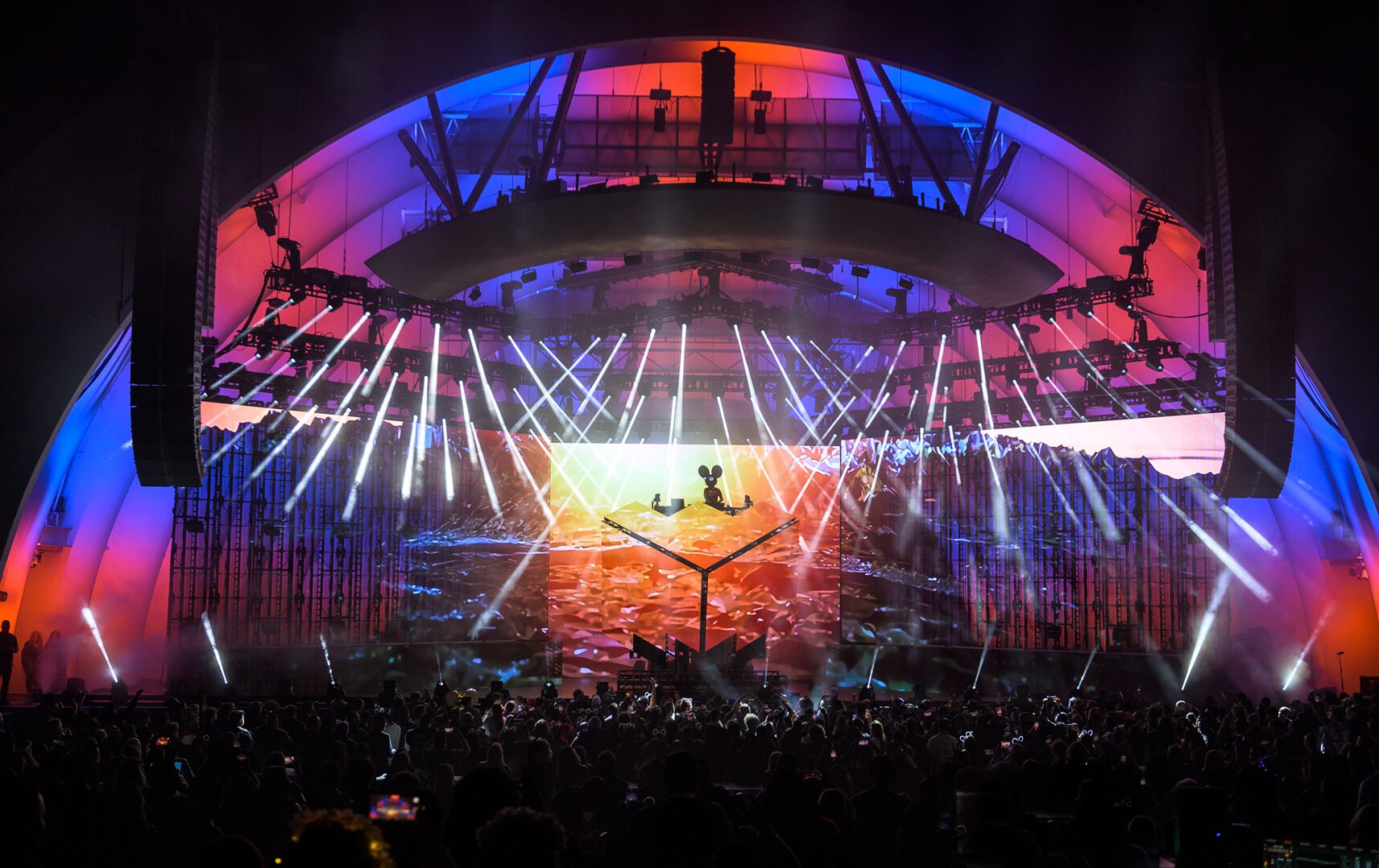
He was the first electronic music artist to grace the cover of Rolling Stone, not to mention Billboard, Vibe, NME, and Music Tech, and the first to headline Lollapalooza. His 2019-2020 cubev3 tour was the No. 2 touring show in the U.S. His 2022 show at the Los Angeles Memorial Coliseum with Kaskade as Kx5 was the biggest ticketed headliner dance event of the year globally. He performed milestone shows at the Hollywood Bowl and Brooklyn Mirage to mark his silver anniversary.
Despite his very public presence, Zimmerman is known for making outrageous statements on the internet—then apologizing for them, and for posting cat content. He’s said many inexcusable things, yet he’s become uncancellable. It’s an impressive achievement and didn’t stand in the way of him being inducted into the Canadian Music Week’s Music Industry Hall of Fame in 2024.
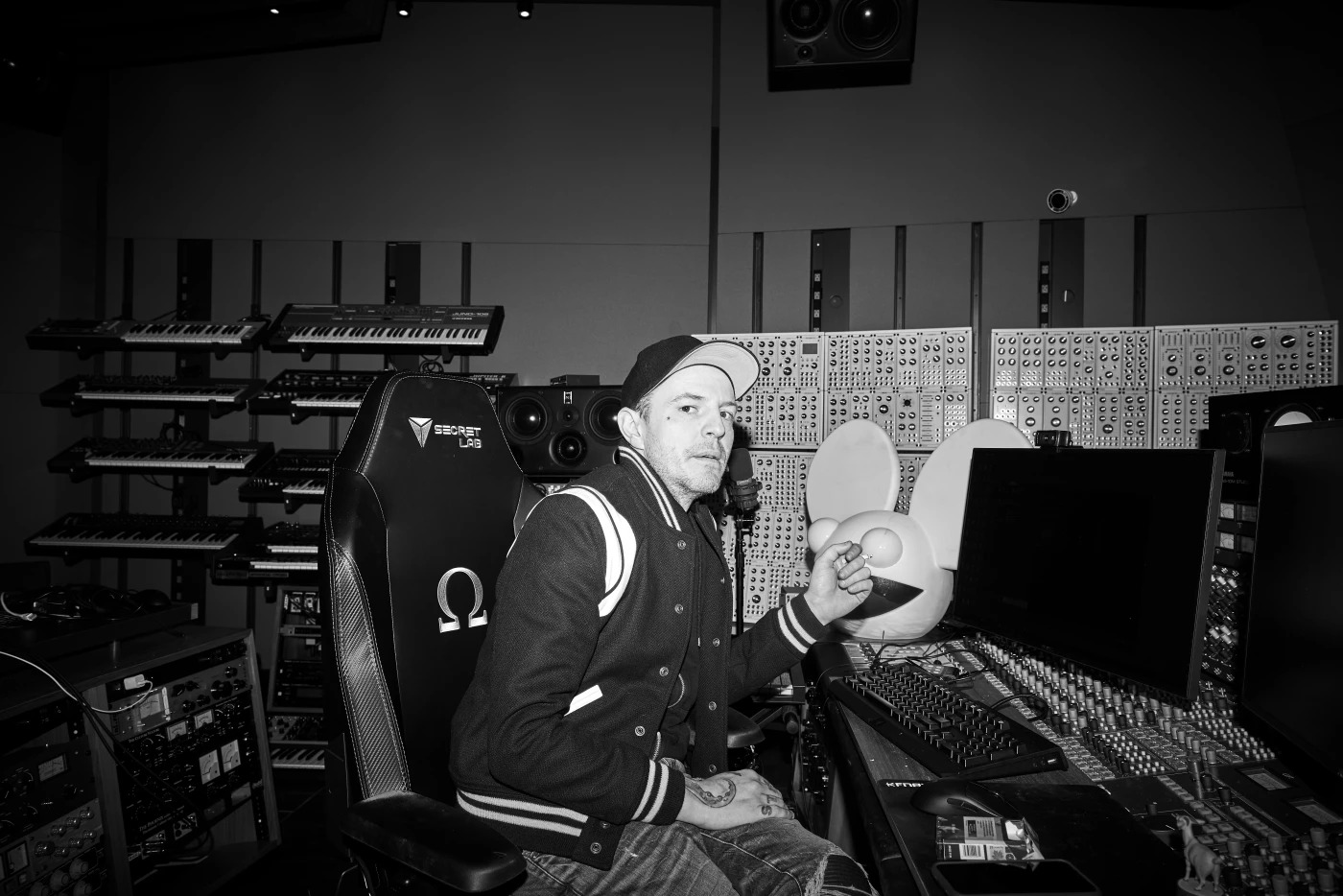
But Zimmerman is not one to dwell on his past achievements. He’s just completed a secondary studio room for his modular synths so they don’t interfere with the mix process in his main studio where, in addition to classic mixing, he also has a Dolby Atmos system. Unlike his electronic dance music contemporaries who primarily work in the box, the centerpiece of Zimmerman’s studio is a 32-channel Neve console. He uses channel strips for EQing and slide potentiometers to adjust levels, and converts to digital audio using Burl Audio’s B80 Mothership, an 80-channel configurable AD/DA interface.
“That’s what we like to call atmosphere models,” he pokes fun at magazine covers of EDM producers standing in front of a 128-channel SSL desk with the aux cord connected to the audio output of their laptop. “I don’t do that for the fashion. That is an expensive flex."
“My sequencing and editing happen in the computer, but the signal path goes through the Neve. The Burl is pretty high end. It’s the best way to capture the Neve sound without compromise. It does the tape emulation real good. You could mix on the Neve and take the master output into a Focusrite into your computer, but bro, that’s how you catch a slap. Don’t do that. My way is an extra two steps. But to me, it’s that .00001 percent of difference. To consumers, it sounds the same on their iPhone, but producing music is more for me than anyone else.”
Groundloop Productions is where Zimmerman cut his studio teeth as a young intern in a mainly computer-free environment. He credits the facility’s owner-operator, Dean Malton, as his mentor and good friend with whom he still works on projects. Zimmerman arrived at the nascence of Pro Tools, Cakewalk, and Cubase, and was tasked with integrating the tape workflow into computers, cataloging Tascam DA-88 tapes. Although laborious, it made him an expert in understanding signal paths. When the shift happened to software, he took his knowledge and seamlessly transferred it to the screen.
A technophile, he harnesses A.I. to assist him with development of audio tools, but not for creative tasks. “The only intelligent thing involved in generative A.I. is the creation of the algorithm and diffusion network,” he says. “In my ideal world, where A.I. integration is acceptable use in the music industry would be where I have a band coming in that I have to track. I need four microphones set up and 12 busses and stuff like that. I would write a prompt to do that, and my templates would be made and ready to go. But nobody’s doing that."
He continues, “Everybody’s like, ‘Make me a melody in the style of…’ I spent a full day with generative A.I. to see how scared I should be. It fucking sucks. I’ve been doing this long enough that I know what an original idea sounds like, and I couldn’t hear one. While it’s impressive that it’s making a piece of shit EDM song, it sounds like every EDM song. It’s not coming up with new ideas. It’s not inventing things. It’s diffusing ideas. There’s no unpredictability with it. I’ve gotten this far without it; I’ll be fine moving forward.”
At this point, his lawyer Dina LaPolt calls—eerie coincidence since she is at the forefront of advocating the No FAKES Act of 2025. Its aim is “To protect intellectual property rights in the voice and visual likeness of individuals, and for other purposes.” Earlier this year, an A.I. version of Zimmerman was posted promoting an artist he’s never heard of and while his immediate response was reactionary, he now says, “When you get some success, you’re playing the lottery. It’s going to be very difficult to prevent generative A.I. from doing something that sounds like you. But, if you’re able to be cloned that way, then you’re not doing it right. You’re not doing anything incredibly different. You can’t rely on existing data to create something new so good luck to you.”
“Creating something new” should be Zimmerman’s short bio as that is what he does whether it’s music, audio tools or live shows for which he developed OCS/Pilot, an open sound control app. In addition to audio, OCS/Pilot can also control lights and video, and is customizable on the spot with modular layouts. He used this system for his standard-setting (now retired) cube shows in all their iterations and made it available publicly in 2020.
But as is his wont, even after using OCS/Pilot for years and perfecting its capabilities, he’s still dissatisfied with the app’s lack of tactile feedback saying he prefers some clicks and less screen staring. For the last six months, Zimmerman has been working on a tool that he says bridges the gap between CDJs and a DAW.
“We’ll have this cool hybrid set up for producers because producers aren’t DJs and DJs aren’t producers, full stop,” he says. “The only way producers can get money is to perform, but they aren’t performers. They click mouses and listen to the same loop 20 times. Now you want to put them on a stage? The path of least resistance is to throw some Pioneers at them and there’s your show. There’s your income."
“It’s a very hard fucking thing to illustrate what you’re doing on a large scale, so that everyone’s making that connection,” he continues. “Nine Inch Nails, the gods of production, had this moment where Josh Freese had to go out and be Vanna White on a giant step sequencer on the screen. I saw them last week with Boys Noize and they’ve got a cool centrepiece where they’ve got their gear out and they’re really doing shit. Don’t get me wrong, Atticus is no idiot, but it’s hard to make the connection of what they’re doing. I’m five feet from them and I still don’t understand.”
Zimmerman has taken the deadmau5 show from festival stages to traditional, high-capacity, seated venues that don’t generally host electronic music events. Besides the Hollywood Bowl and the L.A. Coliseum, he’s performed at Red Rocks, CO, and The Pinnacle, TN, among others. The bigger the venues, the more responsibility there is on him to make the audience go past the conventionality of the space and get involved in the show.
“EDC, you show up on this massive clown dick stage,” he says. “If you bring anything bigger than an ashtray, it ruins everything because they can’t put their big inflatable fucking owl up. We just play the game and hit the CD player a few times. Larger installations like Red Rocks and the Bowl, it’s doing the most with the least. We bring a little extra, but nothing so dangerously expensively crazy where we start looping up ticket prices into the $500 area. That’s why I like these mid venues with Red Rocks being the larger of them versus the MGM Grand Garden Arena. Filling that out with production and having that big of a command on tickets is just not for me. I like those safer plays because we can control it better.”
While some of his contemporaries like Anyma and Illenium have had residencies at Las Vegas’ Sphere, Zimmerman is not keen to have that venue in his gigography. “Everybody goes in with their optics hat, I went in with my business hat, and the numbers don’t make sense,” he says. “The Sphere is expensive. The running costs, the hands involved, the content creation alone, I have done full tours on less than 90 minutes of content that would need to be generated by the Sphere. It’s a big undertaking. I’ve seen a few shows there and I walked away thinking two things: ‘What a great fucking show,’ and ‘That must have cost a fucking fortune.’ For it to make sense, I’d have to do 12 shows. I’m not looking to play if I’m going to owe money.”
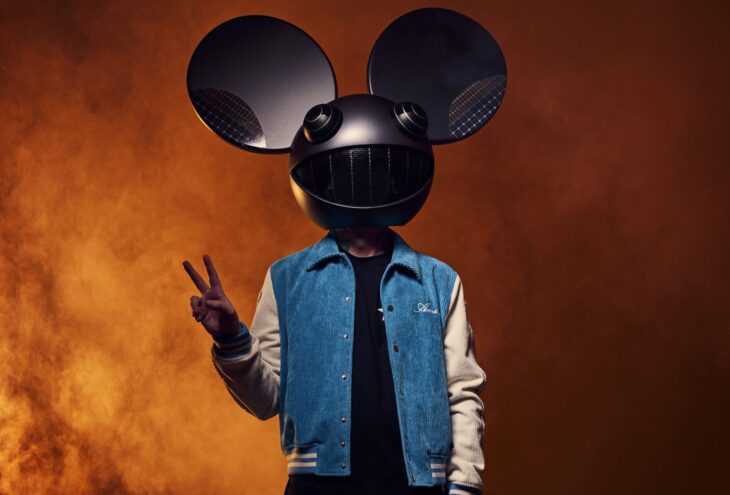
What is seen more and more infrequently is Zimmerman’s identifying marker, the oversized mau5 head. This item was a key factor in his success, creating a mystique around him, helping catapult him as an artist and making him recognizable beyond his music. These days, the head—of which he has many variations—sits alongside him more often than on his head. It’s not because he’s fed up with it so much as he neurologically can’t handle wearing it.
“It’s not punishing to wear, but I cannot see left or right, and I get freaked out,” he explains. “I have overwhelming anxiety then I feel more conscious about my breathing and my surroundings. It’s just not comfortable. I used to be able to cope with it when I was younger but it’s just been getting worse and worse. I wish I could wear it the whole time and be deadmau5 and be anonymous, but I could not hack it. I understand it’s what people love because when I put this shit on, every phone is out and everyone’s filming it. I don’t have any misgivings towards it. I owe my life to that mau5 head.”
This year he released the Westend remix of “Animal Rights,” his track with Wolfgang Gartner, and “Science” with Stevie Appleton—which hit No. 1 on dance music radio. Last year he released an EP, Error5, and a grip of singles and remixes. The word on the street is that there is an album in the works, but with all his accomplishments, what’s the next uncharted frontier?
“It’s more boring than you’d expect,” he says. “As I’m getting older, my ambitions are getting less.” I remember a time when I was really excited about making music and doing new things, but I’m not as stoked about it. I low-key almost sometimes dread having to go into the studio and sit down in front of a blank screen and start something. Not because I don’t want to, but because I’ve done it so much that I’ll sit there and whittle away at something and if I don’t hit it in 15 minutes, I’m going to try again tomorrow. The fire is kind of out.”
Notably more than other genres, electronic dance music is decidedly youth oriented. It was never expected that DJ/producers would persist beyond their 20s, staying up all night and controlling dancefloors into their midlife years, let alone well past conventional retirement age. This fact is not lost on Zimmerman who admits he fights with “the existentialism of being 45 in an industry where 20-year-olds with their shirts half off are just fucking killing it.”
One thing is for certain; he’s not looking for more fame or scrutiny than he already has. What he is continuing to do is diversify his interests while stamping the deadmau5 brand on all his ventures. At the moment, he’s building a 20,000-square foot, polished concrete floor warehouse and two-ton payload trusses with the aim of building stages, not only for himself, but for other artists. He’s excited about working on stage technology and he says it was seeing Nine Inch Nails that brought it home for him.
“It’s not just about buying some lights and programming them right,” he says. “It’s about the design, the execution, the timing, the storytelling and the use of technologies in other ways. I love that shit and I always have with my stage designs. Building a workshop for that kind of thing is going to be really fun.”
Wherever the public is in their perception of Zimmerman’s deadmau5, he’s likely a few steps ahead of them. He sold his catalog for $55 million to Create Music Group in 2025, a deal that includes his mau5trap label. This covers publishing and masters of 4,000 songs. He is one of a handful of electronic music artists who have been offered catalog deals, the others being Calvin Harris, David Guetta, Avicii, and Diplo. Considering how long Zimmerman held onto the majority of his recordings, the decision to sell was a shrewd one.
One of his reasons for selling is simply that those songs are 20 years old and he’s ready to move on from them, handing over the administration to Create. Having the safety net of the catalog sale relieves Zimmerman from the pressure of creation for income’s sake, and gives him creative freedom. He also points out that the lifespan an electronic dance music artist is two to five years before “some 18-year-old kids comes along and east your fucking lunch and you’re out.” He’s seen it countless times.
“Selling the catalog was ‘get out while the getting’s good,’ but not get out for my own benefit,” he says. “Get out as in, get the fucking bag so that’s secured, so every venture I do moving forward—obviously with risk management involved in calculation and in accordance to the bag—that I don’t have to fucking worry about the new kid. If you don’t exit, here’s what happens: your career goes up, right at the top, just like trading stocks, that’s the most your catalog will ever be worth—unless you’re dead. Then because that’s just life, this is what happens: new music and new trends come, and you will ‘fall off,’ or decline, or you won’t be getting booked as much. Your catalog is devaluing unless you’ve had that legacy and that precedent of that value. Then you’ve waited until you’re 80 years old. Electronic music, as it were, doesn’t fucking exist. Your catalog that was worth maybe $20 million isn’t worth anything, because they’re not playing it and no one’s going to buy it. Selling now is hedging your bets and ensuring that security.”
This security also allows him to pursue other projects, including focusing more on mau5trap and trying to be consistent with his fan-focused, and music making-driven, mau5trap mondays livestream. He soundtracked Jonas Åkerlund’s 2019 Netflix movie, Polar. He had a great experience with it as Åkerlund was easy to work with and didn’t give him notes like, “Make it more green-sounding or make it more pensive. There is no such thing as pensive music. That’s just the word they use for the subtitles,” Zimmerman says. He teases that he might be doing another score soon but doesn’t reveal more than that.
He’s also made a sizable donation to his former high school to rebuild its entire music facility from the ground up, revitalizing it from the 1980 era it was suspended in. The project is under construction now, and he’s making himself available to consult on the new modern music making program while ensuring there is enough space for traditional instrument education.
“We’ve had a very similar pipeline in Ontario where the music in high school was, ‘Bang a tambourine to the beat and you get your grade,’” he says. “I wouldn’t trust the decision of my kid wanting to go to Full Sail for 80 fucking grand after high school not knowing anything about it. There was no intro into the recording arts or digital audio, only shit they’ve seen on YouTube. Now you can learn the things that you need to get a taste of it and know if you want that formal education.”
Zimmerman’s commitment to his roots runs deep. Two weeks prior to this conversation, he was inducted into the Milton Walk of Fame and is thrilled about having his name etched in the concrete in front of his hometown’s City Hall. He’s been nominated for 15 Juno Awards and won four, which he’s much more enthused about than his GRAMMY nods.
“I love Canadian stuff,” he says. “I take a lot of pride in being Canadian. I’m holding out for the Order of Canada.”