The Band: Russian Circles
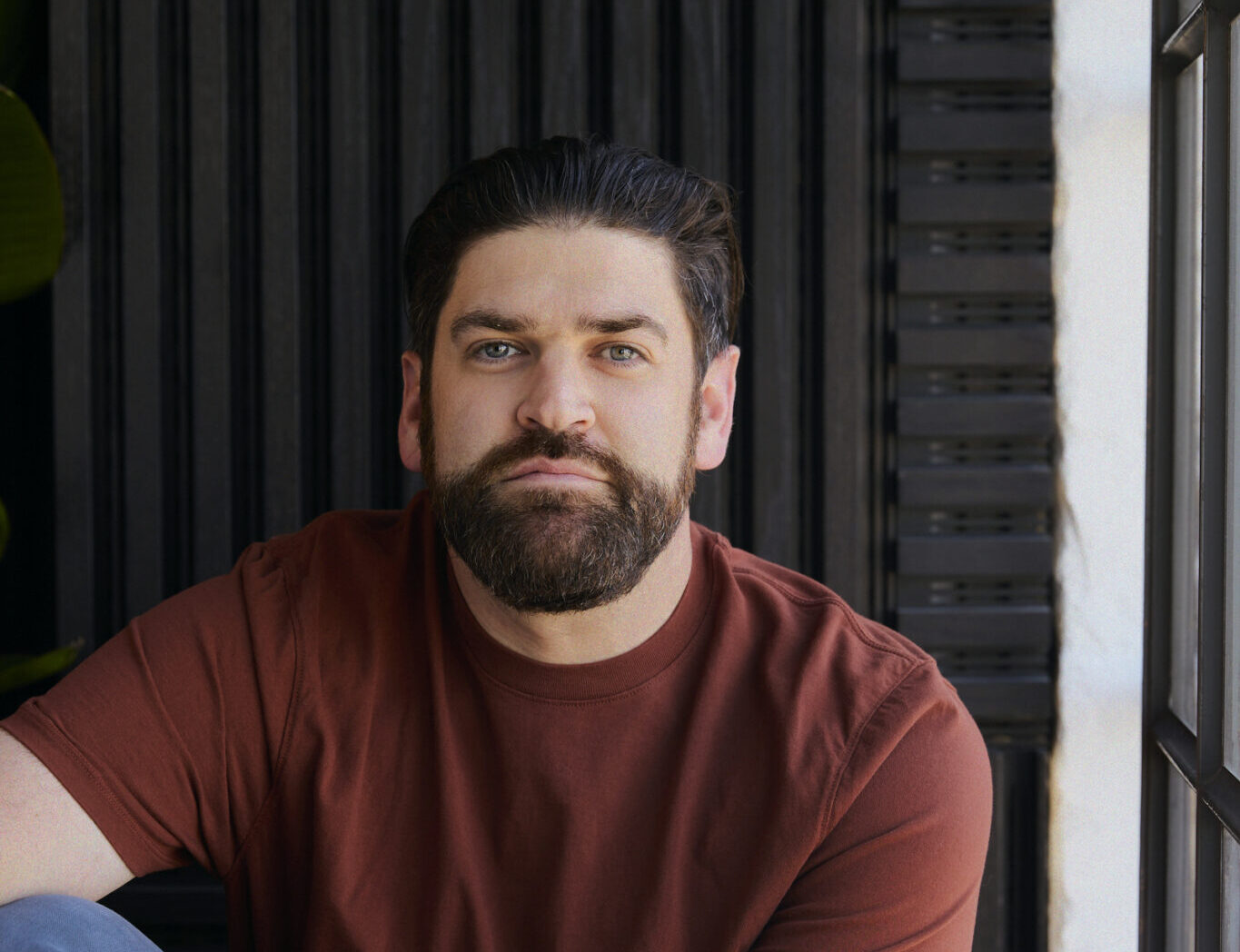
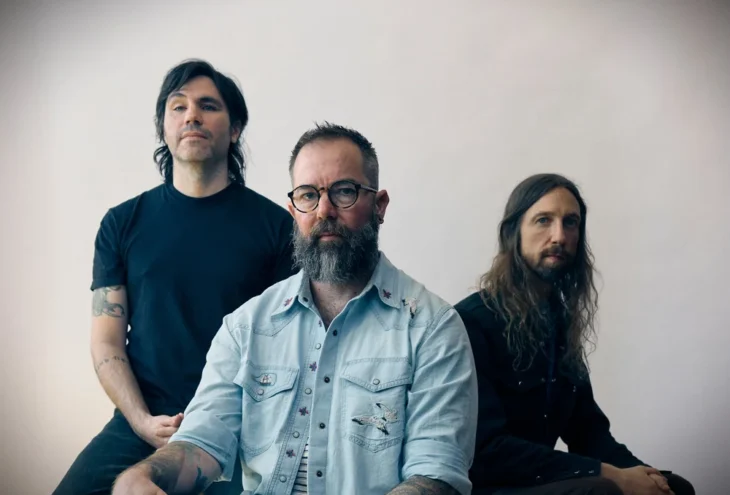
The Members: Mike Sullivan, guitar; Brian Cook, bass, keyboards, synths; Dave Turncrantz, drums.
Produced by: Russian Circles
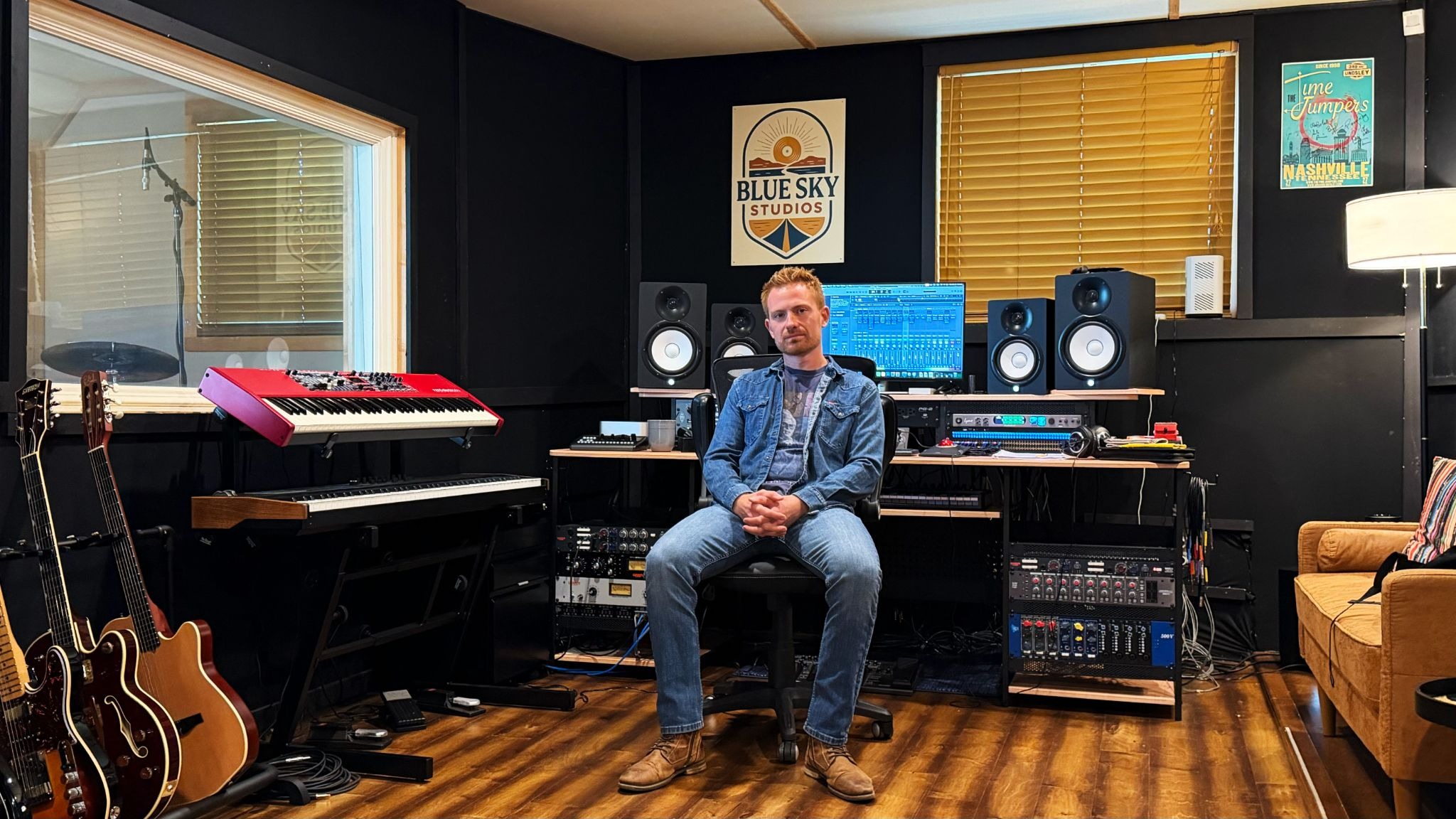
Engineered and mixed by: Kurt Ballou
Additional Engineering by: Zach Weeks
Recorded at: Electrical Audio, God City, and Rancho De La Luna
Mastered by: Alan Douches
The Origin: Possessing an astounding, instinctive ability for building monolithic sonic universes where brute beauty fully immerses listeners into existential surrealities, Russian Circles stands as one of metal’s premier instrumental sonic generators. Through astute, multi-tonal layering, the trio ensures that every hypnotic note holds a sacred frequency, there to survive until it ultimately decays toward its inevitable sonic demise.
To weave these complex, wordless narratives, Mike Sullivan's cinematic experimental guitar loops summon a legion of "ghost guitars," while Brian Cook adds brilliantly dark layers of ever-shifting phantom low-ends. Locking in with these intricate cascading compositions, Dave Turncrantz’s mathematically on-point mind perfectly aligns with the fluctuation within the monumental soundscapes, providing the metal infused motorik beats needed for their arrangements to ride along with the abstract atmospheres suspended in time.
Remarkably, this intense musical connection has grown more unified, massive, and complex over a 22-year career—even as the band members eventually scattered away from Chicago’s storied hard-meets-heavy music scene to live across different areas of the United States. From their dynamic debut album Enter to the majestic, mountain-moving sonics of their latest record NINE, their entire catalog has always straddled the stark chiaroscuro of melodic arcs alongside a major-versus-minor diatonic flux—proving that their universe of creative contrast is entirely boundless.
As Russian Circles live-wired minds continue to pick up and tune into the ever-evolving matrix of “spectral sonics,” they translate those spectacular snippets of sounds into new ‘masters of surreality’ for all to hear. Bassist Brian Cook offers insight into how the band tapped into this energy to create their new album NINE.
The Production: The first step in interpreting those spectral sonics meant bridging the sheer physical distance that separates the trio across Vashon Island, WA, Los Angeles, CA, and Chicago, IL. Because their touring cycles have massively expanded—stretching from a few months on the road during the Station era to a staggering four years for Gnosis—the band had to completely abandon the old method of cramming writing sessions into brief gaps between trips.
“The biggest factor is that it's tough to continuously switch gears between writing and rehearsing,” bassist Brian Cook explains. “I think when you're younger they kinda seem like the same thing, but as you get older you realize that they exercise different parts of the brain. It's kinda analogous to weight training as a touring musician... you're not going to make serious gains if you keep interrupting the process to go on tour.”
Instead of fighting logistics, the band leaned into a meticulous process of independent workshopping, trading home demos via Logic before finally converging as a collective unit. Yet, while remote preparation provides a rough sketch, the true spark only happens face-to-face.
“Working independently and trading demos is still extremely helpful,” Cook notes, “but nothing beats the chemistry of musicians trading off ideas in real time.” These face-to-face connections can both solidify arrangements and iron out the digital friction of remote work.
“As any grown adult knows, it's a lot better to communicate in-person or on the phone than over email. When you're working all day on something and sending out demos to your bandmates at 10 pm, and the email response is 'why is your part so loud in the mix?,’ it's easy to get a little worked up. Hahaha! But you can't work on a painting without making some bold initial strokes across the canvas... and I don't think there was ever a moment where someone articulated their rationale in person where the other parties weren't like ‘oh, that totally makes sense.’ Long story short, the dynamic is always better when we're in the room together.”
Locking into that live, shared energy becomes even more critical when transitioning from digital sketches to tracking. Demos are the personal shared drafts; the studio is where those ideas are tested, transformed, and infused with the band’s combined DNA. For Cook, this leap from laptop screen to studio tracking rooms requires a massive dose of flexibility and trust—especially when dialing in the low end.
“Things can sound great as demos and terrible as studio recordings” Cook shares, describing the distinct limitations of home tracking. “Or... in my case with the bass guitar... things sound terrible as demos because I cannot figure out how to get a decent bass sound going direct into Logic, and I don't want to go down the route of amp modelers, so I have to reassure my bandmates that my parts actually sound good when I play them out of my live rig. Hahaha!"
When the trio finally plugs in together, that bottled-up physical energy completely reinvigorates the music. “We always remain open to changing things once we get into the studio space,” Cook continues. “As much as we try to streamline the process by getting the material as fully formed and fleshed out as possible and having all our tones dialed in, things will inevitably change once we hear everyone play together in a room. Obviously, the energy changes as well. Dave and I definitely play harder, so the rhythm section as a whole becomes palpably more assertive and commanding.”
That fine-tuning doesn't stop once the amps are turned off; Cook notes that the adjustments continue straight through mixing and right up to the final hours of mastering. "There are always a few little overdubs done at home that get tucked into the mix the day of mastering,” he admits. “We need hard deadlines or the songs will never be finished.”
For a band born out of Chicago's music scene, tracking at the late Steve Albini’s legendary Electrical Audio studio carried a lot of personal meaning. Yet while Cook has always loved the iconic producer’s work, he was hesitant to adopt Albini's famous hands-off approach to the entire process.
Stepping into that strange, insular capsule of studio time—and tracking the evolution of a song from rough demo to the final master — is a fine art in and of itself. For Russian Circles, capturing that process requires a producer who knows exactly when to push. They found perfect sonic alchemy in longtime collaborator Kurt Ballou, who acts as a hands-on creative foil — someone who can hold the band to a high standard without stripping away their unique ability to capture, hold, and translate a multitude of sounds.
“Kurt and I essentially grew up in the same sonic corner of punk, hardcore, and metal — just on opposite coasts,” Cook says. “We have similar reference points and philosophies in terms of keeping things raw and natural while also working towards the best possible sonic iteration of something within the constraints of time and ability.”
That shared history allows Ballou to perfectly balance the roles of the engineer. He inherently respects the band's craving for unpolished energy—what Cook calls a “close enough for punk rock” mentality. “I’m the type of person who would rather veer towards Dead Moon than Steely Dan in terms of tightness,” Cook laughs, pointing out that even Led Zeppelin left a squeaky kick pedal in the mix and that no one told Mick Jagger to fix that flat note on the Rolling Stones’ "Rip This Joint.” Cook continues, “I can certainly let a little slop slide. So, Kurt is an asset because he understands how easily something can become overproduced, but he will tell me to do something again if I do a half-ass take. He understands our vision and knows when to step in if we're losing sight of it.”
That commitment to the band's core sound also keeps them from falling into the trap of gear obsession. When asked if he turns to a specific pedal or unique signal chain to spark creative energy during a standstill, Cook notes that the real challenge is resisting the temptation. “I feel like option paralysis is the bigger problem for me personally. I jump between bass, baritone guitar, Moog Taurus, and other synths, so I always start on bass and switch over to another instrument if I hit a dead end.”
For Russian Circles, keeping their setup streamlined is also a logistical necessity for an always working, touring band. Dismantling and rebuilding signal paths might be fun in the studio, but deviating too far means expanding pedalboards and hauling extra gear across a multitude of borders. “We're a working-class band that tours all the time internationally,” Cook explains. “So, adding a bunch of luggage to play one or two songs just isn't in the cards for us.”
Instead of endlessly expanding their sonic toolkit, the trio finds freedom in setting strict boundaries. It’s a philosophy Cook first encountered years ago during his time as a freelance music journalist.
“I remember interviewing this band from NYC called The Austerity Program,” Cook recalls, comparing their antagonistic sound to bands like Big Black or Godflesh, while remaining fiercely their own entity. “Their guitarist explained that they had chosen their palette early on, and their mission was to explore all the possibilities within the very strict boundaries they'd established at the beginning of their career. I really loved that.”
In a modern landscape where bands feel immense pressure to reinvent the wheel with every release, Cook finds peace in working within the perimeters of a defined sonic canvas. “In an age where so many bands look at someone like Radiohead and think, 'We have to take a drastically different approach with every song otherwise we're failing as artists,' it was refreshing to encounter someone who was easily capable of going down wildly adventurous rabbit holes in terms of instrumentation but instead were like ‘Nope… this drum machine… guitar.. bass… we’re using for all our records. No embellishments…’” Cook adds, “Obviously, we haven't adhered to that strict of an approach, but I think we veer closer to that mentality than, say, pulling a Kid A and deciding we're all going to play on new instruments for an album."
Those strict boundaries are exactly what allow the band to achieve their legendary, cinematic scale without drowning the mix. For a band known for a massive wall of sound, the secret to their size is carefully guarding the negative space in their arrangements.
“We have the built-in limitation of being a three-piece,” Cook explains. “A lot of the additional layers you hear come from Mike [Sullivan] looping guitar parts and playing on top of them. But Mike loops that stuff live and we don't play to a click track, so Dave [Turncrantz] must be able to discern the initial loop that's ultimately setting the tempo of the song. We can't overcrowd the mix because we won't be able to hear that initial loop.”
It’s a hard-earned lesson in restraint. Earlier in their career, the band pushed the boundaries of studio tracking too far, creating sonic puzzles that were nearly impossible to solve on stage.
"We've certainly learned that the hard way," Cook admits. "Particularly on the album Geneva, we realized that we'd either created something with too many layers that obscured the tempo, or we added layers that we simply couldn’t recreate live, and that feel too critical to the song to leave out. And of course, you want to supplement the recorded version of the song to offset the absence of that live energy, but you don't want to add a layer that's critical to the track but impossible to pull off on stage."
That trial-and-error means accepting that some studio material doesn't translate on stage, making it best left off a record. “There’s a balance to find in pushing yourself out of your comfort zone versus writing something you can't replicate live, and you can't find that balance without occasionally stumbling,” Cook says. “There are definitely a few songs we eventually had to abandon from playing live because our success rate was just too dismal. We're mindful of 'can we actually play this as a unit?' but we also occasionally go too far and realize, 'oops, no we can't.' We ultimately write songs to play live. If the material doesn't translate on stage, it feels disingenuous to include it on a record.”
But recognizing when to hold back is only half the battle. While the band has a clear maximalist threshold of knowing when to stop adding layers the moment a riff gets oversaturated or a loop gets buried — understanding how to circumvent the inverse can be just as challenging. Deciding when a track is too sparse requires a completely different kind of discipline.
“I don't know if I have a good answer for that,” Cook admits when considering how they manage the emptier spaces. “But one thing I've realized is that we have an aversion to music that feels like it exists within a vacuum. Again, part of replicating the live show is to make it feel like it's part of an environment.”
That desire for a real-world environment is exactly why the band seeks out spaces like Electrical Audio. “The room sounds for the drums are legendary,” Cook says. “You really get a sense of the space and dimensions... it transports the listener to that environment. It's immersive and activates the imagination.” But their fascination with space goes even deeper than room acoustics. In a real concert hall, pure silence is an impossibility — there is always the low murmur of the crowd, the shuffling of feet, or the ambient hum of the venue. Even when listening to music at home, Cook prefers speakers over headphones for that exact reason: he wants the sound to exist within a physical room.
“Pure silence isn't a thing we experience in our day-to-day lives, so why should it exist on a record? Sometimes there's a gap between songs, but more often than not we'll bridge songs with drones because pure silence feels like an unnatural interruption. Even in quiet moments, we'll generally pad things with ambient noise or very quiet background tones so that there is this illusion of resonant frequencies or just general living noise to keep the listener immersed in this sonic world we've invented.”
Maintaining those immersive sonic worlds requires a rare kind of creative alignment bound by a genuine love for creating music. In an industry notorious for rapid burnouts, protecting that creative spark and still loving the process of writing together after all these years is a massive triumph. For Cook, Sullivan, and Turncrantz, that deep-seated bond has fundamentally changed the stakes of the band.
“It's wild that we can continue to do this band,” Cook reflects. “We don't take it for granted. It's one thing to be in a band in your twenties when your personal responsibilities are minimal, you live down the street from your bandmates, and you practice a couple of times a week. It's a very different thing when you're in your forties and juggling the band with being a responsible adult.”
As musicians grow older, the cultural landscape naturally shifts around them. Cook notes the realities of adulthood — the loss of “third places,” the drift away from hip neighborhoods toward environments where isolation can easily creep in, whether personally, geographically, or both. He points directly to the cultural phenomenon of male loneliness in aging adults as a very real consequence of those shifting lives.
Yet, instead of letting those pressures pull the trio apart, the distance has only made their time together more vital. “I think there has been the usual growing-up thing where our personal lives aren't as intimately woven together, but it also makes the band an extra-special place, because it provides a shared experience that keeps us bonded as friends,” Cook says.
“We all value our time and the music we make together, so we've managed to avoid the 'business first, friends later' thing that I've seen plague other bands. At the end of the day, I feel very fortunate to be in a band that gets to put out records and go on tour without going broke, and I get to do it with two of my closest friends.”
When asked if there was any final piece of the puzzle left to uncover about NINE — or some hidden studio revelation that took him by surprise during tracking — Cook offers up the unpretentious honesty that has guided the band for over two decades.
“Not really,” Cook laughs. “I wish I had a cool story to share here, but I'm drawing a blank, and I feel like I've rambled enough already."
Photo Credit: Chris Strong