The Artist: Bayonne
Produced by: Bayonne (Roger Sellers)
Additional Production by: Matt Toman
Engineered by: Roger Sellers, Matt Toman, and Danny Reisch
Mixed by: Danny Reisch
Recorded at: Bayonne's Personal Recording Space
Mastered by: Steve Fallone
The Origin: Originally earning acclaim for his enthralling folk fusion arrangements, Austin-based multi-instrumentalist Roger Sellers — who now records his electronic-stylized symphonies under the moniker Bayonne — captures musical auras awash with misty, transient tones. He builds hypnotizing atmospherics that shift and drift effortlessly, lulling listeners into dreamworlds where warm, radiant layers of cascading melodies swing and sway into luminous, transcendental soundscapes.
At the heart of this vivid sonic world is Bayonne’s distinct approach to composition. He constructs songs by layering live loops—playing, then gathering and weaving a vast array of instrumentation from cascading piano arpeggios to sweeping, immersive guitar chord progressions, and hypnotic harp glissandos—alongside a mélange of found sounds and everyday non-traditional sonics recorded on the fly. By cataloging these loop arrangements and field recordings over time, Bayonne has essentially curated a private athenaeum chock full of idiosyncratic audio samples that he can pick from when looking for inspiration at any given point in time.
Perfecting this mesmerizing methodology, moving past his experimental folk origins into his loop-driven electronic workspace as Bayonne, he developed an intricate yet natural way of creating beautiful sonic collages. This sonic transition materialized in his stunning debut Primitives (2016) and the synth pop of Drastic Measures (2019), before paving the way for the dreamy introspection of Temporary Time (2023) – earning him high praise and admiration from contemporary electro-fusion visionaries including Thundercat, Caribou, and Neon Indian.
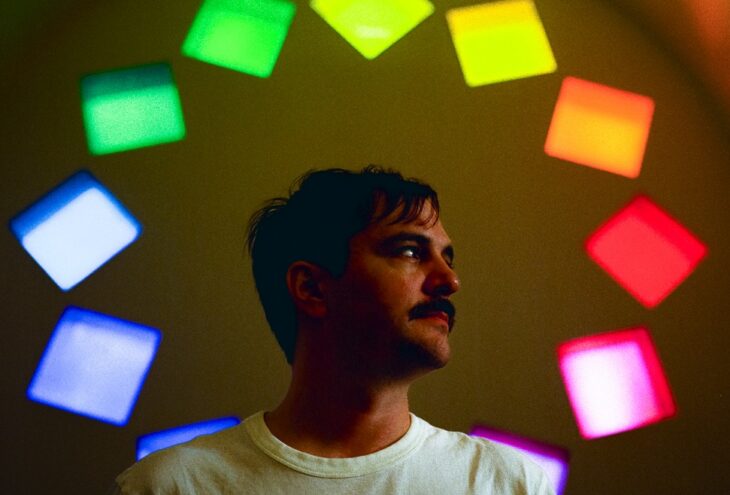
With his latest ambient masterpiece, Filters (2026), he continues to expand his lush, chromesthesia-leaning soundscapes that bleed vivid auditory hues. Here, Bayonne explains how he captures and colors sound.
The Production: Being both a highly analytical and deeply creative integrative thinker, Bayonne approaches recording with an elusive psychological duality. He exists between being an audio archaeologist and a creative empath, a pairing that opens up an unstudied yet focused pathway for drafting his multi-phased, loop-driven orchestrations. Bayonne shares:
“There is no one way of doing it, but for me I think having a library of loops is really important, and going through and finding them is something that is part of the process, because it's not always easy to say, 'Okay, I'm going to go in and work on a new song today.' I feel like most of the time it's just a matter of playing around… usually, you find something, mess around until something strikes, and then it goes.”
Since there isn’t a formula to Bayonne’s creativity, it is a matter of letting the music flow. With Filters, it was a lick of a lyric or a small phrase that often led the creative process, yet his fundamental stream-of-consciousness style remained. This left Bayonne to solve a sonic circle, thinking, “I need to get to this sound… and so how do I get there?” He described the process of matching a vocal snippet with a melodic motif:"
“A lot of the time, there'll be a vocal hook as I'm writing the song, or even as I'm just doing the loops,” Bayonne adds. “It might just be one word or a small phrase that you know is going to work because it sounds and feels right, and then you just kind of work around that. Especially with this record, I’ve realized there's a lot of working backwards. It's like, 'I need to get to this point,' and you build the path to it. But you never quite know what the outcome will be until you're there.”
Bayonne notes another tidbit about his creativity: to let a song reveal itself along its own timeline.
“Sometimes you don't know what a song is really about until way later, or it's like you've reinterpreted it in some way,” he continues. “When it comes to figuring out a sound or getting through a stuck mode, the only way to do it for me is just by messing around, playing through it, and it will [appear].”
And if or when a vocal hook or a lingering arpeggiation continues to float along aimlessly, often the piano lures it toward its destination.
“Piano is by far my favorite thing to record with,” Bayonne explains. “It is always the go-to for me. It is my favorite instrument. It has been the main creative focus throughout my life and feels the most natural. It's so easy to play with feeling on the piano; you can play loud and intense or soft and delicate. The dynamics are amazing—the lows on a 12-foot grand hit your chest so powerfully. You can really speak with piano.”
Reflecting on the process of capturing these sensations, Bayonne adds another element: field recordings, creating an acoustic puzzle that documents all sorts of moments in life.
“The activity of sound around you, I think, is beautiful,” Bayonne shares. “Sometimes you can just get [record] the right moment and then throw it inside of a song; it makes it so much more personal. It feels like you're working on a journal entry. That sound, that moment in your life, is always going to be there, and it just makes it so much more profound and meaningful to me.”
By allowing those transitory environmental sounds and impressions to become part of the music, Filters possesses a languid, lived-in feel. After all the experimentation and discovery that went into creating the album, Bayonne is eager for listeners to experience the music for themselves—particularly the first three, previously unreleased tracks."
“With this album, that's the thing I'm most excited about is people hearing those first three songs,” Bayonne concludes. “['Unexpected'], the first track, is one of my favorite songs I've ever made. So I'm super proud of that. I'm glad that people are going to drop right into Filters, right there.”
Photo Credit: Pooneh Ghana