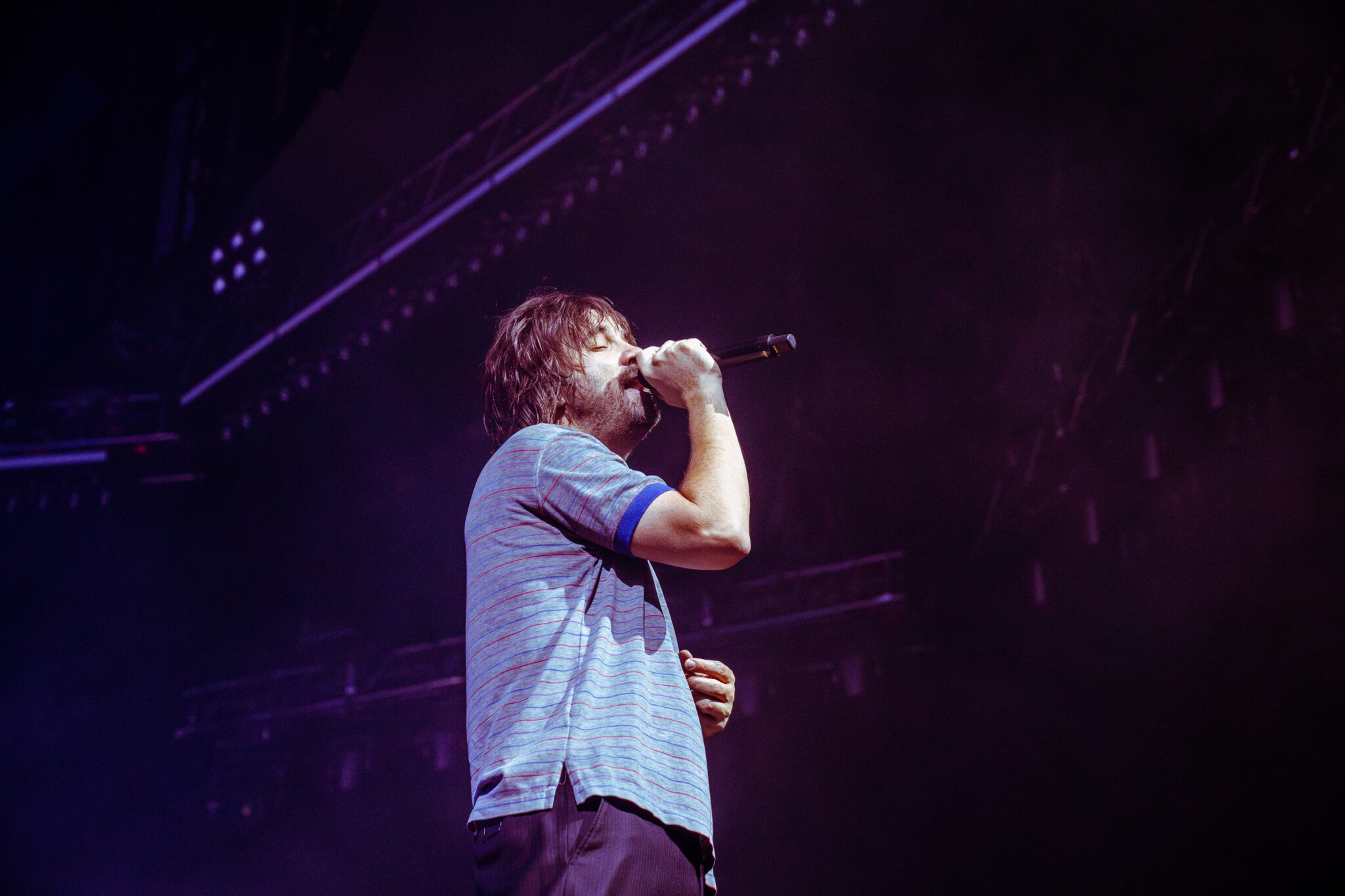
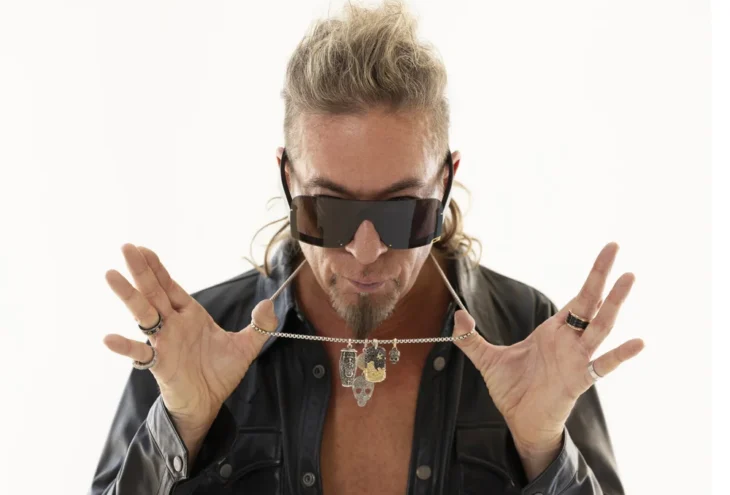
The Artist: Frankie Muriel
The Storyteller: Frankie Muriel
The Song: Shimmery, nimble vibraphone lines and a montuno piano vamp open Cal Tjader’s 1960s classic “Soul Sauce (Guachi Guaro).” They lock into a rich intersection of classic son clave rhythms, while the glassy glissando runs of the vibraphone—the distinct, metal-bar-based pitched percussion instrument famously popularized by jazz pioneer Lionel Hampton—weave seamlessly throughout the entire track. A reinterpretation of jazz legends Dizzy Gillespie and Chano Pozo's "Guarachi Guaro," Tjader’s version mutates standard jazz progressions to create a distinct brand of cool, spacious, melodic froth.
This compelling fusion, built on a base of Latin grooves, became the signature sound that attracted a massive wave of new listeners, ultimately helping to bring this style of jazz to the forefront. That same vibraphone aesthetic, interwoven with a rolling mambo beat, remains audible in the work of conga legend Poncho Sanchez as well as the dream-fused loops heard in modern heavyweights like Tyler, The Creator, who notably interpolated Tjader’s arrangement of "Invitation."
The Background: Possessing a keen awareness of music from a young age — taking note of the vibrant sounds of his father, Frank Muriel, an accomplished Latin jazz percussionist — Frankie Muriel the younger naturally developed a deep relationship with rhythm. Beyond the beat, he absorbed an innate knack for songwriting and showmanship, an inherited intuition that helped him to heed the call to entertain. This compulsion eventually steered him to front the funk-rock-flavored band KINGOFTHEHILL. With MTV heyday hits like “I Do U” becoming mainstream fixtures, Muriel learned the art of the larger-than-life performance.
While enjoying peak popularity, Muriel noted the unpredictable tides of musical tastes and industry trends. Observing these shifts, he recognized that longevity often required strategic pivoting as well as a strong dose of creative autonomy. Armed with this sharp survival instinct, he prepared to adapt, ensconcing himself in recording studios to learn the ins and outs of the production process while plotting a way to reinvent his career and re-emerge.
This behind-the-scenes education proved to be both creatively liberating and highly profitable, ultimately paving the way for his return to lead the dance-rock juggernaut Dr. Zhivegas. The demanding live show marathon, filled with dynamic theatrics and spectacular staging, captured a massive following for nearly three decades. Yet, after years of relentless touring and sensing another sea change, Muriel course-corrected, moving away from the band formats of his past toward a solo endeavor. Beginning with the 2025 release I’m Still Standing, and continuing into his recent release, The Cabo Sessions, Muriel comes full circle, returning to the improvisational rhythms that first inspired him as a child.
The Story: Nights infused with syncopated percussive breaks and vibrant Latin melodies were a constant from an early age for Frankie Muriel. For him, music and memory became an inseparable tapestry of sights and sounds, with its selvage being Cal Tjader’s classic “Soul Sauce (Guachi Guaro).” Growing up under the immediate influence of his father, Frank Muriel, an accomplished percussionist, Frankie Muriel found himself immersed within the genre.
“It’s been a part of my life and part of my life’s soundtrack since I was a baby and I could hear music,” Muriel recalls. “It was a favorite of my father’s — and was also the kind of music that he played — so it was always in our house, it was part of the soundtrack...” Naturally, this constant exposure to such irresistible sounds also sparked an urge to dance. “I think as a child you feel that instinctive pulse and you start moving your body, and those are the great songs that [are always making you] move first,” he explains.
Beyond just the physical groove, the song carried a personal family connection, right down to "the rhythmic break to the song, how it starts off and the vocal break...” It was this specific section, and the distinct vocal call-out within the song, that Muriel connects with the most.
“It stayed with me because it sounded like my father’s voice. I always thought that it was his song because his band played it and it sounded like him singing the refrain,” Muriel shares. “Obviously, I was too young to understand what resonated with me, but it’s a core memory… Now it is in regular rotation in my home, so my daughter is growing up with this as part of her life’s soundtrack. To this day, I always hear him in it.”
These jazz arrangements inadvertently wired Muriel’s understanding of songwriting, teaching him how to decode a hook before setting foot onto the stage. “I think I learned about rhythm and melody from these types of songs way before I discovered rock and pop,” Muriel reflects. “These songs had a catchiness to them without lyrics, and the rhythm is just a hypnotic look into the groove, which I think is the hook that gets inside of you as you listen.”
The early childhood grooves stayed with him, shifting from a nostalgic background track into a major focus for his new music. While working on his latest material, those deeply embedded cadences resurfaced.
“I grew up as a drummer and vibraphone player, which combines percussion and piano into one instrument, so that’s how I learned my melodies,” Muriel notes. The percussion and the congas have also taken on a more prominent role in his newest collection of songs.
“As I was working on my new album, The Cabo Sessions, I realized the sounds from my youth had completely permeated into my writing. What started as a way to honor the memory of my father turned into understanding that these rhythms were in me the whole time. I’ve just let them out, and they’re creating textures and adding great energy into my new music.”
Photo Courtesy of Big Picture Media