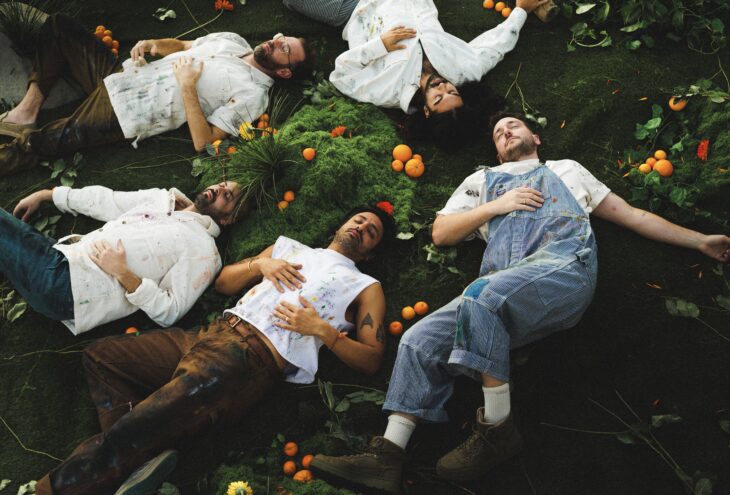
The new year was still fresh when we landed on a Zoom call with Young the Giant’s enigmatic frontman Sameer Gadhia and charming multi-instrumentalist Eric Cannata. The air was crisp (even in Southern California), the extra holiday weight still stubbornly lingering, and the political climate was not allowing for any traditional vibes of new hope.
And yet, the conversation was a free-flowing, warm experience. The two musicians love to talk about their work, and they’re justifiably proud of what they’ve been up to of late. Victory Garden, which drops in May, is YtG’s sixth studio album and, true to form, it displays a marked progression on their celebrated career path. Further evidence that, while this band has a sound that is very much their own, they also refuse to stand still.
The band (completed by Jacob Tilley, Payam Doostzadeh and Francois Comtois) formed in 2004, originally as The Jakes, and the lineup has stayed consistent since 2008. The quality has also remained remarkably consistent, and MC asked Gadhia and Cannata what keeps them creatively buzzing.
“Some of it, I think, is inexplicable,” says Gadhia. “I think it’s that we don’t feel like we’ve explored and said all that we want to say as a group together. I think the second that happens, that’s the eventuality. But right now, we’re just enjoying each other. I think we’re closer than we’ve ever been as a band. We feel more confident as players and songwriters, and there’s more that we want to say. Every time we work on a record, there’s this infinite zero. It’s like you’re trying to get to this place of perfection every time. And you’re obviously wanting to better it and get better at your craft. That’s, for me, what keeps it going.”
“The more we do this, the more we realize there’s so much to learn from each other, from the different collaborators we work with, different producers, engineers,” adds Cannata. “I think that, for this particular record, it was a coming back to form. All five of us writing and recording almost like brothers. Being together and seeing where we were all at as a collective and what we wanted to focus on for this record was really kind of viewing the world from the lens of a child or of the beginner’s mind. Going back to the beginning, when we were making our first record. So I think there’s more vitality than ever within this band and just being present with each other and enjoying the time, because at the end of the day, we do really love collaborating with one another and really love the friendship and camaraderie that comes with this project.”
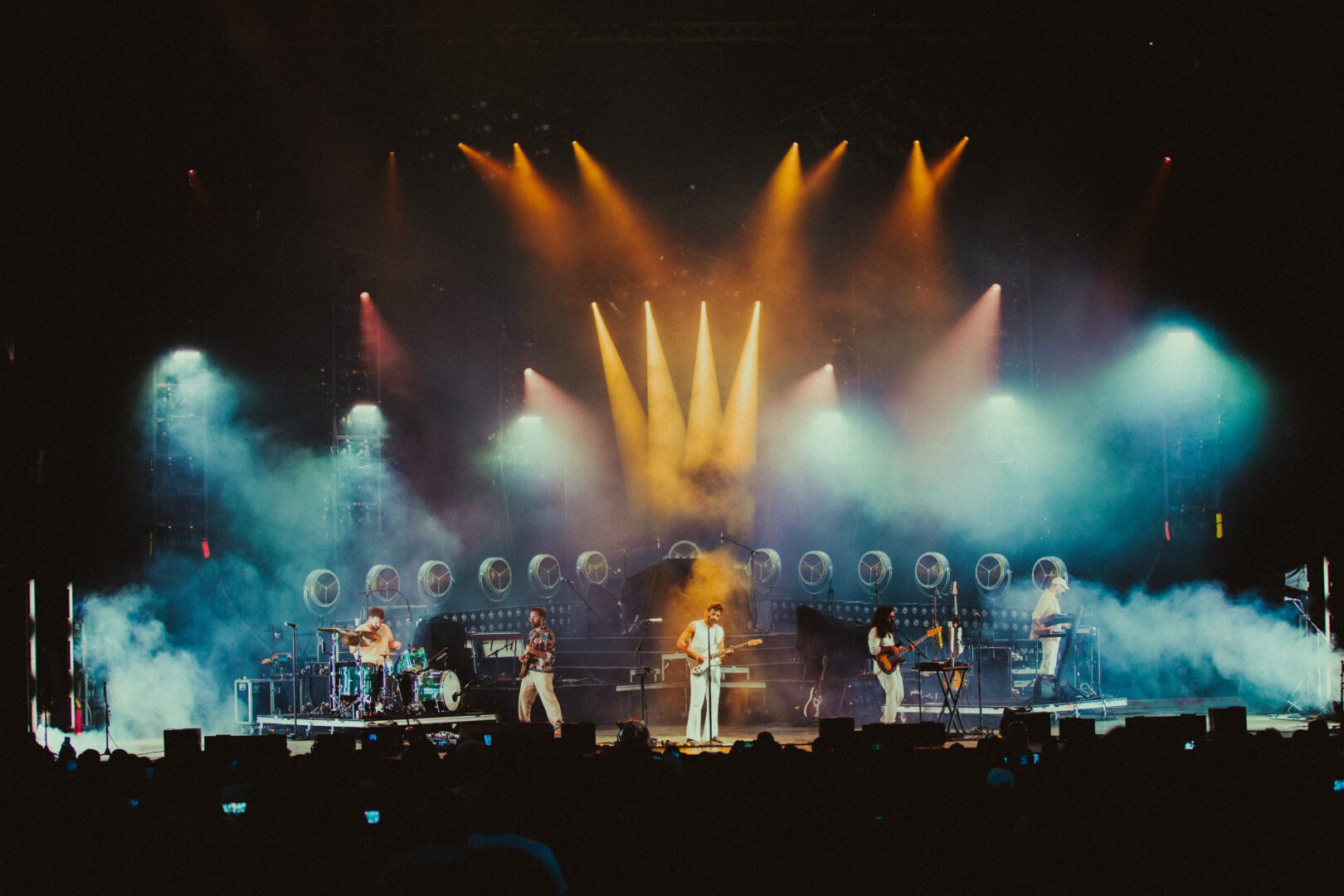
That camaraderie has been there from the beginning, when the band formed in Irvine (Orange County), CA.
“Irvine is a unique place in Orange County, in that the rest of Orange County is pretty homogenous,” says Gadhia. “It’s pretty conservative. Whereas the Irvine that we grew up in was very diverse. It was filled with immigrants from all over the world, some of whom were fleeing very conflicted lives, difficult worlds, to find their form of paradise. It’s a huge cultural hot pot for ideas, for music, for culture. That being said, Irvine is a very manicured place. As you get older, you appreciate things like great public schools. There’s access to education; there’s access to music. And the music that we all had access to at a young age was very important. By the time we were all teenagers, there was a vibrant local music scene. Bands like Rage Against the Machine came out of Irvine, decrying the situation of the world that we live in. For us as teenagers, we were going to shows all the time. And there were shows that were put up all over the place. It became a testing ground and a place to try new ideas. So it was really exciting at that particular moment. Other bands of that era were Cold War Kids and Local Natives—we were all playing shows together.”
Young the Giant’s 2010 self-titled debut album was released on Roadrunner Records (primarily known for metal), the next two dropped on Fueled by Ramen (known for punk), 2018’s Mirror Master came out on Elektra, then 2022’s American Bollywood was released by the super-hip AWAL. Victory Garden is coming out on the punk-focused Fearless Records. So why the label-hopping?
“Roadrunner was our first home,” says Gadhia. “I think at the time, looking back, it was the best home for us, because it was a place where they were trying to prove themselves as a label that could break something else besides heavy metal. I think that’s such a great tip—to be a part of a label where you stand out. I think that really helped us. AWAL was just a quick licensing deal. We wanted to see how that worked, and there were some good things and bad things. We wanted to find a partner that was really passionate and believed in us as a band, and where we were going in the future. We found that in Fearless, which in some ways reminded us so much of our early days at Roadrunner—we do stick out from the roster, and that’s exactly what we want.”
Andy Serrao, an old friend of the band, is President at Fearless, and he played a key role in getting YtG on the roster.
“He was the owner of Chain Reaction, which is a storied venue in Orange County that we used to perform at all the time,” says Gadhia. “He was the reason why we got signed and discovered in the first place, 15 years ago. So, it’s pretty amazing that he’s now the GM of Fearless, and we’ve been able to kind of get back with him in so many ways. It feels like a comfortable home now, to be on Fearless.”
Previous effort American Bollywood was an ambitious piece of work that is worthy of the listeners effort and attention, but it may have caught a few fans off-guard. We’re convinced that it’s a slow burner, that people will discover it down the line. For the band, and Gadhia in particular, it was a worthy endeavor either way.
“It was a very personal record for me to make, and it was something that I had to make,” says Gadhia. “I really appreciate that the band dove in full. Eric was such a huge, instrumental part of the songwriting power of that record, and our ability to come together. Everyone really poured in and understood what we wanted to do. I think we’re very, very proud of that album. Obviously, it didn’t go the way that we thought it might go, but I think that was a learning process for us. And at the end of the day, we still went on a tour that was our biggest tour.”
The band tackled some tough subject matter on that album, warnings that we’re seeing come to fruition during the second Trump administration.
“It still means so much to us, and it’s the record that we own outright,” says Gadhia. “The great thing about the internet is when things get discovered—at some point, maybe people will pick it up again.”
“I feel like we were so incredibly inspired with that record,” adds Cannata. “A lot of the writing was throughout the pandemic, so it was very difficult. It was a painful process. Just getting in the room together was a difficult thing, but I think it was musically a culmination of where we were at, at the time. I really think it closed a chapter, a really important chapter, musically for us. And I think that it was a bold record. I do think performing those songs live, even now, after we’re getting geared up to put out our sixth record, we could tell that a lot of our fans, there’s some of their favorite songs and some of our best work musically.”
Perhaps, but Victory Garden rivals it. True to form, the songs are epic, soaring, and majestic while displaying an openness, vulnerability, and real-ness that creates an air of rare accessibility.
“All of us have become solid producers in our own right,” says Gadhia. “We wanted to work with a producer who recognized that, and it was a collaborative process where so much of the skeleton the songs were from the demos and the production that we’d already done. I think with every record, there’s a new process. And with this record, the inspiration was really just getting back to being in a room together, being live, performing together, writing the songs in the room together. And several years ago, around the time of American Bollywood, we bought a band house together, in the hope that we could reconnect in that space.”
That’s a return to “Monkees”-esque band living for guys who, at this point in their individual lives, are in a much different place personally than they were in the early days of Young the Giant.
“We used to live in band houses for the first record, the second record, and then obviously we started becoming adults and having our own lives and getting our own places,” says Gadhia. “There was no headquarters, so we got this house and built it into a studio with the hopes of working there. And we did do a lot of great work there, even a little bit of tweaking for this record. But what we were realizing was that, being in L.A., so much of the rest of our lives and responsibility were calling to us from the other side of the door. We find ourselves just a little bit distracted there, and we would spend months working on stuff that we knew that we could work at a more inspired and faster pace. The concept was that we were going to go and surgically inundate ourselves in the process. And so we would go out to Idlewild and Joshua Tree. We did four trips in total, two at each, and we spent a week there.”
So it was that Young the Giant holed themselves up in an Airbnb, dropped some psychedelics, and reconnected as human beings, in the process finding inspiration for new work.
“We really wanted, at the very top, to not be precious, not to overthink things,” says Gadhia. “I think, even with American Bollywood, we loved so much of that, but we spent so much time painstakingly obsessing over the tiniest details. And while that is important, I think there’s an element of what we’ve always wanted to chase, which is our live performance, and we hadn’t really found a record that was able to capture that energy. We wanted to be rough around the edges. We wanted to record it fast. We wanted to write it fast. So we decided to then work with Brendan O’Brien, who is such an amazing band producer and has done so many iconic albums. He’s the last of a very few people who know how to make that sound feel like live.”
The relationship with O’Brien, who has worked with the likes of Stone Temple Pilots, Black Crowes, Aerosmith, Springsteen, AC/DC, and many more, was a productive one. Victory Garden was recorded in three weeks, while prior to that it was written in about four weeks total (spread out over a year and a half while touring).
“We want this record to have radical empathy and humanity, and so we did everything in our power to keep it real,” says Gadhia. “There’s no programming going on, everyone’s in the same room, and the bulk of the album has been performed and recorded live.”
“I think that with the advancement of technology and the ability to record records in your home, in your bedroom, I think that it’s a choice, right,” adds Cannata. “It’s a choice for us to say, ‘Let’s all be together. Let’s write the record together. Let’s record together and capture not only great performances of the songs that we had written, but the sheer fact that a bulk of the material was recorded with all the instruments at the same time.’ I think that there’s a special thing captured. And I think a lot of people are craving that, capturing people performing at the same time again, because we live in such an isolated world, sitting on our computers, on our phones.”
While Victory Garden is by no means a concept album, Gadhia says that “radical empathy” is the top line, the connective tissue that makes the whole record tick.
“In this time that we’re in, we vacillate between meaningless stuff, where ‘is life a simulation’ to the ‘nuclear death clock’ of things just nearing an end and hopelessness,” he says. “And this is an ode to everything that is human, everything that’s beautiful. I think having that unconditional love, and having radical empathy, is its own form of resistance. Seeing life through a child’s eyes and seeing that hope again. Hoping that this record is a beacon of hope for not only ourselves, which it definitely has been. It’s been this ray of light in our lives, and it can be that for other people.”
One of MC’s favorite songs on the album is “Already There”—a future anthem that will surely have future crowds simultaneously swaying and singing. We asked the guys to use that song as an example and take us through their process.
“It was really about what the song needed,” Gadhia says. “The song took priority. And with that one, it was a spark of a concept of synthesizer that I believe Eric played me. Oftentimes in the studio, you can kind of sit and be like, ‘oh, how do we want this to sound? What do we want to be like?’ And I think this was this process. We were just trying to be natural and unthinking, and whatever came its way is what the song needed. It was about being intuitive with the arrangement. I remember that was in Joshua Tree. I think it was relatively quick; the melodies kind of swam in a little bit later. But the instrumentation, everything else, just felt really natural and came together.”
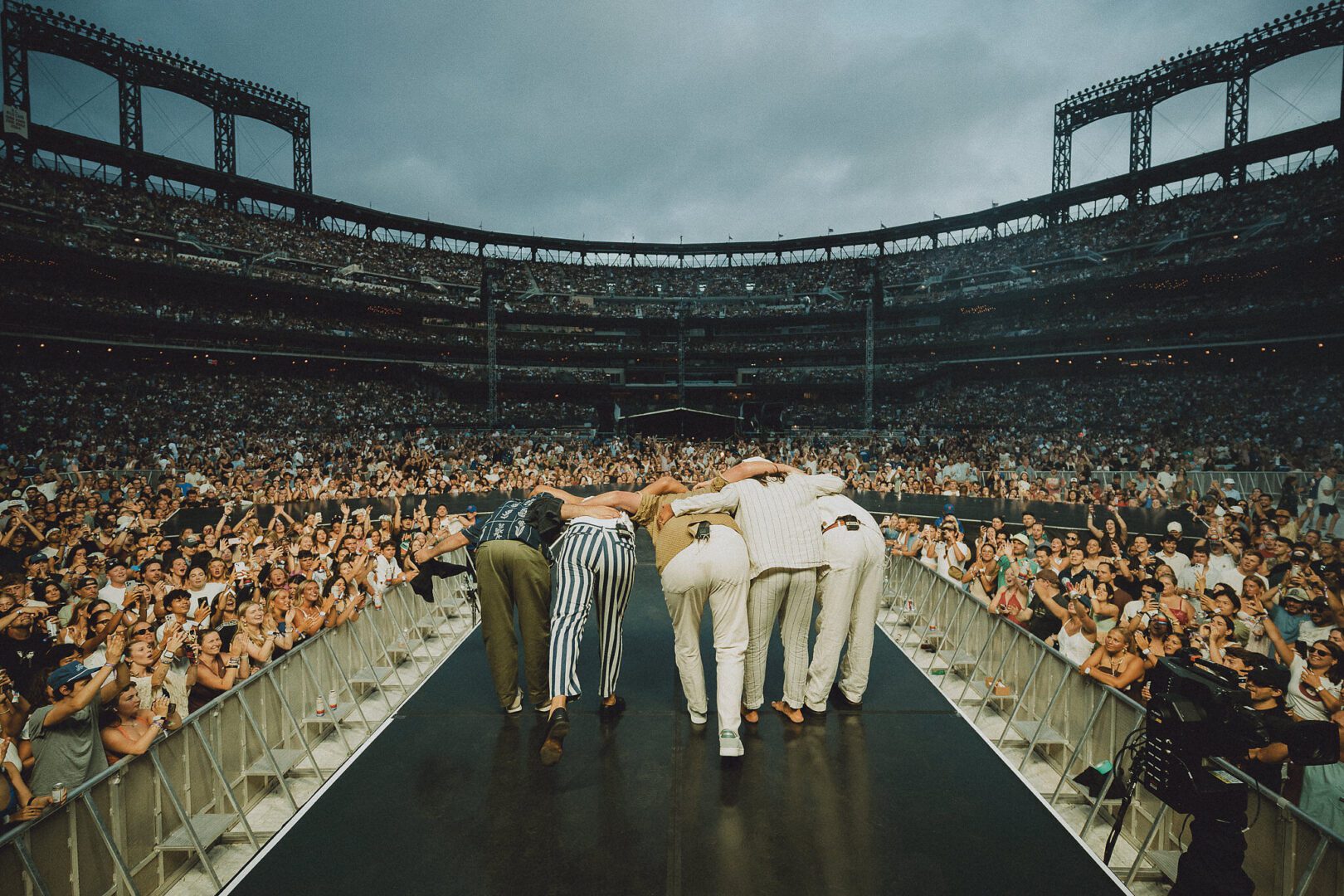
“I was listening back to a few voice memos of ‘Already There,’ where it’s just the base synth that you hear at the very top of the song, and Sameer and I bouncing off each other,” adds Cannata. “And it’s really cool to hear that process of the melody writing, coming from this spark, these chords, or this bass synth, and us just kind of bouncing melody ideas off of each other. A lot of it will be trying to get into that flow state of almost unconsciously riffing on melody ideas.”
Naturally, we asked Cannata and Gadhia about gear, and Cannata in particular was enthusiastic in his response.
“For this record, we were trying to keep a lot of the instrumentation of the strengths of each member,” he says. “So when it comes down to it, there’s two guitars, vocals, drums, bass, and then we’ve always dabbled into drum machines and synthesizers to help embellish and create a sonic world that feels inspired to us. Some of the instruments that were really important on this particular record was the Moog Sub 37 synthesizer. You hear it in the pulsating synth-based sounds of ‘Evergreen,’ of ‘Already There.’ On top of that, we used a Juno 60 synthesizer. We have a cool, funny synth called the Baldwin Discoverer, which is just a digital synth that sounds like a mix of an electric piano with a little bit more of that synth iciness to it. Then there was a good amount of piano as well. We have an upright that was lent to us from our friend and producer who helped produce the lot the previous couple records, John Hill. And then tons of toys in terms of little gibs and gobs and guitar pedals, and we went back to using amps on this record. One of those amps was a silver face Princeton, there’s a port city amp, which is like a boutique amp builder that Brendan had, that I used quite a bit, and then a deluxe Tweed.”
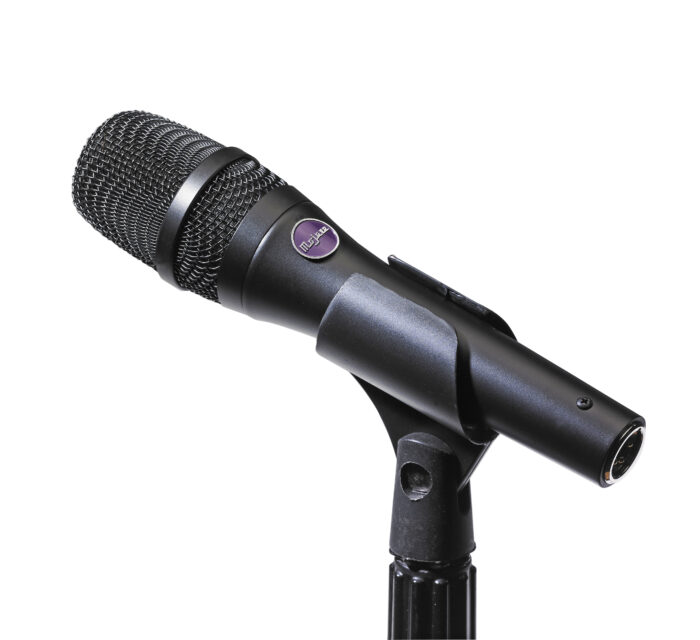
While Gadhia is less gear-headed, he does point out that he used a U67 mic on the entire record, happy to be consistent with a mic that he felt was working for him.
“Sameer is a wizard with the TC Helicon voice live stuff, where he’s been using it live and in the studio,” says Cannata. “It’s such a cool inspiration machine in the studio, where he’s just mastered it at this point. Over the years, the string players have collected more and more guitar pedals. And Sameer is like, ‘Wait a minute, I want something for my voice.’ So he really dove into that in a really cool way.”
With the album dropping in the Spring, 2026 will be a year of promotion. That will come in the form of videos and singles, and likely some touring down the line.
“Our goal is to take this out everywhere,” says Gadhia.
“There will be one or two singles out by the time this story comes out,” adds Cannata. “We’re planning on four singles previous to the album, and the album will be out May 1.”
Look out for it!